

Maddy summaryThe SAVES Act establishes a 5-year pilot program where the VA awards competitive grants to accredited nonprofits (e.g., Assistance Dogs International or International Guide Dog Federation members) to provide service dogs to veterans with specific disabilities like mobility issues, PTSD, TBI, or visual/hearing impairments. It requires veterans with mental health conditions to undergo a VA mental health evaluation to confirm the dog is the optimal treatment, prohibits nonprofits from charging veterans fees, and mandates VA-provided veterinary insurance for the dogs. The program is funded with $10 million annually for five years and directly affects eligible veterans enrolled in VA care with qualifying disabilities and participating nonprofit service providers.
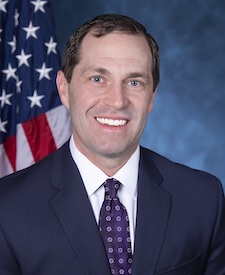
Rep. Jason Crow
Sponsored bills
Maddy summaryThe Stand with Ukraine Act of 2024 establishes a framework for sustained U.S. security assistance to Ukraine in response to Russia's invasion. It endorses a 10-year bilateral security agreement and directs the U.S. government to provide military equipment, training, and security assistance to strengthen Ukraine's defense capabilities against Russian aggression. Key provisions include treating Ukraine as a major non-NATO ally for defense transfers, fast-tracking military sales through the Foreign Military Sales program, and creating mechanisms to prioritize defense article transfers. The bill also includes specific support for Ukraine's recovery, reconstruction, and demining efforts following the conflict. This legislation directly affects U.S. foreign policy implementation, military assistance programs, and Ukraine's ability to build a credible defense against Russian threats.
Maddy summaryThis bill requires the Cybersecurity and Infrastructure Security Agency (CISA) and the Department of Health and Human Services (HHS) to coordinate on healthcare cybersecurity through a dedicated liaison. It mandates updated sector-specific risk management plans for healthcare facilities, including analysis of cybersecurity challenges for rural and small providers, medical device vulnerabilities, and breach response. The law establishes a process to identify "high-risk" healthcare facilities (like major hospitals) for prioritized security support. These provisions directly affect hospitals, clinics, and other healthcare providers handling sensitive patient data.
Maddy summaryThis bill prohibits retired military members with access to classified information from seeking approval for foreign government employment for 30 months after retirement, with exceptions for the UK, Canada, Australia, and New Zealand. It requires pre-approval from the Secretary of Defense and State Department for such employment, including national security reviews, and mandates annual reporting of foreign employment for five years post-retirement. Violations carry civil penalties up to $100,000 or the compensation received, plus potential five-year bans on federal employment or classified access. The bill also creates a public database tracking all approved foreign employment cases to increase transparency.
Maddy summaryHR 9247, the BIS IT Modernization Act, requires the Bureau of Industry and Security (BIS) to replace outdated information technology systems with a unified environment by 2029. The bill mandates adopting advanced data tools to streamline export license reviews, improve tracking of military end uses in countries of concern, and enhance data sharing with industry and partners. It specifically directs BIS to reduce manual processing, strengthen cybersecurity, and facilitate easier access for U.S. exporters using its systems. The act authorizes $25 million annually (2025-2028) to fund these modernization efforts.
Maddy summaryThis bill establishes the Destination Reception Services Program to provide medium-term support to certain immigrants in the U.S., including those granted parole, placed in removal proceedings, or with pending asylum applications. It authorizes $3 billion annually (2025-2028) to fund services like housing assistance, healthcare, job training, legal aid for work authorization/asylum, childcare, and transportation through local government and nonprofit organizations. The program is managed by a federal Board and local community boards that identify high-need areas and allocate funds based on criteria like immigrant population density and service gaps. It explicitly states the program is not an "alternatives to detention" initiative and prioritizes services to help new arrivals achieve self-sufficiency.
Maddy summaryThis bill reauthorizes the Debbie Smith DNA Backlog Grant Program, which provides federal funding to state and local law enforcement agencies to reduce backlogs in processing DNA evidence from crime scenes. It extends the program's funding period from fiscal years 2024 through 2029 (previously ending in 2024). The bill also updates audit requirements to ensure grant funds are used properly through 2029. This directly affects law enforcement agencies that receive these grants to accelerate DNA analysis for criminal investigations.
Maddy summaryHouse Resolution 1372 proposes designating July 20, 2024, as "National Heroes Day" to honor everyday people who save lives during emergencies. It recognizes acts of courage from incidents like mass shootings (e.g., Aurora 2012, Uvalde 2022) where civilians protected others. The resolution encourages all Americans to observe the day through community service, displaying the U.S. flag, or other charitable acts. This is a symbolic, non-binding resolution with no new laws or funding.
Maddy summaryHRES 1361 is a non-binding resolution designating July 20, 2024, as "National Heroes Day" to honor everyday people who act courageously during crises, such as saving lives in mass shootings. It references events like the 2012 Aurora theater shooting and other recent tragedies but focuses on recognizing all community members who demonstrate selfless bravery. The resolution encourages Americans to observe the day through community service, reflection, and displaying the U.S. flag, without creating new laws or obligations. This symbolic gesture aims to inspire ongoing acts of compassion and service across the country.
Maddy summaryThis bill extends the deadline for veterans to apply for authorization after receiving emergency care at non-VA facilities. It requires the VA to consider such care authorized if veterans (or their representatives) submit an application within a deadline set by the VA - but this deadline cannot be earlier than 72 hours after discharge. The change directly affects veterans needing emergency medical treatment outside VA facilities, simplifying the process for documenting care. The key provision modifies 38 U.S.C. §1703(a)(3)(B) to provide a minimum 72-hour window for submission, reducing administrative barriers. The bill applies to emergency admissions occurring on or after its enactment date.