

Maddy summaryThis bill repeals outdated and rarely enforced federal criminal statutes that impose penalties for trivial or obsolete actions, such as writing a check under $1, wearing postal uniforms, or sledding on Capitol grounds. It specifically targets provisions in the U.S. Code covering offenses like removing postage stamps, selling colored margarine without triangular packaging, or discarding produce without cause. The bill eliminates these specific legal provisions, directly affecting individuals who might otherwise face prosecution under these archaic laws, though such prosecutions are extremely uncommon today. The change streamlines the criminal code by removing provisions with no modern enforcement relevance.
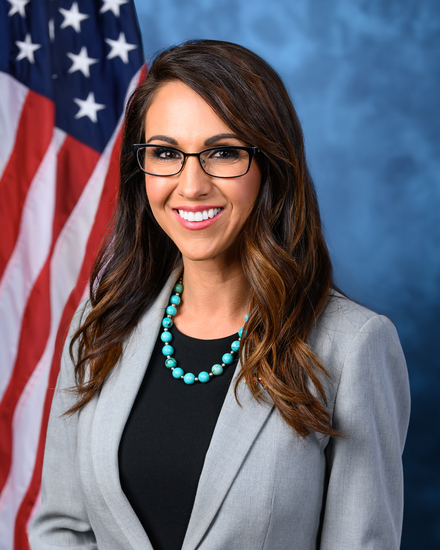
Rep. Lauren Boebert
Sponsored bills
Maddy summaryThis bill amends an existing law (Public Law 87-590) governing the Arkansas Valley Conduit project in Colorado. It changes the payment terms by removing interest requirements, specifying that construction funding must come from sources other than the Secretary, and extending the repayment period to 100 years. The changes directly affect how the project's financial obligations are structured and paid. The bill makes technical adjustments to the project's funding mechanism without creating new policy.
Maddy summaryHR 8706, the "Dismantle DEI Act of 2024," would prohibit federal agencies from maintaining diversity, equity, and inclusion (DEI) offices, programs, or training by requiring the closure of existing DEI offices within 90 days and banning federal funding for DEI-related activities. The bill defines "prohibited diversity, equity, and inclusion practices" as those that discriminate based on race, color, ethnicity, religion, biological sex, or national origin, or require training that asserts a particular group is inherently superior or inferior. It would rescind several executive orders related to racial equity and gender inclusion, and prohibit the use of federal funds for DEI-related activities across all federal agencies, contractors, and grant recipients. The bill contains limited exceptions for Equal Employment Opportunity offices and disability rights enforcement offices as historically organized and operated.
Maddy summary# Summary of Proposed Higher Education Act Amendments This document outlines significant proposed amendments to the Higher Education Act of 1965, primarily as part of the "College Cost Reduction Act." The key elements include: ## Accreditation Reform - Major overhaul of accreditation standards, requiring accrediting agencies to demonstrate independence from trade associations - New requirements for accrediting agencies to assess student achievement outcomes, including median value-added earnings relative to median total price charged - Introduction of an "Alternative Quality Assurance Experimental Site Initiative" to test non-accredited institutions - Protections for religious institutions, including a new process for appealing accreditation decisions related to religious mission - Removal of "litmus tests" that would require institutions to support specific political viewpoints ## Student Success Initiatives - Establishment of "Postsecondary Student Success Grants" to increase participation, retention, and completion rates for high-need students - Focus on evidence-based practices, with tiered requirements (tier 1, 2, and 3 reforms) - Mandatory inclusion of high-need student populations (low-income, first-generation, military-connected, etc.) - Requirements for institutions to report on completion rates, retention rates, and student demographics ## Regulatory Changes - Repeal of numerous existing regulations including: * Closed school discharges * Borrower defense to repayment * Pre-dispute arbitration * False certification requirements * Ability-to-benefit rules * Financial responsibility regulations - New restrictions on incentive compensation for recruiters - Changes to third-party servicer definitions and regulations ## Transfer and Credit Policies - New requirement that institutions cannot deny transfer credit based solely on the source of accreditation - Requirements for transparent transfer policies - Changes to reverse transfer policies ## Other Key Provisions - Modifications to the National Advisory Committee on Institutional Quality and Integrity (NACIQI) - New definitions for "total price" and "value-added earnings" - Changes to the process for institutions to change accrediting agencies - New requirements for institutions to report on student outcomes The overall focus of these proposed amendments is to reduce regulatory burden on institutions, promote transparency, improve student outcomes (particularly for high-need students), modernize accreditation processes, and protect religious institutions' rights in accreditation decisions.
Maddy summaryThis bill clarifies the federal legal definition of "firearm silencer" and "firearm muffler" under Title 18, U.S. Code. It specifically defines these terms to include: (1) devices designed to silence firearms and attach to them, and (2) the outer housing components that contain sound-reduction parts. The bill does not create new restrictions or requirements; it only refines existing terminology for regulatory clarity. This definition affects all manufacturers, sellers, and users of silencers/mufflers under federal law.
Maddy summaryThe Fix Our Forests Act creates a new system for managing wildfire risk on federal lands by designating "firesheds" (landscape-scale areas with high wildfire risk) and establishing a central coordination center called the Fireshed Center. It streamlines environmental reviews for vegetation management projects in these areas, requires public tracking of wildfire risk and management activities through a Fireshed Registry, and limits legal challenges to these projects. The bill affects federal land management agencies (like the Forest Service and Bureau of Land Management), communities in wildfire-prone areas, and utility companies managing vegetation near power lines. It also includes provisions for community wildfire risk reduction programs and research on new wildfire management technologies, aiming to accelerate risk reduction while maintaining transparency about where and how these projects are implemented.
Maddy summaryThis bill amends the tax code to change the requirements for 501(c)(3) tax-exempt status. It would require that a "substantial part" of an organization's activities must not involve providing goods or services to individuals who are not U.S. citizens or lawful permanent residents (green card holders). Nonprofits that primarily serve non-citizens or non-permanent residents would lose their tax-exempt status under this rule. The change applies to tax years beginning after the bill's enactment date. It directly affects organizations providing services to immigrants, including those with legal status.
Maddy summaryThis bill amends Section 4013 of the Water Infrastructure Improvements for The Nation Act to allow water districts and project developers who received federal loans for western U.S. water infrastructure projects to repay those loans faster. It adds a new provision (paragraph (3)) directing repayment authority under Section 4011, streamlining the process for accelerating loan repayment. The change directly affects entities managing federally funded water projects in the western United States, enabling earlier repayment without altering loan terms or funding amounts.
Maddy summaryThis bill terminates all federal funding for FEMA's Shelter and Services Program effective upon enactment. It prohibits new appropriations for this program or any similar successor program. Any remaining funds from the program as of the enactment date will be transferred to support disaster relief efforts under the Robert T. Stafford Disaster Relief Act. The change directly affects FEMA's budget operations but redirects existing resources to broader disaster assistance.
Maddy summaryThe BARRIER Act of 2024 restricts federal financial assistance to organizations that aid or facilitate illegal immigration. It makes entities - including nonprofits, corporations, and others - ineligible for federal funds starting in the first fiscal year after enactment if they provide transportation, shelter, financial support, or legal assistance to individuals entering or remaining in the U.S. without lawful status under immigration law. The law directly affects organizations offering services to people attempting unauthorized entry or living in the country without authorization. It does not change immigration laws but cuts off federal funding for those who assist violations of existing immigration statutes.