

Maddy summaryHR 9523, the Renewed Hope Act of 2024, directs the Department of Homeland Security to hire 200 additional personnel (including 40 forensics analysts and 30 child exploitation investigators for the Victim Identification Laboratory, plus 130 more staff) to support identifying and rescuing victims of child sexual exploitation. It also authorizes temporary hiring of experts for image/audio forensic analysis at specified rates and requires DHS to establish joint procedures for coordinating child exploitation investigations across agencies. The bill mandates a new Victim Identification Training Program at the Cyber Crimes Center, providing annual training on advanced victim identification technology to DHS personnel and external law enforcement agencies (federal, state, local, tribal, military, and foreign) upon request. These provisions directly affect DHS investigative units and law enforcement agencies actively working on child exploitation cases nationwide.
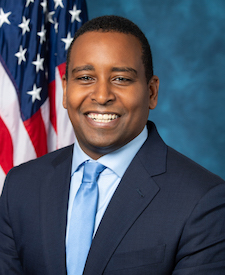
Rep. Joe Neguse
Sponsored bills
Maddy summaryThe PAW Act of 2024 amends the tax code to allow taxpayers to treat certain veterinary expenses for service animals or pets as medical care expenses deductible on their federal income taxes. It specifically covers up to $1,000 annually per pet for veterinary care (including diagnostic tests, medicine, and surgery) or pet health insurance, applying to the taxpayer, their spouse, or dependents. This affects individuals with qualifying service animals (defined by existing federal regulations) or pets meeting the Agriculture Improvement Act's definition. The provision applies to expenses paid after the bill's enactment, with the $1,000 limit adjusted annually for inflation.
Maddy summaryHR 9480, the Empowering Law Enforcement to Combat Financial Fraud Act, allows state, local, and Tribal law enforcement agencies to use specific federal grant funds (from Justice Department and Homeland Security programs) to investigate senior financial fraud (targeting elderly/disabled victims), pig butchering scams (crypto investment frauds), and general financial fraud. The bill directs funds toward hiring specialized staff, training on blockchain tools and transnational fraud, purchasing investigative software, and improving data collection. Agencies must report annually to grant providers on fund usage and fraud statistics, with federal agencies then reporting to Congress on these efforts. This policy change expands the allowable use of existing grants to specifically address these fraud types through enhanced investigative capabilities.
Maddy summaryHRES 1422 is a resolution recognizing the 60th anniversary of the Wilderness Act (enacted in 1964), which established the National Wilderness Preservation System. The resolution commends advocates for the Act, acknowledges wilderness areas' role in protecting over 112 million acres of public lands, and highlights their benefits for recreation, clean water, wildlife habitat, and climate resilience. It specifically emphasizes the importance of including Tribal governments in wilderness designation and management. As a commemorative resolution, it does not create new laws or directly affect any group.
Maddy summaryHR 8656, the Modernizing Wildfire Safety and Prevention Act of 2024, creates new training programs for wildland firefighters including a Middle Fire Leaders Academy and wildfire workforce grants to improve response capabilities. It establishes a Wildland Fire Management Casualty Assistance Program to support families of injured or deceased firefighters and develops a National Smoke Monitoring and Alert System to improve public health responses to wildfire smoke. The bill creates a Joint Office of the Fire Environment Center to coordinate wildfire data and technology across federal agencies and requires federal agencies to process wildfire-related assistance payments within 90 days of approval. This legislation directly affects federal wildland firefighters, wildfire response organizations, communities in wildfire-prone areas, and public health agencies.
Maddy summaryHR 8613, the NSF and USDA Interagency Research Act, requires the U.S. Department of Agriculture (USDA) and the National Science Foundation (NSF) to formally coordinate joint research on agricultural priorities through agreements like memoranda of understanding. It directs them to collaborate on specific areas including food security, precision agriculture tools, soil health monitoring, and STEM workforce development, with funding for centers at colleges and universities. The bill establishes mechanisms for sharing data, supporting research infrastructure, and awarding grants to educational institutions to advance agricultural research and education. It also mandates a congressional report within two years detailing coordination efforts, research achievements, and future opportunities. This legislation primarily affects USDA, NSF, and educational institutions participating in joint research initiatives.
Maddy summaryHR 7920, the AG VETS Act, creates a federal grant program to help military veterans enter or grow in farming and ranching. It authorizes $5 million annually (2025-2029) for competitive grants to eligible groups like land-grant universities, state agriculture departments, nonprofits, and community organizations. These grants fund training programs, curriculum development, workshops, and field experiences focused on farm business management. Recipients must match federal funds dollar-for-dollar, and the program directly supports veterans seeking agricultural careers through hands-on education.
Maddy summaryHR 7294 establishes the "Emergency Forest Watershed Program" to enable rapid response after natural disasters threatening National Forest System lands. It authorizes sponsors (state/local governments, tribes, or water districts) to receive federal funding for emergency measures like erosion control and flood mitigation within 2 years of a disaster, with no matching funds required. The bill waives sponsor liability for normal operations but holds them responsible for willful negligence, and streamlines environmental reviews for these urgent projects. This directly affects National Forest lands and downstream communities by accelerating recovery efforts after events like wildfires or floods.
Maddy summaryHR 3507, the "Yes In My Backyard Act," requires local governments receiving certain federal Community Development Block Grants (CDBG) to report on their progress toward adopting specific housing-friendly land use policies. It directly affects cities and counties that administer CDBG funds by mandating they submit plans tracking 22+ policy changes, such as allowing duplexes in single-family zones, reducing parking requirements, or streamlining permits. The bill does not require local governments to adopt these policies but requires them to document their current status and plans for implementation. This reporting mechanism aims to identify barriers to affordable housing without binding local governments to specific actions. The requirement applies to CDBG recipients starting one year after the bill's enactment.
Maddy summaryThis bill reauthorizes the Every Kid Outdoors program, expanding eligibility to include 4th graders and 10-11 year old home-schooled learners, who receive free access to national parks. It modifies the program period from a fixed September-August cycle to a flexible 12-month period and increases annual funding to $25 million. The funds support program operations, school and community outreach, transportation assistance for schools with financial need, and targeted outreach to underserved communities and children with disabilities. The changes directly affect 4th graders and eligible home-schooled youth in the U.S.