

Maddy summaryHR 9609 modifies deadlines and communication rules for disaster assistance under the Small Business Act, directly affecting small businesses and individuals applying for aid after major disasters. It adds a mandatory 60-day deadline extension for applications, allows late submissions with "good cause," and requires the Administrator to improve public communication about these changes. The bill also mandates notifying local congressional offices about deadlines to ensure broader awareness. These changes aim to streamline access to disaster relief by reducing administrative barriers.
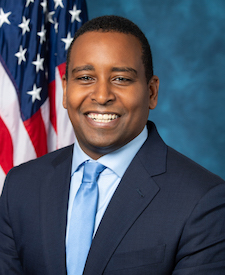
Rep. Joe Neguse
Sponsored bills
Maddy summaryHR 9611, the Small Business Disaster Damage Fairness Act of 2024, increases the collateral requirement threshold for small business disaster loans under the Small Business Act from $14,000 to $50,000 and removes the "major" disaster requirement, meaning more small businesses affected by any disaster (not just major ones) will qualify for loans without needing to provide collateral. The bill directly affects small businesses seeking SBA disaster loans by reducing their collateral burden. It requires the Government Accountability Office (GAO) to report on loan default rates and the impact of these collateral changes within three years of enactment, covering loans from September 2020 through two years after the bill's passage. This focuses on concrete changes to loan eligibility and accountability, not on predicted outcomes.
Maddy summaryThis bill establishes a 3-year pilot program to coordinate care between the Department of Veterans Affairs (VA) and Medicare for veterans enrolled in both systems. It directly affects "covered veterans" (those enrolled in both VA health services and Medicare), primarily senior veterans and wounded warriors who use both programs. The key mechanism assigns each participant a VA case manager to develop personalized care plans, navigate VA and Medicare services, and eliminate gaps in care. The program aims to improve access, outcomes, quality, and cost-efficiency while tracking metrics like patient satisfaction, care coordination, and cost data.
Maddy summaryHR 9497, the AI Advancement and Reliability Act of 2024, creates a new Center for AI Advancement and Reliability within the Commerce Department to advance U.S. leadership in AI safety and reliability. The Center will conduct research, develop voluntary standards, and collaborate with federal agencies, industry, and researchers to address AI reliability, security, and safety risks - such as system flaws and adversarial attacks - through testing and benchmarking. It prohibits new regulatory authority or mandatory data sharing from private entities, requires annual reports to Congress, and is funded at $10 million for fiscal year 2025 with a six-year sunset provision. This bill directly affects federal agencies (like NIST and the National Science Foundation), research institutions, and private sector partners working on AI systems, without imposing new compliance requirements.
Maddy summaryHR 9402, the NSF AI Education Act of 2024, creates new funding programs to expand artificial intelligence education across U.S. schools and colleges. It establishes scholarships and fellowships for undergraduate and graduate students in AI-related fields, with priority for programs focused on K-12 AI education, AI in manufacturing/agriculture, and outreach to rural institutions and Tribal Colleges. The bill also creates "Centers of AI Excellence" at community colleges and career technical schools to integrate AI into curricula and workforce development, and provides research funding specifically for AI teaching methods in K-12 schools serving low-income, rural, and Tribal communities. Additionally, it incorporates AI skills development into the National STEM Teachers Corps to prepare educators to teach AI concepts in classrooms.
Maddy summaryThis bill allows VA health care professionals to prescribe controlled medications via telemedicine without requiring an in-person exam, directly affecting veterans receiving VA telehealth services. It permits prescriptions for controlled substances (like certain pain medications) when the provider is licensed under state law, acting within professional practice, and the prescription serves a legitimate medical purpose. The law requires the VA Secretary to establish regulations for this process but clarifies it doesn’t change existing Controlled Substances Act obligations. This expands access to telemedicine for veterans needing controlled medications while maintaining safety and licensing standards.
Maddy summaryThis bill amends the Disabled Veterans' Outreach Program to expand eligibility for career services to include Gold Star spouses (spouses of service members who died while on active duty) and surviving spouses (spouses of veterans who died from service-connected causes). It updates existing program language to replace references to "veterans" with "veterans or eligible persons" and adds a new definition clarifying that "eligible person" includes these spouses. The change directly affects spouses who lost their partners in military service, allowing them to access the same career counseling and job placement services previously available only to veterans. The bill modifies existing program provisions without creating new services or funding.
Maddy summaryThe LIFT AI Act (HR 9211) provides federal funding to develop AI literacy education for K-12 students and teachers. It directs the National Science Foundation to award grants to colleges, nonprofits, or consortia for creating classroom curriculum, teacher training, and evaluation tools focused on AI skills like ethical use, critical interpretation, and problem-solving. The bill specifically targets schools (K-12) and aims to integrate AI literacy into existing lessons through project-based learning and professional development. Key provisions include developing learner-centered materials, training educators on AI proficiency, and creating tools to assess student progress in AI literacy.
Maddy summaryThe CREATE AI Act of 2023 establishes a National Artificial Intelligence Research Resource (NAIRR) to improve access to AI research tools, computational resources, data, and educational materials for researchers and students across the United States. The NAIRR will provide computational resources, curated datasets, educational tools, and access to AI testbeds, with special emphasis on supporting groups historically underrepresented in STEM fields. Governed by a Steering Subcommittee chaired by the Director of the Office of Science and Technology Policy and managed by a Program Management Office within the National Science Foundation, the NAIRR includes specific requirements for ethical AI development, privacy protections, and security measures. The resource will be accessible to researchers at U.S. institutions of higher education, nonprofits, government agencies, and certain businesses, with priority given to projects addressing privacy, ethics, civil rights, and AI safety.
Maddy summaryHRES 1432 designates September 10, 2024, as "National Firearm Suicide Prevention Day" to raise public awareness about firearm suicides and promote safe storage practices. The resolution encourages healthcare professionals to discuss safe firearm storage with patients and supports the day's goals of reducing firearm suicides through education. It directly affects the general public and healthcare providers by highlighting evidence that safe storage lowers suicide risk, referencing statistics like 54.6% of U.S. suicides in 2022 involving firearms. The bill is symbolic, with no new legal requirements, and aligns with existing awareness efforts like Firearm Suicide Prevention Day.