

Maddy summaryJaime’s Law requires federal background checks for ammunition purchases by expanding existing firearm background check rules to include ammunition. It mandates that unlicensed buyers must transfer ammunition through a licensed dealer (e.g., a gun store), who conducts the background check before completing the sale. The law includes exemptions for transfers between family members, law enforcement, transfers due to death, immediate self-defense situations, and legitimate shooting or hunting activities (with specific conditions). It explicitly states the law does not create a national ammunition registry and does not override state laws on ammunition.
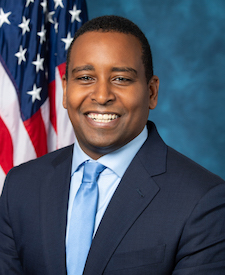
Rep. Joe Neguse
Sponsored bills
Maddy summaryThe Veteran Service Recognition Act of 2023 requires the Department of Defense, Homeland Security, and Veterans Affairs to study noncitizen veterans removed from the U.S. between 1990 and 2023, documenting their service history and reasons for removal. It establishes a system to identify noncitizen veterans before removal proceedings and creates a Military Family Immigration Advisory Committee to review cases and recommend against removal for veterans. The bill also creates a program to facilitate citizenship for noncitizen service members and provides pathways for previously removed noncitizen veterans to adjust to lawful permanent residence. These provisions directly affect noncitizen veterans and their family members facing immigration proceedings, aiming to better recognize military service in immigration decisions.
Maddy summaryHR 4579, the Fairness for Farm Workers Act, amends the Fair Labor Standards Act to establish phased overtime requirements for agricultural workers. Starting in 2024, most farm employers must pay overtime for hours worked beyond 55 per week (reducing to 50 in 2025, 45 in 2026, and 40 in 2027), with small farms (25 or fewer employees) getting a 3-year delay on the full 40-hour standard. The bill also removes existing exemptions that allowed some agricultural employers to avoid overtime pay for certain workers. This directly affects farm workers in agriculture and their employers, requiring compliance with standard overtime rules previously not applied to this sector.
Maddy summaryHR 3579, the Tribal Trust Land Homeownership Act of 2023, streamlines mortgage processing for homeownership on tribal trust lands. It sets strict deadlines for the Bureau of Indian Affairs (BIA) to review and approve residential leasehold mortgages, land mortgages, and right-of-way documents - requiring preliminary reviews within 10 days, approvals within 20-30 days, and timely title reports. The bill creates a new Realty Ombudsman position within the BIA to monitor compliance with these deadlines and serve as a liaison between tribes, lenders, and the BIA. It directly affects tribal members seeking home loans, lenders (like USDA or HUD), and the BIA, aiming to reduce delays in securing mortgages on trust land.
Maddy summaryThis bill requires owners of manufactured home communities receiving federal loans to include specific tenant protections in all leases. It mandates 1-year lease terms (renewable), 60 days' written notice for rent increases (with extended notice for hikes over 5%), a 5-day rent grace period, and rights to sell homes in place without relocation. Owners failing to comply face penalties including a 2-year ban on future federal financing and mandatory refunds to tenants for violations. The bill also establishes a Commission to develop stronger tenant protections for future loan programs, with no new funding required.
Maddy summaryThe DISCLOSE Act of 2023 would increase transparency in political spending by requiring organizations making campaign-related disbursements over $10,000 to disclose the names and addresses of their major donors, including the top five funders for political communications. It would close loopholes allowing foreign nationals to secretly fund election activities through corporations or other entities by expanding the definition of prohibited foreign contributions. The bill would mandate "stand by every ad" disclosure requirements for political communications across all media, including audio, video, and internet ads, requiring clear identification of funders. It would also require reporting of disbursements related to Federal judicial nominations, which currently aren't subject to disclosure requirements. These provisions would apply to corporations, labor organizations, and certain nonprofits that engage in political activity.
Maddy summaryThe IDEA Full Funding Act (HR 4519) mandates specific annual increases in federal funding for special education programs under the Individuals with Disabilities Education Act (IDEA). It requires Congress to appropriate increasing amounts each fiscal year - from $5.87 billion for 2024 up to $55.53 billion for 2033 - to reach 40% of the national average per-pupil expenditure for public schools by 2033. This directly affects all public school districts serving students with disabilities, as federal IDEA funding supports their special education services. The bill sets fixed dollar amounts or percentage targets (whichever is greater) for each fiscal year, aiming to gradually close the long-standing gap between promised and actual federal funding. It does not alter eligibility for services but mandates higher, phased funding levels to meet the 40% target.
Maddy summaryHR 3853, the Roadless Area Conservation Act of 2023, requires the U.S. Forest Service to enforce existing protections against road construction, reconstruction, and logging in designated roadless areas within the National Forest System. It directly affects Forest Service management practices and ensures these areas - critical for clean water, wildlife habitat, recreation, and tribal cultural sites - remain undisturbed. The bill codifies the current Roadless Rule, which already prohibits such activities in inventoried roadless areas, without creating new restrictions on non-roadless lands or limiting permitted uses like hiking or hunting. This preserves existing protections for over 58 million acres of National Forest land without altering the Forest Service’s multiple-use management approach.
Maddy summaryHR 3829, the Higher Education Marijuana Research Act of 2023, makes it easier for universities in states where marijuana is legal to conduct research. It prioritizes research license applications from colleges and universities, allows them to obtain marijuana from state or tribal regulators for medical, agricultural, or public health studies, and protects students and researchers from losing federal aid or facing immigration issues due to their participation. The bill also creates new $15 million annual grant programs through the NIH (for medical research) and USDA (for agricultural research), requiring reports on licensing and streamlining the process for academic marijuana studies. It directly affects institutions of higher education in states with legal marijuana markets, enabling them to study marijuana’s medical benefits and agricultural impacts without federal restrictions on their research activities.
Aircraft Noise Reduction Act This bill allows a general aviation airport to make reasonable adjustments to air traffic and training patterns of noncommercial charter flights for the purposes of implementing aircraft noise limitations. A general aviation airport is a public-use airport that does not have scheduled service or that has scheduled service with less than 2,500 passenger boardings per year. Specifically, upon the request of a general aviation airport, the Federal Aviation Administration (FAA) must consult with the airport and provide for reasonable adjustments to air traffic and training patterns that do not otherwise violate law. No federal funds may be withheld from, withdrawn from, or denied to a general aviation airport based solely on an activity carried out under this bill. In the case of an emergency, the FAA may reject or temporarily restrict an accommodation to a general aviation airport to implement aircraft noise limitations. Further, the Department of Transportation must update current regulations, as necessary, to allow general aviation airports to implement effective noise abatement measures, as determined appropriate by general aviation airport owners and operators.