

George Floyd Justice in Policing Act of 2021 This bill addresses a wide range of policies and issues regarding policing practices and law enforcement accountability. It increases accountability for law enforcement misconduct, restricts the use of certain policing practices, enhances transparency and data collection, and establishes best practices and training requirements. The bill enhances existing enforcement mechanisms to remedy violations by law enforcement. Among other things, it does the following: lowers the criminal intent standard—from willful to knowing or reckless—to convict a law enforcement officer for misconduct in a federal prosecution, limits qualified immunity as a defense to liability in a private civil action against a law enforcement officer, and grants administrative subpoena power to the Department of Justice (DOJ) in pattern-or-practice investigations. It establishes a framework to prevent and remedy racial profiling by law enforcement at the federal, state, and local levels. It also limits the unnecessary use of force and restricts the use of no-knock warrants, chokeholds, and carotid holds. The bill creates a national registry—the National Police Misconduct Registry—to compile data on complaints and records of police misconduct. It also establishes new reporting requirements, including on the use of force, officer misconduct, and routine policing practices (e.g., stops and searches). Finally, it directs DOJ to create uniform accreditation standards for law enforcement agencies and requires law enforcement officers to complete training on racial profiling, implicit bias, and the duty to intervene when another officer uses excessive force.
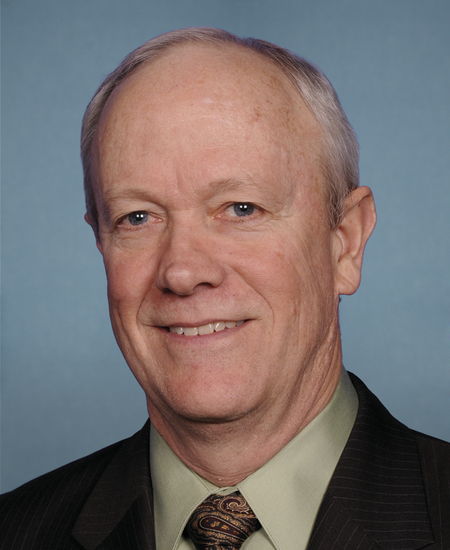
Rep. Jerry McNerney
Sponsored bills
Capitol Remembrance Act This bill requires the Architect of the Capitol (AOC) to design and install in a prominent location in the U.S. Capitol a permanent exhibit that depicts the January 6, 2021, attack on the Capitol. To the extent possible, the AOC must preserve property that was damaged during the attack and include it in the exhibit. The AOC must also include (1) existing photographic records relating to the attack; and (2) a plaque to honor the U.S. Capitol Police and other law enforcement agencies that protected the Capitol, the individuals who died or sustained injuries to protect the Capitol, and the staff who helped restore the Capitol complex after the attack.
Postal Employee Appeal Rights Amendments Act This bill extends federal employee protections against adverse personnel actions, including the right to appeal such actions to the Merit Systems Protection Board, to additional categories of employees at the U.S. Postal Service (USPS). Specifically, it extends such protections to any officer or employee of the USPS who is not represented by a bargaining representative and is in a supervisory, professional, technical, clerical, administrative, or managerial position covered by the Executive and Administrative Schedule.
Postal Supervisors and Managers Fairness Act of 2021 This bill modifies procedures for negotiating pay and benefits of supervisory and other managerial personnel of the U.S. Postal Service (USPS). At least 60 days before the expiration of a pay decision, the USPS must propose to the supervisors' organization any changes in pay policies, pay schedules, or fringe benefit programs for members of such organization. Not later than 60 days after the USPS agrees to a collective bargaining agreement that affects the pay or benefits of supervisors or managers who are members of the supervisors' organization, the USPS shall provide a proposal regarding such matters to the organization. The bill makes binding the decision of the fact-finding panel appointed by the Federal Mediation and Conciliation Service in the event of an impasse between the USPS and a supervisors' organization over proposed changes in pay and benefits.
This resolution thanks and honors the journalists and news staff who risked themselves to chronicle the insurrection at the U.S. Capitol on January 6, 2021, and it condemns the harassment and violent attacks on the media during the insurrection.
This joint resolution proposes a constitutional amendment authorizing Congress and the states to set reasonable limits on the raising and spending of money by candidates and others to influence elections. The amendment grants Congress and the states the power to implement and enforce this amendment by legislation. They are allowed to distinguish between natural persons and corporations or other artificial entities created by law, including by prohibiting such entities from spending money to influence elections.
This resolution honors Officers Brian Sicknick and Howard Liebengood of the U.S. Capitol Police, and it commends the bravery and service demonstrated by officers of the U.S. Capitol Police, the Metropolitan Police Department of the District of Columbia, and the other law enforcement agencies and protective entities that assisted in responding to the January 6, 2021, attack on the U.S. Capitol.
This resolution requires the House Committee on Ethics to investigate and report on whether (1) actions taken by Members of the 117th Congress seeking to overturn the 2020 Presidential election violated their oath of office; and (2) these Members should face sanction, including removal from the House of Representatives. It also condemns all targeted and malicious efforts to disenfranchise Black, Brown, and Indigenous voters.
This resolution impeaches President Donald John Trump for high crimes and misdemeanors. Specifically, the resolution sets forth two articles of impeachment. The first article states that President Trump abused the powers of the presidency by attempting to unlawfully overturn the results of Georgia's presidential election. The article specifies that President Trump, on a recorded call, repeatedly asked the Secretary of State of Georgia to overturn the verified results of the election and threatened consequences for a failure to do so. The second article states that President Trump abused the powers of the presidency by inciting violence and orchestrating an attempted coup. The article specifies that, on January 6, 2021, President Trump incited a crowd of supporters to attack the Capitol while Congress was in session to certify the results of the election. The article further specifies that, after those supporters had violently breached the Capitol, President Trump made a statement repeating his false claims of election fraud and expressing affection for the supporters. Both articles state that, by such conduct, President Trump warrants impeachment and trial, removal from office, and disqualification from holding U.S. office.
This resolution censures and condemns President Donald J. Trump for asking the Georgia Secretary of State on January 2, 2021, to overturn the Georgia results of the November 2020 presidential election. It further calls on President Trump to (1) retract and disavow this behavior, and (2) acknowledge President-elect Joseph R. Biden as the victor of the November 2020 presidential election.