

Maddy summary# Summary of the Agriculture Resilience Act of 2023 This comprehensive legislation aims to enhance agricultural sustainability, reduce greenhouse gas emissions, and decrease food waste across the food system. Key provisions include: 1. **Conservation Programs**: - Expanded Conservation Reserve Program with increased acreage limits through 2028 - New Grassland 30 pilot program for 30-year conservation contracts - Conservation of Private Grazing Land program focused on advanced grazing management - Alternative Manure Management Program to reduce methane emissions from livestock operations 2. **Renewable Energy**: - Enhanced Rural Energy For America Program with carbon accounting requirements - New agrivoltaic systems research and demonstration program - Continued support for the AgSTAR program (anaerobic digestion) 3. **Food Waste Reduction**: - Standardized quality date labeling ("BEST If Used By") and discard date labeling ("USE By") - Amendments to the Federal Food Donation Act requiring donation of excess food - School food waste reduction grant program for local educational agencies - Grants for composting and anaerobic digestion food waste-to-energy projects 4. **Additional Key Provisions**: - Composting recognized as a conservation practice - Technical assistance programs for sustainable agriculture - Support for beginning, socially disadvantaged, and small-scale farmers - Funding commitments for multiple programs through fiscal year 2028 The legislation emphasizes climate change adaptation and mitigation, environmental protection, food system resilience, and equitable support for diverse farm operations while reducing food waste across the supply chain.
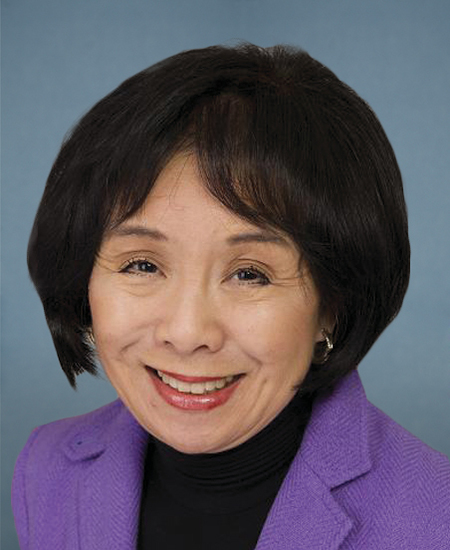
Rep. Doris O. Matsui
Sponsored bills
Maddy summaryThis bill changes how U.S. foreign aid is provided to international health organizations. It prevents U.S. agencies from denying aid to foreign non-governmental organizations (NGOs) solely because they offer health services (like counseling or referrals) using their own funds, as long as those services follow local laws. It also stops applying stricter rules about how foreign NGOs can use their own funds for advocacy compared to U.S. NGOs receiving similar aid. The bill directly affects foreign health-focused NGOs that rely on U.S. foreign assistance funding.
Maddy summaryHR 1637 establishes a Medicare pilot program called the Dementia Care Management Model to improve care for beneficiaries with Alzheimer's disease or related dementia. It requires participating providers to offer comprehensive services - including continuous monitoring, personalized care plans, medication management, and caregiver support - while excluding hospice care. Payments are made monthly based on patient needs (with pathways for uncomplicated vs. complex cases) and include quality-based bonuses, with no cost-sharing for beneficiaries. The model tests whether this approach improves health outcomes, care quality, and caregiver support while reducing Medicare spending, targeting Medicare beneficiaries not in nursing homes or hospice who meet specific diagnosis and enrollment criteria.
Maddy summaryThe Office of Gun Violence Prevention Act of 2023 establishes a new office within the Department of Justice to coordinate federal efforts on gun violence prevention. The office, led by a Director appointed by the Attorney General, will evaluate existing programs, identify data gaps, and make evidence-based policy recommendations to Congress and the President. It will work with an advisory council including DOJ officials and external members like gun violence survivors, community service providers, and public health experts. The office must produce an annual report to Congress on gun violence trends and policy recommendations, and the bill authorizes funding to support these activities.
Maddy summaryHR 1723, the Abortion is Health Care Everywhere Act of 2023, amends the Foreign Assistance Act to remove restrictions on using U.S. foreign aid funds for abortion services. It explicitly allows U.S. foreign assistance programs to fund comprehensive reproductive health care, including abortion services, training, and equipment. This change directly affects U.S. international health programs and recipient countries, enabling them to integrate safe abortion care into broader reproductive health services. The bill aims to align U.S. policy with global health guidelines by making abortion services a standard part of reproductive health care funded through foreign assistance.
Offshore Pipeline Safety Act This bill establishes requirements that address the safety and environmental risks associated with certain pipelines on the Outer Continental Shelf. Specifically, the bill requires the Bureau of Safety and Environmental Enforcement (BSEE) to finalize regulations proposed in 2007 related to offshore pipelines. The regulations must require owners of oil and gas pipelines to (1) provide for biannual, third-party inspections of pipelines; and (2) equip pipelines with leak detection systems or devices. Further, the BSEE must issue regulations to charge an annual fee on such owners for the purpose of providing the BSEE with funds to decommission or remove offshore pipelines in the event the owner files for bankruptcy. In addition, the BSEE must continually monitor the condition and location of all oil and gas pipelines that have been decommissioned (e.g., inactive pipelines that are left buried in the seafloor) and remain in place. If the BSEE identifies an exposed segment of any decommissioned pipeline, then it must either remove the pipeline from the ocean or ensure it is properly decommissioned and does not pose a threat. If a segment of any active pipeline is exposed or shifts, then the BSEE must remove the pipeline, decommission it, or resecure the segment to the sea floor. When determining whether to permit an owner to decommission such pipelines, the BSEE must consider the navigational hazards, any interferences with other uses of the Outer Continental Shelf, and the environmental impacts of the pipelines.
Marine Mammal Climate Change Protection Act This bill establishes requirements to protect marine mammals adversely affected by climate change, including by establishing a program within the National Oceanic and Atmospheric Administration (NOAA) to monitor the adverse impacts of climate change on marine mammals. In addition, it also requires NOAA's National Marine Fisheries Service (NMFS) and the U.S. Fish and Wildlife Service (USFWS) to issue regulations that list marine mammal species in waters under U.S. jurisdiction for which climate change is more likely than not to result in a decline in population abundance, an impeded population recovery, or a reduced carrying capacity (i.e., the maximum population of a marine mammal species that an area will support without undergoing deterioration). The NMFS and the USFWS must update the list at least once every five years and issue regulations that include climate impact management plans for species on such list. The bill also directs the NMFS and the USFWS to review agreements with foreign governments concerning the management of marine mammals that are or may be affected by climate change. The Department of State must initiate amendments to such agreements or negotiate the development of such agreements in a manner consistent with the goals of the bill.
Maddy summaryHR 1396 expands Berryessa Snow Mountain National Monument by adding approximately 3,925 acres of federal land in Lake County, California (known as the Walker Ridge/Molok Luyuk Addition), directly affecting land management in that area. The bill modifies the monument's boundary to include this parcel, formally designates it as "Condor Ridge (Molok Luyuk)" (using the Patwin language), and requires the Secretary of the Interior to develop a joint management plan with the Secretary of Agriculture within one year of enactment. This plan must include consultation with affected federally recognized tribes and establish ongoing engagement with tribes for monument management. The bill also mandates public availability of updated maps and legal descriptions for the newly designated area.
Maddy summaryHR 1219, the Food and Agriculture Industry Cybersecurity Support Act, establishes an online cybersecurity clearinghouse under the National Telecommunications and Information Administration (NTIA) to provide resources and support to the food and agriculture industry. The clearinghouse will offer publicly accessible tools, including updated FAQs, ransomware response guides, and small business assistance, alongside consolidated voluntary cybersecurity recommendations covering risk management, incident recovery, and protection of critical systems. It also mandates a Comptroller General study assessing federal cybersecurity efforts in the sector, including coordination among agencies and potential benefits of creating a dedicated industry-specific cybersecurity information-sharing center. The bill directly affects food producers, processors, distributors, and their technology systems, aiming to strengthen defenses against cyber threats without imposing new regulatory requirements.
California Clean Coast Act of 2023 This bill prohibits oil and gas exploration and leasing in areas of the outer Continental Shelf located off the coast of California.