

Maddy summaryThe Residential Recovery for Seniors Act would expand Medicare Part A coverage to include specific types of residential substance use disorder treatment for seniors. It creates three new coverage categories: low-intensity, high-intensity, and medically managed residential treatment, each with defined service requirements and facility standards. Medicare would cover these services when provided by certified facilities meeting specific clinical and operational criteria, including regular need assessments and adherence to evidence-based treatment standards. The bill also establishes a prospective payment system for these services to be implemented by October 2025, with initial payments matching current costs and future payments adjusted for inflation.
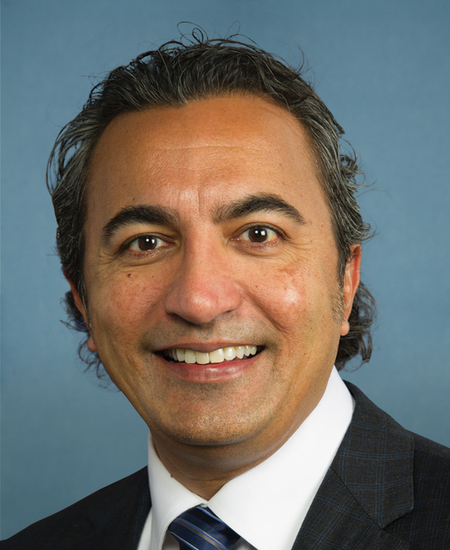
Rep. Ami Bera
Sponsored bills
Maddy summaryThis bill permanently removes a 2026 expiration date for a tax exclusion allowing employers to pay employees' student loans through educational assistance programs without those payments being counted as taxable income. It directly affects employees who receive employer-sponsored student loan repayment assistance and employers offering such programs. The key provision amends the Internal Revenue Code to make this tax exclusion permanent, applying to all future payments made after the bill's enactment. This change simplifies the tax treatment for both employers and employees participating in these student loan repayment programs.
Maddy summaryHR 9104, the Access to Birth Control Act, requires pharmacies that normally stock contraception to provide birth control or related medications without delay if in stock, or immediately offer alternatives like referrals to other pharmacies or expedited orders if unavailable. It prohibits pharmacists from intimidating customers, misrepresenting availability, breaching confidentiality, or refusing to fill valid prescriptions for birth control. Pharmacies violating these rules face civil penalties up to $1,000 per day or private lawsuits. The law specifically applies to pharmacies that routinely carry contraception and excludes cases where a valid prescription is missing or payment cannot be made. It aims to address documented refusals to dispense birth control, particularly following the Dobbs decision.
Maddy summaryHR 4581, the Maternal and Child Health Stillbirth Prevention Act of 2024, amends Title V of the Social Security Act to explicitly allow federal funds to support stillbirth prevention efforts. The bill directs states receiving Title V maternal and child health funds to use these resources for evidence-based programs and research aimed at reducing stillbirths, including tracking fetal movements, screening for growth issues, smoking cessation, and community support. It directly affects state maternal health programs by clarifying that existing funding can now cover specific stillbirth prevention activities previously not explicitly permitted. The law changes how Title V funds may be spent, adding clear provisions for research and programs targeting stillbirth reduction. This is a policy change that updates funding guidelines without creating new programs or mandates.
Maddy summaryThe Revitalizing Downtowns and Main Streets Act creates a 20% tax credit for converting non-residential buildings into affordable housing. To qualify, buildings must be at least 20 years old and nonresidential, with conversion costs exceeding 50% of the building's adjusted basis or $100,000. The converted housing must be rent-restricted for 30 years for residents earning 80% or less of area median income (60% in certain designated areas), with a $12 billion national credit limit. Special provisions apply for economically distressed areas and rural historic preservation projects, primarily affecting developers who convert vacant commercial buildings in downtown or main street areas into affordable housing.
Maddy summaryThe Rohingya GAP Act establishes a U.S. Special Coordinator for Rohingya Atrocities Prevention and Response to coordinate U.S. government efforts on Rohingya issues. It authorizes $10 million annually for atrocity investigations and $8 million for a Burma-focused conflict observatory to document human rights violations. The bill directs U.S. agencies to support Rohingya refugees' protection, education, and livelihoods in Bangladesh while promoting durable solutions including safe return to Myanmar with full citizenship rights when conditions allow. It requires annual reporting on U.S. efforts to address atrocity risks, protect Rohingya, and advance accountability for crimes against them. The legislation aims to address root causes of violence against Rohingya through empowerment, inclusion in decision-making, and support for transitional justice mechanisms.
Maddy summaryHR 3042 updates the eligibility rules for countries seeking to become "candidate countries" under the Millennium Challenge Corporation (MCC) program. It revises the income threshold to align with World Bank graduation standards and clarifies that U.S. waivers or suspensions of foreign aid restrictions no longer disqualify countries. The bill specifies that the MCC Board will make the final determination on candidate country status. This directly affects countries aiming to qualify for U.S. economic aid through the MCC program.
Maddy summaryHRES 1355 is a non-binding resolution supporting the designation of July 10 as Journeyman Lineworkers Recognition Day. It honors lineworkers who maintain electrical infrastructure under hazardous conditions, including during disasters, and commemorates Henry Miller, the first president of the International Brotherhood of Electrical Workers, who died on July 10, 1896, while troubleshooting an electrical outage. The resolution encourages public recognition of these workers' contributions but does not create new laws or policies.
Maddy summaryHRES 1349 is a symbolic House resolution recognizing the success of the Food for Peace Act, which provides U.S. humanitarian food aid to global populations facing hunger. It does not create new policy or funding but formally acknowledges the program’s impact - such as reaching 53 million people with emergency aid in 2022 - and highlights global hunger statistics (e.g., 783 million people hungry in 2022). The resolution urges continued U.S. funding prioritization for the program but has no binding effect or direct policy changes. It directly affects no new groups, as it solely expresses congressional support for an existing aid program.
Maddy summaryHRES 1332 is a symbolic resolution recognizing June as LGBTQIA+ Pride Month. It encourages the celebration of Pride Month to honor the historical struggles and achievements of LGBTQIA+ people in the United States, while acknowledging the ongoing challenges they face. This resolution does not create new laws or policies, but serves as a formal recognition of LGBTQIA+ rights as human rights and highlights their integral role in American history. The resolution was introduced by multiple members of Congress and passed by the House of Representatives.