

Maddy summaryThe AI Development Practices Act of 2024 requires the National Institute of Standards and Technology (NIST) to develop voluntary guidance for AI developers on best practices for creating, releasing, and assessing artificial intelligence systems. This guidance will cover defining risk tolerances (including security, economic, and social risks), documenting system characteristics like fairness and safety, and public reporting of capabilities and limitations. NIST must update the guidance periodically, base it on international standards and industry practices, and report to Congress within 18 months on new materials and policy recommendations. The bill does not mandate specific actions but aims to foster industry-wide communication and coordination on AI development practices.
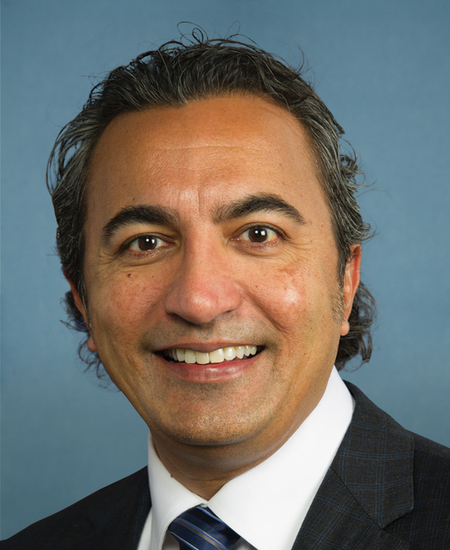
Rep. Ami Bera
Sponsored bills
Maddy summaryHR 9402, the NSF AI Education Act of 2024, creates new funding programs to expand artificial intelligence education across U.S. schools and colleges. It establishes scholarships and fellowships for undergraduate and graduate students in AI-related fields, with priority for programs focused on K-12 AI education, AI in manufacturing/agriculture, and outreach to rural institutions and Tribal Colleges. The bill also creates "Centers of AI Excellence" at community colleges and career technical schools to integrate AI into curricula and workforce development, and provides research funding specifically for AI teaching methods in K-12 schools serving low-income, rural, and Tribal communities. Additionally, it incorporates AI skills development into the National STEM Teachers Corps to prepare educators to teach AI concepts in classrooms.
Maddy summaryHR 9215, the Workforce for AI Trust Act, creates new fellowship programs at the National Science Foundation (NSF) to support graduate and postdoctoral researchers studying ethical AI development and governance. It requires institutions to recruit diverse candidates committed to "trustworthy AI" and funds tuition, stipends, and research expenses for up to three years. The bill also directs NSF to expand AI skills training for STEM students through workshops and professional development, while NIST is directed to develop technical standards for AI risk management careers like testing and evaluation. These provisions directly affect researchers, universities, and future AI professionals by building workforce capacity in ethics and governance.
Maddy summaryThe CREATE AI Act of 2023 establishes a National Artificial Intelligence Research Resource (NAIRR) to improve access to AI research tools, computational resources, data, and educational materials for researchers and students across the United States. The NAIRR will provide computational resources, curated datasets, educational tools, and access to AI testbeds, with special emphasis on supporting groups historically underrepresented in STEM fields. Governed by a Steering Subcommittee chaired by the Director of the Office of Science and Technology Policy and managed by a Program Management Office within the National Science Foundation, the NAIRR includes specific requirements for ethical AI development, privacy protections, and security measures. The resource will be accessible to researchers at U.S. institutions of higher education, nonprofits, government agencies, and certain businesses, with priority given to projects addressing privacy, ethics, civil rights, and AI safety.
Maddy summaryHRES 1432 designates September 10, 2024, as "National Firearm Suicide Prevention Day" to raise public awareness about firearm suicides and promote safe storage practices. The resolution encourages healthcare professionals to discuss safe firearm storage with patients and supports the day's goals of reducing firearm suicides through education. It directly affects the general public and healthcare providers by highlighting evidence that safe storage lowers suicide risk, referencing statistics like 54.6% of U.S. suicides in 2022 involving firearms. The bill is symbolic, with no new legal requirements, and aligns with existing awareness efforts like Firearm Suicide Prevention Day.
Maddy summaryHR 9529, the SAFER Nursing Homes Act of 2024 (despite its title referencing "Sustained Allocations" in the text), provides mandatory funding for inspections of nursing facilities participating in Medicare and Medicaid. It allocates $492 million for fiscal year 2025 specifically to support surveys and certifications of skilled nursing facilities and nursing facilities under federal programs. This funding directly affects Medicare/Medicaid-certified nursing homes by ensuring resources for required regulatory oversight. The bill does not create new rules but secures financial support for existing inspection processes, with future funding determined annually by the Health and Human Services Secretary.
Maddy summaryHR 7159, the Pacific Partnership Act, mandates the U.S. government to develop a comprehensive strategy for engagement with Pacific Island nations. It requires the President, by January 1, 2026, and every four years thereafter, to submit a detailed strategy to Congress outlining U.S. diplomatic, defense, and economic goals in the region, including assessments of threats like natural disasters, illegal fishing, and foreign military activity. The strategy must detail plans to address these threats, coordinate with Pacific Island governments and regional organizations like the Pacific Islands Forum, and outline required resources and staffing. This bill directly affects U.S. foreign policy operations and shapes how the federal government engages with Pacific Island nations on shared security, economic, and environmental priorities.
Maddy summaryHRES 1056 is a non-binding House resolution recognizing recent trilateral cooperation among the United States, Japan, and South Korea. It formally acknowledges specific collaborative efforts, including resumed summitry, joint military exercises, shared missile warning systems, economic partnerships, and coordinated responses to regional challenges like North Korea and crises in Sudan and Israel. The resolution does not create new policies or funding but expresses congressional support for strengthening this alliance framework. It highlights the importance of continued cooperation across diplomatic, security, and economic domains to promote stability in the Western Pacific. The resolution was introduced by multiple House members and referred to the Foreign Affairs Committee.
Maddy summaryThe HOPE Act of 2024 would establish HOPE Accounts, tax-advantaged savings accounts for paying qualified medical expenses. These accounts would allow individuals to save for medical costs with tax-free growth and distributions, with contribution limits of up to $4,000 per month for self-only coverage or $8,000 for family coverage. To qualify, individuals must have minimum essential health coverage and cannot have other health savings accounts like HSAs or FSAs. Contributions are generally not deductible but may be excluded from gross income for lower-income individuals, and distributions for qualified medical expenses would be tax-free. The bill also includes rules for employer contributions and coordination with existing health savings mechanisms.
Maddy summaryThe NO BAN Act (HR 9244) prohibits U.S. immigration authorities from denying visas or entry based on national origin, religion, or sex. It amends immigration law to explicitly ban such discrimination in visa decisions and tightens restrictions on the president’s power to suspend entry of certain groups under Section 212(f). The bill requires specific evidence, narrow tailoring, time limits, and congressional notification for any entry restriction, while mandating public reports on visa denials and waivers. It directly affects nonimmigrant visa applicants (e.g., students, workers) and federal agencies administering immigration policy.