

Maddy summaryHR 6245 requires the U.S. President to submit biennial reports detailing assets controlled by 21 specific Iranian officials (including the Supreme Leader, IRGC commanders, and intelligence ministers) and how those assets were obtained. The reports must identify foreign financial institutions maintaining accounts for these officials or providing them significant services. The Treasury Secretary must then direct U.S. financial institutions to close such accounts and prohibit services to these officials, while encouraging foreign institutions to do the same. The law expires after 5 years or if Iran ceases to be designated a "jurisdiction of primary money laundering concern" or provides significant cooperation on counterterrorism.
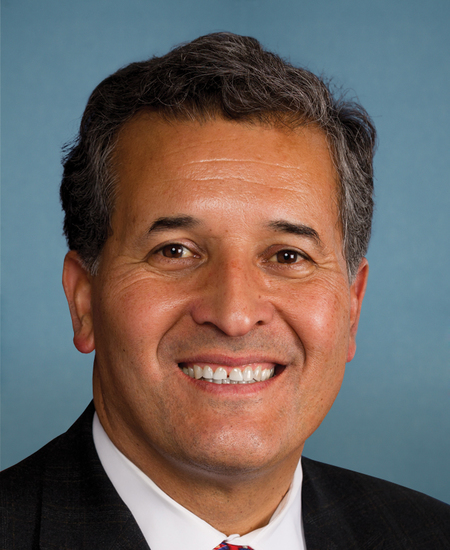
Rep. Juan Vargas
Sponsored bills
Maddy summaryHR 3303, the Maternal Health for Veterans Act, requires the Department of Veterans Affairs (VA) to annually report on maternity care coordination programs and maternal health outcomes for veterans receiving care through VA facilities or VA-contracted providers. The bill mandates the VA to collect data on maternal outcomes - including disparities affecting high-risk demographic groups - and submit recommendations to Congress by September 2028. It authorizes $15 million annually (2024-2028) for VA maternity care coordination programs, supplementing existing funding without reducing current resources. The law directly affects veterans using VA maternity services, aiming to improve care through data-driven strategies.
Maddy summaryThe BUILD for Veterans Act of 2023 requires the Department of Veterans Affairs to improve management of its physical infrastructure, including buildings, land, and related systems used to deliver services to veterans. The bill establishes specific requirements for better staffing, performance metrics, and strategic planning for capital asset management, with deadlines for reports to Congress. It mandates a comprehensive review of climate resilience for VA facilities and requires centralized management of asset disposal and reuse. These provisions aim to enhance the efficiency and effectiveness of VA's infrastructure management to better serve veterans.
Maddy summaryHRES 1148 is a resolution passed by the U.S. House of Representatives that condemns the Iranian government for supporting terrorism, regional proxy conflicts, and internal suppression of dissent - including its crackdown on protests following Mahsa Amini's death in 2022. It specifically calls for maintaining sanctions against Iran, supporting the Iranian Resistance's Ten-Point Plan (which advocates for a democratic, secular, nonnuclear Iran), and protecting Iranian political refugees in Albania. The resolution also affirms the Iranian people's right to self-determination under international law and urges the U.S. to recognize their struggle for freedom. As a non-binding resolution, it does not create new laws but formally expresses congressional stance.
Maddy summaryHR 6443, the Jamul Indian Village Land Transfer Act, directs the federal government to take approximately 172.1 acres of land owned by the Jamul Indian Village of California in San Diego County into trust for the tribe. The bill specifies four land parcels totaling this amount, which will become part of the tribe's reservation and be managed under federal trust laws. Crucially, the bill prohibits using this land for any class II or III gaming under the Indian Gaming Regulatory Act. This transfer directly affects the Jamul Indian Village by securing federal trust status for their existing landholdings.
This resolution recognizes the anniversary of the Civil Rights Act of 1866 and its impact on establishing that all Americans are protected equally under the law.
Maddy summaryThis bill directs the U.S. Treasury to instruct the U.S. representative at the International Monetary Fund (IMF) to immediately review and suspend IMF surcharges on member countries. It specifically targets the 200-300 basis point fees applied to IMF loans exceeding certain thresholds, which the bill states constitute up to 39% of debt payments for some nations like Ecuador and Egypt, and will cost Ukraine an estimated $1.5 billion in surcharges from 2024-2028. The review requires a 365-day analysis of surcharge impacts on national budgets (including health, education, and food security), effectiveness in reducing IMF credit risk, and potential unintended consequences like pushing countries toward predatory loans. The bill mandates this review be completed and results published within a year, with surcharges suspended during the process.
Maddy summaryThis bill authorizes federal grants to expand maternal health services in underserved communities. It directly affects public and nonprofit health care providers serving minority, low-income, or medically underserved areas, requiring them to improve prenatal, postnatal, and postpartum care while reducing racial and economic disparities. Key provisions include prioritizing community-led providers, limiting administrative costs to 10% of grant funds, and mandating culturally appropriate care. The grants, funded for fiscal years 2025-2029, aim to enhance health outcomes for mothers and infants in these communities through coordinated service delivery.
Maddy summaryHR 7812, the National Parent and Youth Helpline Act, creates a federal grant program to establish a 24/7 national toll-free helpline for parents, caregivers, and youth facing personal challenges like emotional distress, substance abuse, or educational concerns. The grant, worth $20 million annually from 2025-2030, will fund one nonprofit to operate the helpline (via phone, text, and chat), host weekly evidence-based support groups, and maintain a resource website. It specifically prioritizes serving diverse groups, including LGBTQ+ individuals, and requires annual performance reports to the Secretary and a congressional report after three years. The bill directly affects millions of parents and youth by providing accessible, trauma-informed support to strengthen families and prevent issues like child maltreatment.
Maddy summaryHR 7770, the Rosie the Riveter Commemorative Coin Act, authorizes the U.S. Mint to produce and sell three commemorative coins honoring women who worked on the U.S. home front during World War II. It specifies $5 gold coins (max 50,000), $1 silver coins (max 400,000), and half-dollar coins (max 750,000), all to be issued between January 1, 2025, and December 31, 2025. Each coin sale includes a surcharge ($35 for gold, $10 for silver, $5 for half-dollar), with all surcharge funds directed to the Rosie the Riveter Trust for maintaining the Rosie the Riveter WWII Home Front National Historical Park and educational programs. The coins will feature designs reflecting the legacy of diverse women workers and must meet specific weight, diameter, and composition standards.