

Maddy summaryHR 6462, the READINESS Act, helps federal employees who are spouses of military members or Foreign Service officers when their spouse receives a permanent relocation order. The bill requires federal agencies to offer these employees one of four options within 30 days: full-time remote work, a local transfer to a position of equal grade, a remote transfer, or unpaid leave for up to 36 months. Agencies must report all requests and actions taken annually to the Office of Personnel Management (OPM), with OPM then summarizing this data for Congress each year. This directly affects federal employee spouses facing relocation due to a service member's permanent duty station change, aiming to reduce employment disruption.
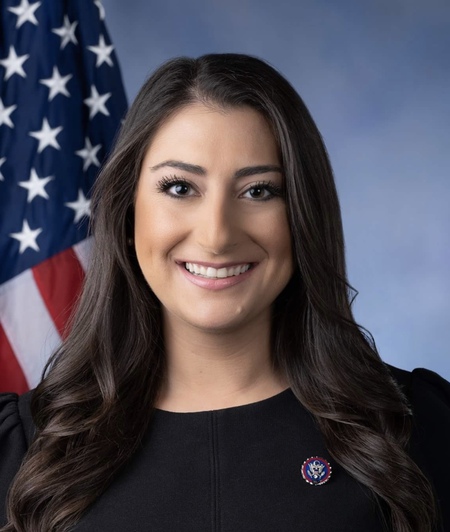
Rep. Sara Jacobs
Sponsored bills
Maddy summaryThis bill directs the Health and Human Services Secretary to fund research on early detection and treatment of uterine fibroids, with a focus on reducing health disparities. It authorizes grants to states for screening programs (including advanced imaging), patient navigation services, and public education campaigns - prioritizing areas with socially vulnerable populations at higher risk. States receiving funds must implement evidence-based strategies to improve access to early intervention. The bill also requires regular reports to Congress on grant outcomes and research findings related to fibroid treatment disparities and related conditions like Asherman’s Syndrome.
Maddy summaryHR 8309, the Global Internet Freedom Act, requires the U.S. State Department to add new details about internet restrictions to annual human rights reports. The bill amends the Foreign Assistance Act to mandate that these reports describe how countries create deliberate barriers to internet access (like shutting down connectivity or blocking protected content) and impose undue restrictions on online free expression or privacy violations. It directly affects the content of the State Department's annual Country Reports on Human Rights Practices, which are used to inform U.S. foreign policy. The law does not change U.S. policy or funding but specifies new reporting requirements about internet freedom globally.
Maddy summaryThis bill establishes the Project Turnkey Program, allocating $1 billion annually to fund affordable housing and homelessness services. It directly helps vulnerable populations including homeless individuals, those at risk of homelessness, and victims fleeing domestic violence or trafficking. Key provisions allow funds for rental assistance, rehabilitating vacant properties (like hotels and motels), supportive services, and shelter operations, while requiring states to use funds to supplement - not replace - existing local housing investments. The program runs through 2034 with specific rules to streamline housing development and expand capacity for community organizations.
Maddy summaryThis bill names a specific United States Postal Service facility at 24355 Creekside Road in Santa Clarita, California, as the "William L. Reynolds Post Office Building." It directly affects the physical location of this post office by changing its official designation. The key provision is a simple name change, with all existing references to the building in federal documents automatically updated to reflect the new name. This is a ceremonial designation with no policy or funding changes.
Maddy summaryHRES 1202 is a symbolic resolution expressing the U.S. House of Representatives' support for designating May 5-11, 2024, as Wildfire Preparedness Week. It encourages public education on fire safety, evacuation planning, and preventive measures like vegetation management and reducing human-caused ignitions (e.g., fireworks). The resolution does not create new laws or allocate funding but aims to raise awareness about wildfire risks, citing statistics on recent fires and health impacts from smoke exposure. It directly supports communities in wildfire-prone areas by promoting existing preparedness resources and educational initiatives. The resolution was introduced by Representatives Torres, Huffman, and Jacobs and referred to the Committee on Natural Resources.
Maddy summaryThe CROWN Act of 2024 prohibits discrimination based on hair texture or style commonly associated with race or national origin, such as braids, locs, cornrows, twists, or afros. It directly affects individuals - particularly people of African descent - who face workplace, school, housing, or public accommodation discrimination due to natural or protective hairstyles. The bill expands existing federal civil rights laws (like Title VI, the Fair Housing Act, and Title VII) to explicitly include hair-based discrimination, requiring compliance in federally funded programs, housing, employment, and public spaces. It clarifies that grooming policies targeting these hairstyles violate anti-discrimination protections without creating new legal standards.
Maddy summaryThis bill extends the reporting requirement under the 2018 Elie Wiesel Genocide and Atrocities Prevention Act from every six years to every twelve years. It directly affects U.S. government agencies responsible for producing these reports on global genocide and atrocities prevention efforts. The key change is a simple amendment to Section 5(a) of the 2018 Act, altering the frequency of mandatory government reporting. This is a procedural extension of existing obligations, not a new policy. The bill does not create new programs or affect specific groups.
Maddy summaryThe DROUGHT Act of 2024 increases federal funding for water infrastructure projects in areas facing severe drought or serving disadvantaged communities. It allows the Environmental Protection Agency to cover up to 90% of project costs (instead of standard limits) for projects in states or counties with severe drought (as defined by the U.S. Drought Monitor for 4+ weeks in the past 3 years or a governor's emergency declaration) or in communities designated as disadvantaged by EPA's screening tool or meeting state affordability criteria. The bill prioritizes projects that address both drought conditions and serve disadvantaged populations. This directly affects water infrastructure projects in eligible drought-impacted regions and communities with historical water access challenges.
Maddy summaryThis bill prohibits law enforcement and intelligence agencies from purchasing or obtaining certain personal records from data brokers or other third parties. It defines "covered records" as information about people in the US (including location data, communication contents, and online activity), requiring government agencies to follow FISA procedures to obtain such information. The bill also prohibits using illegally obtained records as evidence in court and limits how agencies can share such information. It directly affects data brokers who sell personal information and government agencies that seek to obtain personal data, strengthening privacy protections for US persons by requiring specific legal procedures.