

Madeleine K. Albright Democracy in the 21st Century Act This bill establishes programs to promote democracy abroad, authorizes Department of State and U.S. Agency for International Development (USAID) democracy programs from FY2023 through FY2027, and addresses related issues. The State Department must establish programs (1) to defend democracy globally, including by enhancing the ability of the State Department and USAID to respond quickly and flexibly to democratic openings and backsliding; (2) to support efforts to enhance government transparency and other activities related to reducing corruption; and (3) for democracy research and development, such as activities to drive innovation in State Department, USAID, and National Endowment for Democracy (NED) responses to complex challenges to democracy. The bill establishes the Democracy in the 21st Century Fund, to be administered by the State Department, to support the programs established by this bill and other related activities. U.S. government assistance for democracy programs shall not be subject to the prior approval of any foreign government. The bill also protects the identities of implementing partners of certain State Department, USAID, and NED assistance programs in countries that are undemocratic or have engaged in gross violations of civil and political rights, including by exempting the names of partners for democracy programs in such countries from Freedom of Information Act requests. The President must report to Congress a comprehensive strategy to promote democracy abroad.
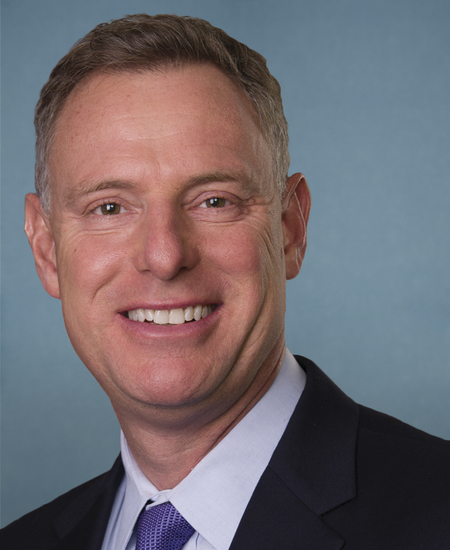
Rep. Scott H. Peters
Sponsored bills
No Cost for Monkeypox Testing Act of 2022 This bill requires specified public health care programs and private health insurance to cover, through December 31, 2023, testing for monkeypox without imposing cost-sharing, including deductibles, coinsurance, and copayments. (Monkeypox is a viral disease that is endemic to parts of Africa and causes symptoms similar to, but less severe than, smallpox.) The bill also establishes procedures for uninsured individuals to access such testing at no cost.
Save Our Sequoias Act This bill provides for the conservation of giant sequoia trees ( Sequoiadendron giganteum ) in California, including by providing statutory authority for the Giant Sequoia Lands Coalition; directing the coalition to submit a Giant Sequoia Health and Resiliency Assessment; declaring an emergency on certain public lands and allowing officials to carry out protection plans during the emergency to respond to the threat of wildfires, insects, and drought; directing the Department of the Interior to develop and implement a Giant Sequoia Reforestation and Rehabilitation Strategy; and establishing a variety of programs and funds to support the conservation of giant sequoias.
Harriet Tubman Bicentennial Commemorative Coin Act This bill directs the Department of the Treasury to mint and issue 50,000 $5 gold coins, 400,000 $1 silver coins, and 750,000 half-dollar clad coins emblematic of the legacy of Harriet Tubman as an abolitionist. The Secretary may issue coins under this bill only during the period of January 1, 2024, through December 31, 2024. All surcharges received by Treasury from the sale of such coins must be paid equally to the National Underground Railroad Freedom Center in Cincinnati, Ohio, and The Harriet Tubman Home, Inc. in Auburn, New York, for the purpose of accomplishing and advancing their missions.
National World War II Memorial Commemorative Coin Act This bill directs the Department of the Treasury to mint and issue up to 50,000 $5 coins, 400,000 $1 silver coins, and 750,000 half-dollar clad coins in commemoration of the National World War II Memorial in the District of Columbia. The design of the coins shall be emblematic of the memorial and the service and sacrifice of American soldiers and civilians during World War II. All surcharges received from the sale of such coins shall be paid to the Friends of the National World War II Memorial to support the National Park Service in maintaining and repairing the memorial, and for educational and commemorative programs.
This bill directs U.S. Customs Border and Protection to establish procedures for performing repairs and maintenance projects below a certain cost threshold at federally owned ports of entry where certain activities are conducted, such as entry inspections and activities to prevent the entry of illicit drugs, agricultural pests, and contraband.
Assault Weapons Ban of 2022 This bill makes it a crime to knowingly import, sell, manufacture, transfer, or possess a semiautomatic assault weapon (SAW) or large capacity ammunition feeding device (LCAFD). The prohibition does not apply to a firearm that is (1) manually operated by bolt, pump, lever, or slide action, except for certain shotguns; (2) permanently inoperable; (3) an antique; (4) only capable of firing rimfire ammunition; or (5) a rifle or shotgun specifically identified by make and model. The bill also exempts from the prohibition the following, with respect to a SAW or LCAFD: importation, sale, manufacture, transfer, or possession related to certain law enforcement efforts, or authorized tests or experiments; importation, sale, transfer, or possession related to securing nuclear materials; and possession by a retired law enforcement officer. The bill permits continued possession, sale, or transfer of a grandfathered SAW, which must be securely stored. A licensed gun dealer must conduct a background check prior to the sale or transfer of a grandfathered SAW between private parties. The bill permits continued possession of, but prohibits sale or transfer of, a grandfathered LCAFD. Newly manufactured LCAFDs must display serial number identification. Newly manufactured SAWs and LCAFDs must display the date of manufacture. The bill also allows a state or local government to use Edward Byrne Memorial Justice Assistance Grant Program funds to compensate individuals who surrender a SAW or LCAFD under a buy-back program.
Banning Oil Exports to Foreign Adversaries Act This bill requires the Department of Energy (DOE) to prohibit the export or sale of petroleum products (e.g., crude oil) from the Strategic Petroleum Reserve to (1) China, North Korea, Russia, and Iran; (2) any other country the government of which is subject to sanctions imposed by the United States; and (3) any entity owned, controlled, or influenced by such countries or the Chinese Communist Party. However, DOE may issue a waiver of the prohibition if the export or sale of petroleum products is in the national security interests of the United States.
Gabriella Miller Kids First Research Act 2.0 This bill reauthorizes through FY2027 a pediatric disease research initiative within the National Institutes of Health (NIH) and requires the NIH to coordinate pediatric research activities to avoid duplicative efforts. Additionally, the Department of Health and Human Services must report, within five years, to Congress about research funded through the initiative.
Atrocity Crimes, Relief and Accountability Act or the ACRA Act The bill requires the State Department and the U.S. Agency for International Development to provide assistance to suspected victims, survivors, and witnesses of war crimes; establishes a Ukraine victims trust fund; and establishes a Ukraine atrocity crimes rewards fund. The bill also allows the International Criminal Court to conduct limited activities in the United States relating solely to foreign nationals suspected of committing war crimes in Ukraine.