

Maddy summaryThe Clean Energy Minerals Reform Act of 2023 establishes a new regulatory framework for hardrock mineral mining on federal lands, replacing the 1872 Mining Law. It requires permits for exploration and operations, imposes new royalty rates (minimum 8-12.5% of gross value), and creates a new Abandoned Hardrock Mine Reclamation Program funded by fees and royalties. The bill establishes a "small miner's lease" program with reduced fees for small operations (up to 200 acres) and requires financial assurance to cover reclamation costs. It also mandates consultation with Indian Tribes before mineral activities that may impact tribal lands or resources, and prohibits mining in protected areas including National Parks, wilderness areas, and sacred sites. The bill applies to all existing mining claims and new mineral activities on federal lands, with new rules taking effect upon enactment.
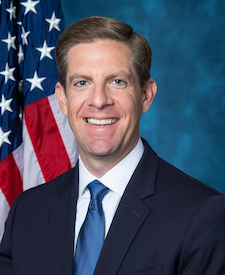
Rep. Mike Levin
Sponsored bills
Maddy summaryHR 3537 authorizes the minting of commemorative coins to mark the 100th anniversary of the U.S. Foreign Service, established by the 1924 Rogers Act. The bill specifies three coin types ($5 gold, $1 silver, and half-dollar clad) with limited mintage (50,000 gold, 400,000 silver, 750,000 half-dollars) to be issued in 2025, featuring designs honoring diplomatic history. A surcharge on each coin sale ($35 for gold, $10 for silver, $5 for half-dollars) will fund the Association for Diplomatic Studies and Training (ADST) to support its oral history program and diplomatic preservation efforts. The coins will be legal tender, sold at cost-plus-surcharge, with all revenue directed to ADST per the bill's provisions.
Maddy summaryThis bill directs the Department of Homeland Security to create a threat assessment on how terrorists and foreign actors use cyber harassment - including doxing - to threaten individuals. The assessment must detail tactics, notable incidents, and risk indicators for law enforcement, while coordinating with privacy offices. It requires DHS to share the report with Congress within 180 days and publish it online, with state/local law enforcement receiving it via fusion centers. The bill does not create new laws or penalties but focuses on information gathering about existing threats. (Procedural bill; summary limited to key action and scope.)
Maddy summaryHCONRES 44 is a non-binding congressional resolution urging the creation of a U.S. Commission on Truth, Racial Healing, and Transformation. It does not establish the commission itself but calls for its formation to acknowledge historical injustices against Black, Indigenous, and other people of color - including systemic discrimination in housing, Social Security, the GI Bill, and land policies - and to address ongoing racial inequities. The resolution emphasizes the need to dismantle the "belief in a hierarchy of human value" and promote racial healing as a national priority. It complements ongoing efforts like H.R. 40 (a bill to study reparations) but does not create new legal requirements or funding.
Maddy summaryThis bill would prevent the leasing of Federal lands for oil and gas development when there's low or no potential for such development. It requires the Secretary of the Interior to first complete a "reasonably foreseeable development scenario" that assesses oil and gas potential before offering land for lease, with public participation required in this process. The bill would stop offering for lease land designated as low or no potential, with limited exceptions for preventing drainage from adjacent producing wells, affecting how public lands and National Forest System lands are managed for oil and gas leasing.
Maddy summaryHRES 319 is a symbolic resolution passed by the U.S. House of Representatives on April 24, 2023, recognizing the federal government's duty to develop a Green New Deal. It states the House believes the government should create a comprehensive plan to address climate change and economic inequality through a 10-year national mobilization. The resolution outlines goals like achieving net-zero emissions by 2050, creating high-wage union jobs, upgrading infrastructure, and prioritizing frontline communities, but it does not establish binding policy or funding mechanisms. As a non-binding resolution, it serves as a statement of legislative intent rather than a law.
Maddy summaryThe FEND Off Fentanyl Act (HR 3333) establishes new sanctions targeting foreign persons and transnational criminal organizations involved in fentanyl trafficking, specifically naming Mexican cartels like the Sinaloa Cartel and Jalisco New Generation Cartel. It authorizes the President to block transactions with individuals facilitating fentanyl trafficking and requires annual reports to Congress on enforcement actions. The bill also designates fentanyl-related transactions as a primary money laundering concern for financial institutions and extends the statute of limitations for sanctions violations to eight years. These measures aim to disrupt fentanyl trafficking networks by targeting both the drug flow and the financial mechanisms supporting them.
Maddy summaryHR 3255, the Freight Rail Workforce Health and Safety Act, requires major freight railroads (Class I carriers) to provide employees with at least 7 days of paid sick leave annually. This includes leave for personal illness, family care, preventive medical visits, and situations related to domestic violence, sexual assault, or stalking. Employees can carry over unused days to the next year, and railroads cannot require workers to find replacements before taking leave or penalize them for using it. The law prohibits retaliation, such as termination or demotion, for requesting or using sick leave, and ensures paid sick leave is separate from existing vacation or holiday time.
Maddy summaryThe PAST Act of 2023 amends the Horse Protection Act to ban specific devices used to cause pain (soring) in horses at shows, particularly affecting Tennessee Walking Horses, Racking Horses, and Spotted Saddle Horses. It defines prohibited "action devices" (like boots or chains causing friction) and requires licensed, conflict-free inspectors at events to enforce rules. The bill increases penalties for violations to up to $5,000 fines or 3 years in jail, and mandates longer disqualifications for repeat offenses (180 days → 1 year → 3 years). Horse show organizers, exhibitors, and participants must comply with these new inspection and penalty requirements.
Reservist Pay Equity Act of 202 3 This bill increases the rate of the differential wage payment tax credit from 20% to 50% and requires that the maximum dollar amount of such credit be adjusted for inflation after 2023. The credit is allowed to employers for their employees who are active duty members of the uniformed services.