

Food Supply Chain Capacity and Resiliency Act This bill allows the Department of Agriculture (USDA) to expand the Food Supply Chain Guaranteed Loan Program. The program may guarantee loans to support new investments in the start-up or expansion of projects in the United States that will increase U.S. food supply chain capacity to aggregate, process, manufacture, store, transport, wholesale, or distribute food. In awarding loan guarantees under this bill, USDA must give preference to loans for projects that create jobs in economically distressed communities or to help create a more resilient, diverse, and secure U.S. food supply chain. USDA must prescribe such regulations as may be necessary to carry out this program. The bill specifies that USDA must use the amounts made available to carry out this bill to supplement, and not supplant, funds provided under other federal, state, or local law.
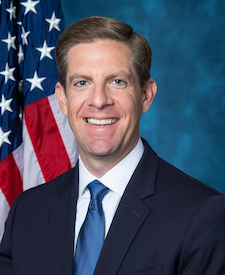
Rep. Mike Levin
Sponsored bills
Maddy summaryHR 4889, the Raise the Wage Act of 2023, would gradually increase the federal minimum wage for most workers to $15.50 per hour by 2027, with specific annual targets: $9.50 starting in 2023, rising to $11.00 after one year, $12.50 after two years, and $15.50 after four years. It would also phase out the separate lower minimum wage for tipped employees (starting at $6.00/hour) by aligning their pay with the regular minimum wage by 2028, while requiring employers to let workers keep all tips. The bill includes similar phased increases for workers under 20 and transitions toward fairer wages for workers with disabilities under special certificates, which would sunset after 2028. Future annual increases after 2028 would tie the minimum wage to the median hourly wage of all workers.
Maddy summaryThis bill requires large U.S. insurance companies (those collecting $100 million+ in annual premiums) to annually disclose all investments and insurance policies tied to fossil fuel industries - including coal, oil, gas extraction, and related infrastructure. Companies must report specific details like maximum financial exposure and policy amounts for each fossil fuel-related investment and policy. Federal agencies will use this data to monitor financial risks to consumers and the broader economy, and the public will access a searchable annual database of all disclosed information. The law directly affects major insurers regulated by the Federal Insurance Office, mandating transparency around their fossil fuel ties.
Maddy summaryHR 4157, the "Not Just a Number Act," requires the Department of Veterans Affairs (VA) to produce annual reports on veteran suicide rates and their connection to VA healthcare and benefits. The reports must break down suicide rates by age, gender, and race, and examine how engagement with VA services (like Vet Centers, healthcare enrollment, benefits claims, and housing loans) correlates with suicide trends. The bill also mandates a VA toolkit for state/local coroners to improve veteran suicide death reporting, and a study on creating a dedicated VA suicide prevention office. These measures aim to standardize data collection and identify effective prevention strategies, directly affecting VA operations, congressional oversight, and veteran care systems.
Maddy summaryThe CHIPP Act (HR 4771) permanently extends federal funding for the Children's Health Insurance Program (CHIP), which provides health coverage to low-income children in families that earn too much to qualify for Medicaid but cannot afford private insurance. It removes previous expiration dates (like 2029) from CHIP funding provisions, ensuring continuous support for states administering the program. The bill also permanently extends related programs, including pediatric quality measures funding with automatic inflation adjustments, and modifies eligibility rules to allow states to expand coverage for children in higher-income households. This affects all 50 states that run CHIP programs and the millions of children and families who rely on this coverage.
Maddy summaryHR 4769, the PFAS Alternatives Act, funds research and training to develop PFAS-free turnout gear for firefighters. It authorizes $25 million annually (2024-2028) for grants to eligible organizations to research, develop, and test next-generation gear without per- and polyfluoroalkyl substances (PFAS), which are linked to firefighter cancer risks. The bill requires partnerships with firefighting organizations to ensure research translates into practical training and gear care guidance, including decontamination protocols. It also allocates $2 million yearly for training programs on proper gear use and maintenance, aiming to reduce exposure to hazardous chemicals during fire operations.
Maddy summaryHR 4663, the Federal Mechanical Insulation Act, defines "mechanical insulation" (insulation around pipes and equipment in federal buildings) as an eligible energy efficiency measure. It requires federal agencies to include mechanical insulation in their required energy and water evaluations, specifically mandating that evaluations identify this insulation as a potential efficiency measure. The bill specifies that such insulation must meet minimum standards under Reference Standard 90.1 to qualify. This change directly affects federal building managers and contractors by formally recognizing mechanical insulation as a standard efficiency option in compliance with existing energy conservation laws.
Strengthening Efforts to End Violence Against Children Act of 2023 This bill modifies the framework for providing foreign aid to programs that support vulnerable children by expanding the goals of these programs and requiring additional reports. Specifically, aid may be provided to programs that (1) support family care for vulnerable children and extend protective services to children living outside of family care; (2) promote the protection of children from violence, exploitation, abuse, and neglect through preventative and responsive programming; and (3) provide lifesaving protection and interventions for vulnerable children in emergency settings. The bill also requires the President, among other reporting requirements, to develop and submit to Congress a strategy for coordinating, implementing, and monitoring assistance programs for children in adversity, submitting a review to Congress every 4 years afterwards.
This resolution (1) recognizes the Latino community’s commitment to conservation and the importance of getting outdoors, and (2) supports the designation of Latino Conservation Week.
Maddy summaryH.J.Res. 25 would remove the 1979 deadline for states to ratify the Equal Rights Amendment (ERA), which was originally proposed in 1972. This bill directly affects states that ratified the ERA after the deadline (such as Nevada, Illinois, and Virginia in 2017-2018) by making their ratifications legally valid. The key provision states that the ERA is valid as part of the Constitution if ratified by three-fourths of states, regardless of the original deadline. The bill does not create new rights but aims to finalize the constitutional amendment process by eliminating the time limit.