

Maddy summaryHR 7634, the Plastic Pellet Free Waters Act, prohibits plastic pellets and pre-production plastic materials from being discharged into water through wastewater, spills, or runoff from specific facilities. It directly affects plastic polymer production facilities, plastic molding and forming facilities, and any point source (like packaging or transport operations) handling plastic pellets. The bill requires the EPA to issue a final rule within 60 days of enactment banning these discharges and updating all relevant wastewater, stormwater, and performance standards in permits and regulations. This creates a legal requirement for facilities to prevent plastic pellet pollution in waterways, targeting a major source of ocean plastic pollution.
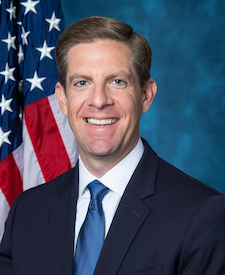
Rep. Mike Levin
Sponsored bills
Maddy summaryHRES 1074 is a symbolic House resolution reaffirming congressional support for a two-state solution to the Israel-Palestine conflict. It explicitly states the House supports Israel's right to exist as a Jewish, democratic state and recognizes Palestinians' right to sovereignty through a separate state. The resolution identifies a two-state solution as the best path to lasting peace and condemns efforts opposing this approach. As a non-binding resolution, it does not create new law or policy but formally expresses the House's position on this issue. It was introduced by multiple House members on March 12, 2024.
Maddy summaryHR 7629, the Protect Our Letter Carriers Act of 2024, allocates $1.4 billion annually (2025-2029) to the U.S. Postal Service for high-security collection boxes and replacing physical universal mailbox keys with electronic versions, directly affecting USPS operations and letter carriers. It requires the Attorney General to appoint specialized prosecutors in each district to coordinate investigations and prosecutions of postal-related crimes, such as assaults on carriers or mail theft. The bill also mandates the U.S. Sentencing Commission to adjust guidelines so that assaults or robberies against postal employees are treated with the same severity as assaults against law enforcement officers. These provisions aim to enhance safety through infrastructure upgrades, improved prosecution, and stricter sentencing for crimes targeting postal workers.
Long-term Opportunities for Advancing New Studies for Biomedical Research Act or the LOANS for Biomedical Research Act This bill requires the Department of the Treasury to establish the BioBonds Program to support loans for clinical trials for eligible drugs and medical devices for unmet medical needs. Under the program, fiscal agents purchase loans (up to $25 million per recipient) and issue collateralized bonds that are sold to investors and that are guaranteed by Treasury. An eligible borrower under this program is one conducting (or seeking to conduct) research related to a drug or device that is (1) intended to meet an unmet medical need; and (2) under investigation in certain types of controlled clinical trials, including a trial to investigate the safety and effectiveness of the drug or device. The Government Accountability Office (GAO) and Treasury must report on the program; GAO must also study whether similar programs should be established for other biomedical research projects.
Maddy summaryThe ZEVs Act of 2024 requires automakers selling over 100 new passenger vehicles annually in the U.S. to gradually increase sales of zero-emission vehicles (ZEVs), starting with 43% of new passenger vehicle sales in 2027 and reaching 100% by 2035. Manufacturers must meet these targets using a credit system: they earn credits for each ZEV sold or can purchase credits from others, with unused credits bankable for up to five years. The bill sets annual, increasing percentage targets (e.g., 51% in 2028, 88% in 2033) and imposes civil penalties for noncompliance, including fines equal to twice the value of missing credits. After 2035, manufacturers must sell only ZEVs, with the EPA enforcing these requirements through penalties and potential injunctions.
Maddy summaryThe Degrees Not Debt Act of 2024 amends the Federal Pell Grant formula to increase the maximum award for the 2024-2025 and 2025-2026 academic years to $14,800, reduced by the previous year's maximum grant amount. Starting in 2026-2027, the maximum grant will be adjusted annually for inflation (using the Consumer Price Index) and then reduced by the prior year's maximum. This bill directly affects low-income undergraduate students who qualify for Pell Grants by raising the maximum award and tying future increases to inflation. The policy change updates the Higher Education Act of 1965 to modernize Pell Grant calculations.
Maddy summaryThe Assad Regime Anti-Normalization Act of 2023 amends the Caesar Syria Civilian Protection Act to expand sanctions against individuals and entities supporting the Assad regime in Syria. It targets those who provide financial or material support to the regime, divert humanitarian aid, seize property, or engage with Syria Arab Airlines or Cham Wings. The bill prohibits U.S. officials from recognizing or normalizing relations with the Assad regime and requires the administration to develop a strategy to counter other countries' engagement with Syria. It also mandates annual reports on diplomatic meetings with Syria, transactions involving Syria, and how the Assad regime manipulates UN operations in Syria.
Maddy summaryThis bill updates the BEACH Act to improve monitoring of water quality at public beaches and coastal recreation areas. It expands the definition of monitored waters to include nearby shallow upstream areas and locations "present on" beaches, and allows states using federal grants to identify specific pollution sources. The bill also extends annual funding for these programs from $30 million per year through 2029 (replacing the previous 2001-2005 authorization) and requires the EPA to incorporate new water testing technologies into its guidance for states. These changes directly affect states and local governments receiving EPA grants for beach water quality monitoring.
Maddy summaryHR 7197, the Artificial Intelligence Environmental Impacts Act of 2024, requires the Environmental Protection Agency (EPA) to conduct a comprehensive study on AI's environmental footprint - including energy use, water consumption, e-waste, and pollution across AI models' full lifecycle - and to solicit public input. It establishes a voluntary reporting system for AI companies (voluntary reporting entities) to share data on their environmental impacts, supported by guidelines developed with a stakeholder consortium focused on creating measurement standards. The bill mandates a 4-year report to Congress detailing the consortium’s findings, the reporting system’s design, and recommendations for future action to address negative impacts or promote positive ones. This legislation does not impose mandatory regulations but aims to build data and standards for informed decision-making about AI’s environmental effects.
Maddy summaryHR 7116, the Do Not Disturb Act, updates federal rules to combat robocalls and deceptive telemarketing. The bill requires clear disclosure when AI is used to mimic human voices in calls or messages, enhances penalties for AI impersonation scams, and mandates free robocall-blocking services for consumers. It also creates a tracking system for the top 100 illegal robocall campaigns and expands telemarketing regulations to include text messages, applying to telecommunications providers, VoIP services, and businesses making automated calls or sending text messages.