

Maddy summaryThis resolution (HRES 1131) is a symbolic House measure celebrating Hindu Americans and condemning anti-Hindu hate. It recognizes Hinduism’s global significance and Hindu Americans’ contributions to U.S. society, including cultural, economic, and spiritual impacts like yoga and Ayurveda. The resolution specifically condemns Hinduphobia, anti-Hindu bigotry, hate crimes targeting places of worship (mandirs), and discrimination faced by Hindu Americans, referencing rising FBI-reported hate crimes. As a non-binding resolution, it does not create new laws or allocate funds but aims to affirm support for Hindu Americans through public declaration.
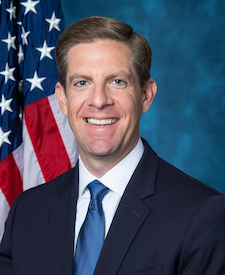
Rep. Mike Levin
Sponsored bills
Maddy summaryHR 7892, the Student Loan Contract Act of 2024, requires that master promissory notes for federal student loans under Part D of the Higher Education Act be officially called "student loan contracts" starting after the bill's enactment. It clarifies that these contracts apply only to loans within the same award year as the initial loans covered by the contract. The bill makes this terminology change and updates related references in the Higher Education Act, but does not alter loan terms, repayment conditions, or borrower obligations. This is a procedural adjustment to standardize document naming and administrative references.
Maddy summaryHR 7862 directs federal agencies to annually report on converting unused government-owned buildings into affordable housing. It establishes two grant programs: a $1.75 million annual grant for exploring office-to-residential conversions, and a $250 million annual program for states and local governments to convert underutilized public buildings into rental housing. The state/local program requires converted housing to maintain affordability for 30 years, with at least 20% of units reserved for households earning ≤50% of local median income, or 40% for households ≤60% of median income. This bill directly affects federal agencies (through reporting) and state/local governments (through grant funding), focusing on repurposing vacant public property to expand affordable housing options.
Maddy summaryHR 7849, the Disaster Resiliency and Coverage Act of 2024, establishes a federal grant program to help homeowners in high-risk disaster areas make their homes more resilient. The program provides up to $10,000 per household (adjusted annually for inflation) for specific qualifying mitigation activities, such as reinforcing roofs, installing flood barriers, or creating fire-resistant landscaping. Homeowners must have an adjusted gross income under $250,000 ($500,000 for joint filers) and the work must meet FEMA-established standards. States and tribal governments administer the program, with funds intended to incentivize insurance companies to offer or increase coverage in vulnerable areas.
Maddy summaryThis is a commemorative resolution (HRES 1100) passed by the U.S. House of Representatives to mark Duke University's 100th anniversary. It formally celebrates Duke's founding in 1924, recognizes its historical milestones (including medical advancements, desegregation, and athletic achievements), and encourages North Carolina residents to participate in anniversary events. The resolution directs the House Clerk to provide five copies to Duke University President Vincent E. Price. As a symbolic gesture with no policy impact, it directly affects Duke University and its community through recognition, not legislative action.
Maddy summaryHR 7770, the Rosie the Riveter Commemorative Coin Act, authorizes the U.S. Mint to produce and sell three commemorative coins honoring women who worked on the U.S. home front during World War II. It specifies $5 gold coins (max 50,000), $1 silver coins (max 400,000), and half-dollar coins (max 750,000), all to be issued between January 1, 2025, and December 31, 2025. Each coin sale includes a surcharge ($35 for gold, $10 for silver, $5 for half-dollar), with all surcharge funds directed to the Rosie the Riveter Trust for maintaining the Rosie the Riveter WWII Home Front National Historical Park and educational programs. The coins will feature designs reflecting the legacy of diverse women workers and must meet specific weight, diameter, and composition standards.
Maddy summaryHR 5247, the Expedited Hiring for VA Trained Psychiatrists Act of 2023, allows the Veterans Health Administration (VA) to hire psychiatrists who complete VA-residency programs without following standard civil service hiring rules. The bill permits immediate appointment after residency completion (or before, if the process begins early) for positions that have remained unfilled for at least 35 days. This directly affects VA psychiatrists completing specific residency programs and streamlines their hiring into VA clinical roles.
Maddy summaryThe Protecting Students on Campus Act of 2024 requires colleges and universities receiving federal funds to prominently display links to file discrimination complaints (based on race, color, or national origin) on their websites and post annual awareness materials about Title VI rights in high-traffic campus locations. It mandates schools to submit annual reports detailing discrimination complaints received, their analysis, and actions taken. The bill also prevents the Department of Education’s civil rights office from dismissing complaints resolved through school internal processes. These requirements aim to improve transparency and accessibility for students reporting discrimination, directly affecting all institutions of higher education receiving federal funding.
Maddy summaryThis bill (HR 7723) amends campaign finance law to prevent political campaigns from automatically charging donors for recurring contributions without explicit permission. It requires campaigns to obtain active, affirmative consent (like checking a box) before setting up recurring donations - preventing donors from being charged simply by not unchecking a pre-checked box. Campaigns must provide clear receipts showing future charges and include easy cancellation instructions in all communications. The law directly affects federal election campaigns, independent expenditure groups, and electioneering communication funders by changing how they solicit and manage recurring donations.
Maddy summaryHR 7698 establishes a new Office of Civic Bridgebuilding within the Corporation for National and Community Service to support programs reducing polarization and improving social cohesion. It authorizes $25 million annually (2025-2027) for competitive grants to nonprofits, community groups, and educational institutions to fund projects addressing local needs like healthcare gaps or environmental concerns through research-backed methods. Grantees must demonstrate how projects engage diverse communities, ensure participant safety (especially for marginalized groups), and use standardized metrics to track effectiveness. The Office will oversee grants, support training, and maintain a public research base on civic bridgebuilding best practices.