

Maddy summaryThis bill amends the tax code to exclude veteran disability compensation or pension payments (from Title 38, U.S. Code) when calculating income for two housing programs: the Low Income Housing Tax Credit and Qualified Residential Rental Project Bonds. It directly affects veterans receiving these disability payments who apply for or qualify for these housing tax benefits. The key provision adds a specific exclusion to the income calculation rules, ensuring these veteran payments are not counted as income for eligibility purposes. This change simplifies the income determination process for veterans seeking housing assistance through these federal programs. The amendment applies to income determinations made after the bill's enactment date.
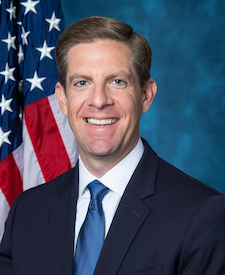
Rep. Mike Levin
Sponsored bills
Maddy summaryThe Nuclear Waste Administration Act of 2024 establishes a new independent agency, the Nuclear Waste Administration, to manage the permanent disposal of nuclear waste, transferring responsibilities from the Secretary of Energy. It creates a consent-based siting process requiring agreements with states, local governments, and tribes before building facilities, and establishes a Working Capital Fund to ensure waste generators pay the full cost of disposal. The bill sets specific deadlines for developing storage facilities by 2034 and repositories by 2060, while requiring environmental reviews, public input, and oversight through a new Nuclear Waste Oversight Board. This new agency will oversee all aspects of nuclear waste management, including transportation, storage, and disposal, with accountability measures including annual reports and public transparency.
Maddy summaryHR 3433, the "Give Kids a Chance Act of 2024," requires pharmaceutical companies developing certain cancer drugs to conduct pediatric studies if the drugs target molecular pathways relevant to childhood cancers. It directly affects drug manufacturers submitting new applications for cancer treatments, particularly those combining previously approved adult cancer drugs or containing a single new active ingredient. The bill amends FDA regulations to mandate these pediatric investigations only when specific conditions are met, such as when a drug's molecular target is relevant to pediatric cancer growth. The FDA must issue implementing guidance within 12 months, and reports to Congress will track implementation and effectiveness starting 2 years after enactment.
Maddy summaryHR 9760 establishes a federal grant program to help communities prepare for wildfires. It provides up to $10 million per project for eligible entities (like states, tribes, or local governments) to implement or develop community wildfire resilience plans. These plans must include strategies like clearing vegetation near homes (defensible space), protecting vulnerable residents, hardening critical infrastructure, and coordinating with local agencies. The program authorizes $1 billion annually from 2024-2028, prioritizing high-risk areas identified through federal maps, and requires annual reports on radio communication gaps for wildfire response.
Maddy summaryThe SERVE Act expands eligibility for Veterans Affairs benefits to former service members discharged due to sexual orientation or gender identity (including gender dysphoria). It directly affects veterans who received entry-level separations, honorable discharges, or other-than-honorable discharges for these reasons, making them eligible for VA hospital care, mental health counseling at Vet Centers, national cemetery interment, education benefits, and housing loans. The bill amends existing VA benefit statutes to include this group by adding specific language to each relevant provision. It also requires the VA to conduct outreach to inform affected veterans and submit a report tracking benefit usage by demographic categories within 15 months of enactment.
Maddy summaryThis bill amends the Justice for United States Victims of State Sponsored Terrorism Act to establish a fifth round of payments for eligible victims of state-sponsored terrorism, requiring all authorized payments to be distributed by December 31, 2024. It directs specific funds into the Victims of State Sponsored Terrorism Fund, including $898 million from the Binance case settlement and 50% of annual unobligated balances from DOJ and Treasury forfeiture funds starting December 1, 2024. The bill mandates annual payments beginning January 1, 2025, for eligible claimants and requires the Special Master to submit annual reports on fund activity to Congress, including detailed deposit and disbursement records. It directly affects victims of state-sponsored terrorism, the Special Master administering the fund, and federal agencies managing forfeiture funds.
Maddy summaryHRES 1464 is a symbolic House resolution recognizing the Latino community's engagement in outdoor recreation and conservation efforts. It expresses support for designating the third week of September as "Latino Conservation Week" to highlight community involvement in protecting natural resources. The resolution does not create new laws or allocate funds; it is purely a statement of recognition. It aims to acknowledge existing community activities like park cleanups and educational events focused on environmental stewardship.
Maddy summaryHR 9660, the SEEK HELP Act, provides legal protections for individuals responding to opioid overdoses. It shields people from civil lawsuits for administering opioid reversal drugs (like naloxone) in good faith and protects those seeking medical help during overdoses from criminal prosecution or asset forfeiture related to drug possession. The bill requires the federal government to run public awareness campaigns about these protections and allows states to use grant funds for overdose response education. It also mandates a GAO report to evaluate how effectively these protections encourage overdose reporting and reduce fatalities. The law directly affects bystanders, emergency responders, and law enforcement officers handling overdose situations.
Maddy summaryThis bill establishes two programs to improve water quality in the Tijuana River and New River watersheds that flow across the US-Mexico border. It requires the EPA to develop action plans for restoration, prioritize projects to manage wastewater and stormwater, and coordinate with US and Mexican entities. The bill authorizes $50 million annually from 2025-2035 for projects including natural infrastructure, water reuse, and stormwater management. These programs directly affect communities in southern California, particularly Imperial Beach and San Diego, as well as communities in Tijuana and Mexicali, Mexico, aiming to protect public health and ecosystems.
Maddy summaryThis bill expands online privacy protections under the Children's Online Privacy Protection Act to cover teens aged 12-17, in addition to children under 13. It requires website and app operators to obtain verifiable consent from parents for children and from teens themselves before collecting personal information. The bill restricts operators from using collected data for individual-specific advertising to children or teens and mandates clear notices about data practices. Operators must provide users with the right to access, delete, and correct personal information they've collected. These requirements apply to websites, online services, and mobile applications that collect information from children or teens or have actual knowledge a user is a child or teen.