

Maddy summaryThis bill requires the Secretary of Energy to determine if proposed natural gas exports to foreign countries are "consistent with the public interest" before approving them. To make this determination, the Secretary must evaluate three specific assessments: (1) climate impacts using full lifecycle emissions data and methane's 20-year warming potential, (2) economic effects on specific consumer groups like low-income households and manufacturers, and (3) environmental justice concerns affecting vulnerable communities. The Secretary must complete this review within one year of receiving the Federal Energy Regulatory Commission's environmental impact statement. The law also mandates public participation opportunities and treats export approvals as "major Federal actions" under environmental law.
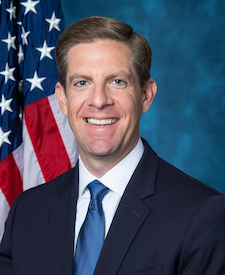
Rep. Mike Levin
Sponsored bills
Maddy summaryThe STORE Nuclear Fuel Act of 2024 establishes a federal program to create interim storage facilities for spent nuclear fuel and high-level radioactive waste, primarily affecting nuclear power plant operators (contract holders) and communities hosting potential sites. It requires the Secretary to prioritize "priority waste" (including waste from permanently shut-down reactors and emergency deliveries) and mandates a consent-based approval process requiring agreements with states, local governments, and tribes before selecting a site. The bill also delays fee collection from nuclear waste generators until the Nuclear Regulatory Commission approves repository construction, and limits annual funding for interim storage to 25% of interest from the nuclear waste fund. This addresses the lack of long-term disposal options while providing a temporary storage solution for waste currently stored at power plants.
Maddy summaryThis bill expands the U.S. Department of Veterans Affairs' (VA) authority to fund organizations that assist homeless veterans. It allows VA grants to cover help with accessing VA benefits (like disability compensation) and coordinating non-VA benefits from government programs or private nonprofits. The change also explicitly includes "conversion of units to permanent housing" as a valid use of grant funds under existing criteria. This directly affects homeless veterans seeking support and the service organizations providing housing and benefit navigation assistance.
Maddy summaryThis bill modifies how disability benefits are treated for homeless disabled veterans seeking housing assistance. It excludes certain disability payments (under Chapter 11 or 15 of Title 38, U.S. Code) from income calculations when determining eligibility for HUD-assisted housing programs, including the supported housing program under Section 8(o)(19) and housing on Department property. Specifically, it ensures these benefits are not counted toward income for housing eligibility, though they still count for "adjusted income" definitions. The bill directly affects disabled veterans applying for HUD housing assistance who receive these specific disability benefits. It makes a concrete change to income calculation rules without altering benefit amounts or creating new funding.
Maddy summaryThis bill amends VA policy to allow headstones or markers for cremated veterans buried alongside other eligible veterans. It specifically permits the VA to provide such markers when the cremated veteran shares a burial site with another eligible veteran (per 38 U.S.C. §2402(a)), the marker includes both individuals' names, and the cost does not exceed current limits. The change directly affects cremated veterans interred with other eligible veterans at VA cemeteries. It does not expand eligibility but adjusts how existing markers are provided under specific conditions.
Maddy summaryHR 9819, the Saving Our Veterans Lives Act of 2024, establishes a program through the Department of Veterans Affairs (VA) to provide eligible veterans with secure firearm lock boxes upon request. The bill defines "covered items" as U.S.-made, ASTM-compliant lock boxes designed to prevent unauthorized access, which veterans receive free of charge along with information on secure storage options. It explicitly states the program does not require firearm storage, registration, or affect veterans' legal right to own firearms, and prohibits the VA from collecting personal data or creating participant lists. The VA is authorized $5 million annually (2025-2035) to fund the program, develop educational materials, and run a public campaign promoting safe storage as a suicide prevention strategy.
Maddy summaryThe VA Employee Fairness Act of 2024 modifies collective bargaining rules for employees of the Veterans Health Administration (VHA). It removes existing subsections (b), (c), and (d) from the law governing VHA employee bargaining and renumbers the remaining provision. This change streamlines the collective bargaining framework but does not alter the Secretary of Veterans Affairs' existing authorities over incentive pay and expedited hiring. The bill directly affects VHA employees by changing how their collective bargaining rights are structured under federal law. The law remains neutral, focusing solely on procedural adjustments to the existing bargaining framework.
Maddy summaryThe GROW Act (HR 1786) requires the Department of Veterans Affairs to report annually on the Warrior Training Advancement Course (WARTAC), a program training transitioning veterans for VA jobs. These reports must detail participation rates, cost savings, and hiring outcomes for veterans completing the course. Additionally, the bill establishes a two-year pilot program under the Department of the Interior to employ veterans in conservation and resource management roles, tracking metrics like applicants hired and transitions to permanent federal positions. All findings and program results must be shared with Congress through mandatory briefings and reports.
Maddy summaryHR 1719, the Honoring Our Fallen Heroes Act of 2023, establishes a presumption that certain cancers diagnosed in public safety officers (like police and firefighters) are work-related if linked to their duties. It defines 22 specific cancers (including lung, mesothelioma, and WTC-related cancers) as "exposure-related," allowing officers or their families to receive benefits without proving direct work connection, provided they were diagnosed within 15 years of leaving active service. The bill also creates a process for adding new cancers to the list based on scientific evidence, requiring the Bureau to review petitions and make decisions within 180 days. This applies to deaths or disabilities occurring on or after January 1, 2023, directly affecting officers who developed covered cancers during service.
Maddy summaryThis bill amends VA regulations to require the Department of Veterans Affairs to cover both the purchase price and shipping costs for adaptive vehicles delivered to veterans. It directly affects veterans who receive VA-funded adaptive vehicles under Section 3902 of Title 38, U.S. Code. The key change updates the payment mechanism so veterans no longer bear the cost of shipping the vehicle to their location. This policy change simplifies the process by ensuring full delivery costs are covered in a single VA payment.