

Maddy summaryThis bill would establish 18-year fixed terms for all Supreme Court justices, replacing lifetime appointments. It requires the President to nominate one justice every two years (during first and third years after presidential elections), with Senate confirmation within 90 days, and prohibits reappointments after a single term. Current justices would be phased out in order of seniority as new justices are appointed under this schedule. The bill directly affects all sitting and future Supreme Court justices by mandating term limits and a structured appointment process.
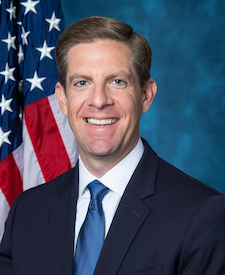
Rep. Mike Levin
Sponsored bills
Maddy summaryHR 3555, the Protect our Parks Act of 2025, requires the Secretary of the Interior to ensure National Park Service units are fully staffed for visitor safety, resource protection, and maintenance within 30 days of enactment. It mandates rehiring all National Park Service employees involuntarily terminated between January 20, 2025, and the bill’s enactment date. The bill also directs the continuation of specific park projects funded under the Great American Outdoors Act, Infrastructure Investment and Jobs Act, and the Inflation Reduction Act. This legislation directly affects National Park Service staff and park operations, focusing on staffing stability and project continuity.
Maddy summaryThis bill establishes a code of conduct for Supreme Court justices, requiring them to disclose gifts, income, and potential conflicts of interest. It creates a formal process for handling complaints about justices, including a judicial investigation panel to review allegations. The bill adds specific circumstances requiring recusal, such as when a justice or family member has financial ties to a party in a case. Additionally, it mandates that parties and amicus briefs disclose any gifts given to justices and lobbying activities related to their nomination. These provisions aim to increase transparency and accountability in the Supreme Court's operations.
Maddy summaryHR 3460, the AI Whistleblower Protection Act, prohibits employers from retaliating against employees or independent contractors who report AI security vulnerabilities or AI violations to regulators, Congress, or internal supervisors. It directly affects workers in AI development, deployment, or use - such as software engineers or safety auditors - who identify risks like stolen AI technology or failures to address safety dangers. Key provisions include banning termination, demotion, or harassment for lawful reporting, requiring employers to reinstate affected workers with double back pay, and blocking contracts that force arbitration to resolve retaliation claims. The bill establishes a 180-day window to file complaints with the Labor Department or sue in court, with remedies covering legal fees and compensatory damages. It applies broadly to any employer in commerce, ensuring protections cannot be waived by employment agreements.
Maddy summaryHR 3373, the GHOST Act of 2025, requires entities shipping certain firearm parts (barrels, slides, or bolts) across state lines to register shipments with the Attorney General within 5 business days. This includes providing sender/recipient details, shipping method, and proof of delivery via certified mail or recipient signature. The bill creates a confidential database for law enforcement access but prohibits public disclosure under the Freedom of Information Act. Violations carry fines or up to 1 year in prison for single shipments, and up to 10 years for shipping 50+ parts in one transaction.
Maddy summaryHR 3376 creates the Water Affordability, Transparency, Equity, and Reliability Trust Fund, funded by increasing the corporate tax rate from 21% to 24.5% starting in 2025, with annual funding capped at $35 billion or 1/20th of 20-year infrastructure needs. The bill allocates funds to clean water programs (42%), safe drinking water programs (42.5%), household water well systems (1%), colonias assistance (0.5%), and Indian health services (3%), requiring specific prioritization of low-income and minority communities for many programs. It mandates an EPA study on water affordability, discriminatory practices, and civil rights violations in water service, including data collection on service disconnections affecting vulnerable populations. The bill also includes provisions for lead service line replacement, PFAS contamination response, and job training grants for water system operators with specific requirements to prioritize low-income communities.
Maddy summaryHR 3014 expands the Veterans Affairs Secretary's authority to provide grants to organizations helping homeless veterans. It specifically allows grants to cover assistance in obtaining VA benefits (section 2011(a)(5)) and coordinating other benefits from federal, state, local, or nonprofit sources (section 2011(a)(6)). The bill also updates grant criteria to include converting temporary housing to permanent units. This directly affects homeless veterans and the community nonprofits, shelters, and service providers receiving these grants. The key change is broadening the types of services grant funds can support to better connect veterans with available benefits and housing solutions.
Maddy summaryHR 3277, the Ensuring Lasting Smiles Act, requires group health plans and health insurance issuers to cover medically necessary outpatient and inpatient treatments for congenital anomalies or birth defects primarily affecting the eyes, ears, teeth, mouth, or jaw. This includes reconstructive procedures, dental/orthodontic support during treatment, and follow-up care, but excludes purely cosmetic surgery not tied to a medical diagnosis. Cost-sharing (like copays) for these services must not be stricter than for other medical benefits. The law takes effect for plan years beginning January 1, 2026, and mandates insurers to provide notice about this coverage to beneficiaries.
Maddy summaryHR 3295, the Federal Animal Research Accountability Act of 2025, requires research institutions receiving National Institutes of Health (NIH) funding to submit detailed annual reports on animal use. These reports must categorize animals by species and specify: (1) animals used with no pain/distress, (2) animals with pain/distress using pain relief, (3) animals with pain/distress where pain relief would interfere with research, and (4) animals bred but not yet used. The NIH must make these reports publicly accessible online within three months of submission through a searchable database. The bill applies to all NIH-funded research entities and takes effect two years after enactment.
Maddy summaryHR 3304, the Providing Child Care for Police Officers Act of 2025, establishes a federal grant program to help law enforcement agencies provide child care for officers' minor children during nonstandard shifts. The program awards competitive 3-year grants to state or local "lead agencies" (like state child care offices) to fund child care services through eligible law enforcement agencies or consortia, with 20% of funds reserved for small agencies (under 200 officers). Grants cover startup costs, provider training, sick child care, facility construction, and other needs, requiring local matching funds (10% to 33% over three years). The program is authorized for $24 million annually from 2026-2030 and includes studies to evaluate its impact on child care access for officers and other first responders.