

Maddy summaryThis bill creates federal funding for community-based violence intervention programs in high-violence areas, targeting communities with 35+ homicides annually or 20+ homicides with rates double the national average. It establishes grants for community organizations to implement trauma-informed violence interruption strategies, hospital-based programs for injured patients, and job training for "opportunity youth" (16-25 year olds not in school or work). The legislation authorizes $300 million in 2026, increasing to $700 million annually through 2033, with requirements for evidence-based approaches that reduce violence without contributing to mass incarceration. It creates a National Community Violence Response Center to coordinate data collection, research, and best practices for these programs. The focus is on prevention through economic opportunity, trauma care, and community-driven interventions rather than traditional law enforcement approaches.
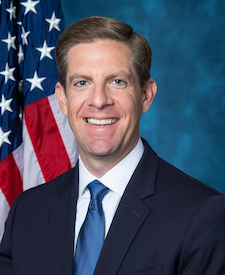
Rep. Mike Levin
Sponsored bills
Maddy summaryThe Caring for Survivors Act of 2025 increases monthly dependency and indemnity compensation for surviving spouses of veterans. It changes the calculation method from a fixed $1,154 to 55% of a specific veteran compensation rate, effective six months after enactment. The bill also reduces the required continuous disability rating period for survivors from 10 years to 5 years, and provides a proportional payment for cases where the rating period is shorter than 10 years. Surviving spouses of veterans who died before January 1, 1993, receive the greater of their current benefit or the new calculation. This directly affects surviving spouses eligible for benefits under Title 38, U.S. Code, particularly those with veterans who died prior to 1993.
Maddy summaryHR 4060, the Service Member Housing Relief Act, adjusts housing stipend rules for active-duty military personnel. It lowers the threshold requiring housing cost relief from 20% to 15% of a service member's income, meaning more members will qualify for extra housing assistance when their rent exceeds this lower percentage. The bill removes an outdated provision (subparagraph C) from the existing law governing these stipends. This change directly affects uniformed service members facing high housing costs, providing broader access to financial relief through a simplified calculation.
Maddy summaryThe Increasing Behavioral Health Treatment Act removes a Medicaid exclusion that previously blocked coverage for behavioral health services for individuals under 65 in psychiatric hospitals (also called "institutions for mental diseases"). It requires states to submit detailed plans to the federal government outlining how they will expand outpatient and community-based care for people transitioning from these facilities, including improved crisis services like mobile units and observation centers. States must also report annually on costs, patient outcomes, and the types of outpatient treatment provided after discharge, with specific requirements for coordinating care between health providers and first responders. This policy change directly affects Medicaid beneficiaries under 65 in psychiatric hospitals and state Medicaid programs, aiming to shift care toward less restrictive community settings.
Maddy summaryHCONRES 37 is a non-binding congressional resolution urging the President to establish a U.S. Commission on Truth, Racial Healing, and Transformation. The resolution does not create the commission itself but calls for its formation to acknowledge historical racial injustices (like discriminatory housing policies, the Chinese Exclusion Act, and forced Native American boarding schools) and catalyze efforts to eliminate racial inequities. The commission would focus on dismantling the "belief in a hierarchy of human value" and advancing racial healing, complementing ongoing efforts like H.R. 40 (the reparations study bill). It directly affects federal leadership (via the President) and aims to guide national policy, though it has no legal force.
Maddy summaryHR 3941 would repeal Section 5123 of Public Law 118-159, which is part of the Caesar Syria Civilian Protection Act of 2019. This bill specifically targets one provision within the larger 2023 law, removing that particular section from federal law. It does not affect the rest of the Caesar Act or its core sanctions framework. The bill's direct effect is solely on the repealed section of the existing law. This is a procedural change focused on eliminating a specific legal provision.
Maddy summaryHR 3993, the Preserving Great Americans’ Legacies Act of 2025, prohibits the U.S. Navy from renaming specific naval vessels currently named after eight historically significant individuals. The bill directly affects Navy vessels bearing the names of Cesar Chavez, Medgar Evers, Ruth Bader Ginsburg, Dolores Huerta, Thurgood Marshall, Harvey Milk, Lucy Stone, and Harriet Tubman. It permanently blocks any future name changes for these vessels, regardless of existing legal provisions allowing such changes. The law applies immediately upon enactment and ensures these vessels retain their current names.
Maddy summaryThis bill codifies existing protections for designated roadless areas within the National Forest System by prohibiting new road construction, road reconstruction, and logging in these areas. It directly affects National Forest lands already identified as "inventoried roadless areas" under the current Roadless Rule, which covers roughly 58 million acres. The key mechanism requires the Secretary of Agriculture to enforce these prohibitions, maintaining current protections without expanding restrictions to other lands or altering existing multiple-use management. The bill does not create new protected areas but legally solidifies the existing regulatory framework to preserve ecological and recreational values.
Maddy summaryThis bill, HR 3916 (My Body, My Data Act of 2025), requires businesses and other "regulated entities" to minimize collection and sharing of personal reproductive or sexual health data - such as pregnancy status, contraceptive use, or abortion-related information - and gives individuals specific rights. It mandates that entities provide individuals with easy access to their data, the ability to correct inaccuracies, and the right to request deletion of such information within 15 days. The law also requires clear privacy policies detailing data practices and prohibits retaliation against individuals who exercise these rights, such as charging higher prices or denying services. It applies broadly to most businesses (excluding HIPAA-covered healthcare providers) and is enforced by the FTC with private lawsuits allowed for violations.
Maddy summaryHR 3906, the Medical Research for Our Troops Act, restores funding levels for military medical research by increasing the Defense Health Agency's research budget from $40.395 billion to $41.576 billion in the 2025 appropriations act. It ensures Congressionally Directed Medical Research Programs funds are used consistently with the Consolidated Appropriations Act, 2024, requiring the Defense Secretary to support all previously identified research programs and maintain existing funding allocations. The bill directly affects military medical research initiatives and the Defense Health Agency's budget implementation. This is a procedural funding adjustment, not a new policy, maintaining continuity for ongoing research projects.