

Commission to Study and Develop Reparation Proposals for African Americans Act This bill establishes the Commission to Study and Develop Reparation Proposals for African Americans. The commission must (1) compile documentary evidence of slavery in the United States; (2) study the role of the federal and state governments in supporting the institution of slavery; (3) analyze discriminatory laws and policies against freed African slaves and their descendants; and (4) recommend ways the United States may recognize and remedy the effects of slavery and discrimination on African Americans, including through a formal apology and compensation (i.e., reparations). The commission consists of individuals from civil society and reparations organizations and individuals appointed by the President and congressional leadership; Members of Congress and governmental employees may not serve on the commission. The commission may hold hearings, subpoena witnesses and records, and contract with other entities to conduct its work. The commission must submit its final report within 18 months of its first meeting.
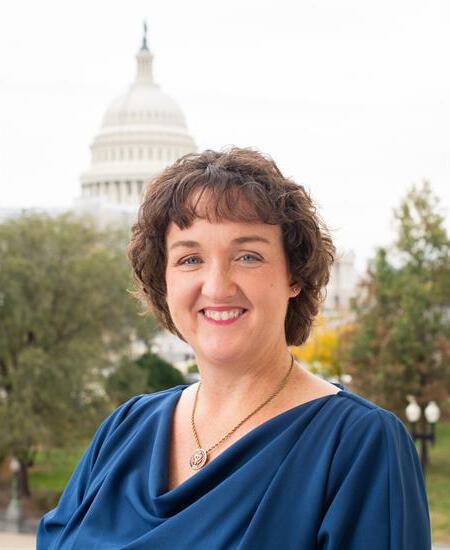
Rep. Katie Porter
Sponsored bills
Lodging Options Developed for Government Employees Act or the LODGE Act This bill expands the current authority of the Department of the Interior to enter into agreements with housing entities to provide rental housing for employees. The bill allows Interior to enter agreements with other federal agencies, state or local governments, tribal governments, or other public or private organizations for purposes of facilitating housing accommodation projects for rent to field employees and members of the public on public lands, including National Park System units; off public lands in the vicinity of system units; or on a combination of such lands. Interior may allow field employees and members of the public to occupy and lease project quarters. Field employees and members of the public shall be prohibited from subleasing housing units or quarters developed or leased in accordance with a housing partnership agreement under this bill, including all forms of short-term rentals. To the maximum extent practicable, priority for occupancy in project quarters shall be given to field employees. Interior may collect, or authorize entities who have entered into partnership housing agreements under this bill to collect, rents directly from field employees and members of the public occupying housing units or quarters. The bill modifies the lease-to-build program to allow Interior to lease federal land and interests in land to qualified persons for the construction of field employee quarters for any period not to exceed 60 years (under current law not to exceed 50 years).
This bill authorizes the Thomas Paine Memorial Association to establish a commemorative work on federal land in the District of Columbia in honor of the philosopher and patriot, Thomas Paine. Thomas Paine is best known for writing Common Sense , a pamphlet that helped to inspire the Revolutionary War. The establishment of the commemorative work shall be in accordance with the Commemorative Works Act. Federal funds may not be used to pay any expense to establish the commemorative work.
Sustaining America's Fisheries for the Future Act of 202 2 This bill sets forth and revises various provisions relating to fisheries conservation and management, including to increase the adaptive capacity of fishery management to the impacts of climate change, implement working waterfront plans, establish an innovation prize for data collection technology used in fisheries management, and establish a national standardized reporting program for bycatch.
Environmental Justice For All Act This bill establishes several environmental justice requirements, advisory bodies, and programs and modifies the scope of environmental review under the National Environmental Policy Act of 1969. The bill sets forth provisions to address the disproportionate adverse human health or environmental effects of federal laws or programs on communities of color, low-income communities, or tribal and indigenous communities. It also prohibits disparate impacts on the basis of race, color, or national origin as discrimination. Aggrieved persons may seek legal remedy when faced with such discrimination. In addition, the bill directs agencies to follow certain requirements concerning environmental justice. For example, agencies must prepare community impact reports that assess the potential impacts of their actions on environmental justice communities under certain circumstances. It also raises coal, oil, and gas royalty rates to create a funding source to support fossil fuel-dependent communities and displaced workers as they transition away from fossil fuel industries. Additionally, the bill creates a variety of advisory bodies and positions, such as the White House Environmental Justice Interagency Council. Among other things, the council must issue an environmental justice strategy. It also establishes requirements and programs concerning chemicals or toxic ingredients in certain products. For example, the bill (1) requires certain products (e.g., cosmetics) to include a list of ingredients or warnings; and (2) provides grants for research on designing safer alternatives to chemicals in certain consumer, cleaning, toy, or baby products that have an inherent toxicity or that are associated with chronic adverse health effects. Finally, it creates a variety of funding programs, such as a grant program to enhance access to park and recreational opportunities in urban areas.
Methane Waste Prevention Act of 2021 This bill establishes requirements to reduce methane emissions from the oil and natural gas sector. Methane is emitted during the production and transport of coal, natural gas, and oil. Specifically, the Environmental Protection Agency (EPA) must issue regulations that require the sector to reduce methane emissions over time. By 2025, methane emissions must be at least 65% below 2012 emissions. By 2030, the emissions must be at least 90% below 2012 emissions. The Department of the Interior must also establish regulations to reduce and prevent the waste of natural gas on federal land and Indian lands, including waste from venting, flaring, and fugitive releases. The regulations must include consistent enforcement mechanisms for any oil or gas operations that are not in compliance.
This act designates the facility of the United States Postal Service located at 6401 El Cajon Boulevard in San Diego, California, as the Susan A. Davis Post Office.
Faster Payments to Veterans' Survivors Act of 2022 This act modifies policies and procedures related to the payment of benefits under certain life insurance programs administered by the Department of Veterans Affairs (VA). If a primary beneficiary has not made a claim for payment within one year (currently two years) after the death of the insured under the National Service Life Insurance (NSLI) program or the United States Government Life Insurance (USGLI) program, the VA is authorized to make payment to another designated beneficiary as if the primary beneficiary had predeceased the insured. If no designated beneficiary makes a claim within two years (currently four years) after the death of the insured, the VA is authorized to make a payment to a person the VA deems to be equitably entitled to such benefit. The act also modifies the beneficiary designation process under NSLI and USGLI. Specifically, if a person does not designate a beneficiary for insurance, or if the designated beneficiary predeceases the insured person, the VA must determine the beneficiary in a specified order of succession. Additionally, the act requires the VA to improve its processes and procedures with respect to identifying, locating, and paying hard-to-find beneficiaries of life insurance policies, including by improving its website search tools.
This act designates the facility of the United States Postal Service located at 1400 N Kraemer Blvd. in Placentia, California, as the PFC Jang Ho Kim Post Office Building.
This act designates the facility of the United States Postal Service located at 2016 East 1st Street in Los Angeles, California, as the Marine Corps Reserve PVT Jacob Cruz Post Office.