

Maddy summaryHR 1213, the RESCUE Whales Act of 2023, repeals Title I of Division JJ in the Consolidated Appropriations Act of 2023 (Public Law 117-328). This provision specifically removed a modification that had altered how certain conservation funding was allocated under environmental laws protecting whales. The bill directly affects the implementation of that funding mechanism by restoring the prior legal framework. It is a procedural change with no new policy requirements or direct impact on whale conservation efforts beyond reversing the 2023 funding adjustment.
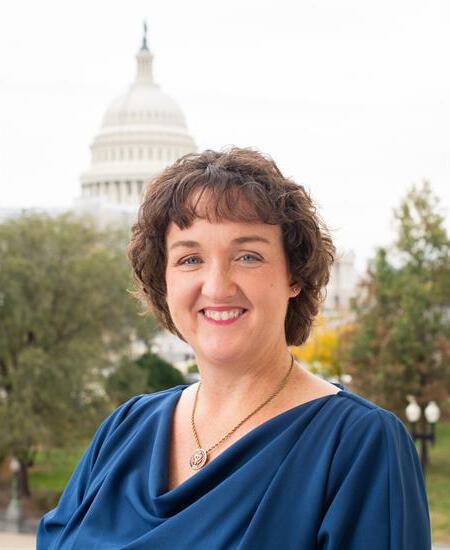
Rep. Katie Porter
Sponsored bills
This resolution recognizes the importance of the Islamic faith and expresses deep respect for Muslims in the United States and worldwide in honor of Eid al-Fitr (the conclusion of Ramadan).
Maddy summaryThis bill requires the Government Accountability Office (GAO) to study how quickly the Federal Aviation Administration (FAA) responds to congressional requests for information, including written inquiries and meeting requests. It also mandates that the FAA Administrator provide annual briefings to the House Transportation Committee and Senate Commerce Committee on the agency's activities, objectives, and efforts to engage with Congress and the public. The bill directly affects the FAA's communication practices with Congress, aiming to increase transparency in federal aviation oversight.
Maddy summaryThe Choices for Stranded Passengers Act of 2023 requires airlines to provide free alternative flights on another carrier when a passenger's flight is delayed or canceled due to the airline's own actions (a "controllable" delay) and the delay meets the definition of significant (3+ hours for domestic flights, 6+ hours for international flights). This applies to passengers traveling on flights with 31 or more seats. Airlines must offer this free alternative transportation option if it gets passengers to their destination sooner than waiting for the original flight or another flight by the same airline, or allow passengers to choose free ground transportation or a full refund instead. Airlines must clearly explain these rights to passengers at booking and during delays.
Maddy summaryThe Veterans Equal Access Act (HR 2431) allows Department of Veterans Affairs (VA) health care providers to give recommendations and opinions to veterans about participating in state-legal marijuana programs. It directly affects veterans living in states, the District of Columbia, Puerto Rico, U.S. territories, or federally recognized tribes where marijuana is permitted under state law. The bill requires the VA Secretary to authorize VA physicians and staff to provide these recommendations, complete related forms, and override any conflicting federal restrictions that previously prohibited such advice. This change enables veterans to receive guidance from VA providers regarding state marijuana programs without fear of VA disciplinary action.
Maddy summaryThe Coastal Seaweed Farm Act of 2023 requires the Secretaries of Agriculture and Commerce to conduct a two-year study on coastal seaweed farming's environmental, economic, and community impacts, including best practices for sustainability, ecosystem protection, and consultation with Indigenous groups. It establishes an Indigenous Seaweed Farming Fund to provide grants for seaweed farming projects by federally recognized Tribes, Native entities, and Indigenous communities, with restrictions to prevent harm to commercial fisheries. The bill also mandates regulations to ensure seaweed farming operations maximize marine ecosystem benefits while minimizing adverse effects, and allocates $3 million annually for the study and regulations, plus $20 million annually for the grant program. This legislation directly affects Tribal communities, coastal ecosystems, and future seaweed farming operations through concrete policy requirements.
Maddy summaryHR 1351, the "Save Oak Flat From Foreign Mining Act," repeals Section 3003 of the 2015 National Defense Authorization Act, which had mandated transferring 2,422 acres of Oak Flat in Arizona’s Tonto National Forest to foreign-owned Resolution Copper for mining. The bill withdraws this land from all mining activities, preventing Resolution Copper from using destructive block cave mining that would destroy the sacred site and harm water resources. Oak Flat, a National Register-listed Traditional Cultural Property sacred to Indigenous tribes, would be protected from a mine projected to deplete 775,000 acre-feet of groundwater over 40 years and create a 4,000-acre toxic waste dump. The legislation directly affects Resolution Copper (owned by Rio Tinto and BHP) and aims to halt the project that would obliterate cultural resources and exacerbate regional water shortages.
Freedom to Decide Act This concurrent resolution expresses the sense of Congress to (1) affirm that federal law authorizes the distribution of medication abortion, including by mail, as stated in a 2022 Department of Justice memorandum; and (2) condemn restrictions on the access and coverage of reproductive health care, including medication abortion.
Maddy summaryThe Family Violence Prevention and Services Improvement Act of 2023 amends the Family Violence Prevention and Services Act to improve services for victims of domestic violence, dating violence, and family violence. The bill authorizes $270 million annually for fiscal years 2024-2028, with specific allocations including 12.5% for Tribal grantees, 2.5% for culturally specific services, and funds for national hotlines and resource centers. It establishes a national domestic violence hotline, a National Indian Domestic Violence Hotline, and resource centers for Alaska Native and Native Hawaiian populations, requiring all services to be trauma-informed, culturally relevant, and accessible to underserved populations including racial and ethnic minorities, people with disabilities, and Tribal communities. The bill also mandates a study on financial stability support for survivors of domestic violence.
Maddy summaryHR 2630, the Safe Step Act, requires group health plans and health insurance issuers to establish a clear, transparent process for patients or their doctors to request exceptions to medication step therapy protocols. These protocols typically force patients to try cheaper drugs first before covering more expensive alternatives. The bill mandates that plans must approve exceptions when prior treatments failed, delay would cause serious harm, a treatment is unsafe, or a patient is stable on a previously approved drug, with strict 72-hour (or 24-hour in emergencies) decision timelines. It also requires plans to publish the exception process online and limit documentation requests to only necessary medical information. This law directly affects health insurers, employers offering health plans, and patients using step therapy for prescription drugs.