

Failed Bank Executives Clawback Act This bill requires the Federal Deposit Insurance Corporation (FDIC) to claw back compensation paid to certain responsible parties when an insured depository institution or financial company is placed into FDIC receivership. Specifically, all or part of the compensation paid the previous five years to an institution-affiliated party substantially responsible for the condition of the institution must be paid to FDIC to prevent unjust enrichment and to assure that the party bears losses consistent with their responsibility. Compensation includes salary, bonuses, awards, and profits from buying or selling securities. Finally, the bill establishes that an insured depository institution's holding company is liable to the FDIC for payments to insured depositors, the FDIC's receiver costs, and interest when the institution is under FDIC receivership.
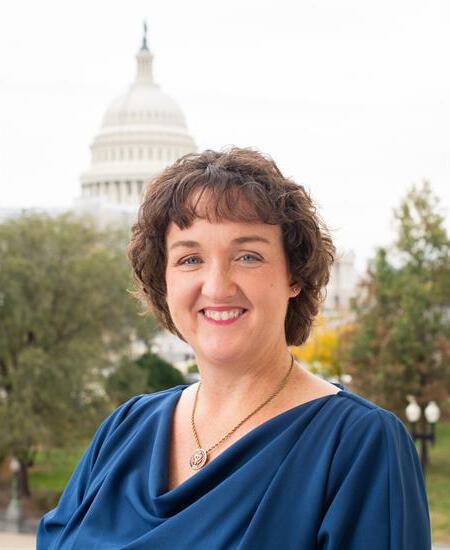
Rep. Katie Porter
Sponsored bills
Maddy summaryHR 2974 establishes the United States Interagency Council on Housing Affordability and Preservation, a new federal body composed of heads from 21 agencies (including HUD, Treasury, and Justice) to coordinate efforts on affordable housing. The Council’s key duties include developing a national strategic plan for affordable housing within 12 months, reviewing federal housing programs, providing regional support to states and localities to access federal resources, and requiring annual agency reports on housing barriers. It mandates $4.8 million annually for operations (2024-2028) and encourages states to create their own housing councils to align with federal goals. The bill directly affects federal agencies, state/local governments, and low-income renters by improving coordination and access to housing programs, without directly changing housing subsidies or tenant protections.
Water Infrastructure Sustainability and Efficiency Act or the WISE Act This bill requires each state to use a certain percentage of funds it receives for capitalization of its clean water state revolving fund for projects to address green infrastructure, water or energy efficiency improvements, or other environmentally innovative activities.
Maddy summaryThis bill creates a federally chartered National Center for the Advancement of Aviation to develop the U.S. aviation and aerospace workforce. The Center will provide grants for education and training programs, including scholarships, internships, and curriculum development for middle schools, high schools, and colleges focused on aviation careers. It will specifically support underrepresented groups and veterans transitioning to aviation careers while coordinating with government agencies to avoid duplicating existing programs. The Center must operate as a non-profit entity, maintain tax-exempt status, and submit annual reports to Congress on its activities.
Performing Artist Tax Parity Act of 2023 This bill modifies the above-the-line tax deduction for the expenses of performing artists (including commissions paid to managers or agents) to provide for a phaseout of such deduction for taxpayers whose adjusted gross income exceeds $100,000 ($200,000 for joint return filers). The $100,000 phaseout threshold is adjusted for inflation annually for taxable years beginning after 2023.
Maddy summaryHR 2918, the Fair Housing for Survivors Act of 2023, amends the Fair Housing Act to explicitly protect survivors of domestic violence, sexual assault, and sex trafficking from housing discrimination. It adds "survivor of domestic violence, sexual assault, or severe forms of trafficking" as a protected class under the law, prohibiting landlords and housing providers from refusing to rent, evicting, or charging more based on this status. The bill also clarifies that discrimination based on survivor status - including denial of housing due to protective orders, shelter stays, or prior incidents - is illegal. This directly affects survivors who face barriers like denied rentals, evictions, or higher costs when seeking safe housing, addressing documented discrimination reported by 67% of survivors in New York studies. The law preserves survivors' ability to pursue other discrimination claims under the Fair Housing Act.
Raise the Age Act of 2023 This bill establishes new restrictions on the sale or transfer of certain semiautomatic firearms to individuals under 21 years of age. Specifically, this bill makes it unlawful for a licensed gun dealer, importer, manufacturer, or collector to sell or deliver a semiautomatic center-fire rifle or semiautomatic center-fire shotgun that has (or has the capacity to accept) an ammunition feeding device with a capacity of more than five rounds to an individual who the licensee knows or has reasonable cause to believe is under age 21. The prohibition does not apply if the individual under age 21 is a full-time law enforcement officer or active-duty member of the Armed Forces. The bill also requires the Federal Bureau of Investigation to report on the operation of its public access line, including a description of information sharing protocols and recommendations for improving such protocols.
Maddy summaryHR 2370, the Access to AEDs Act, authorizes $25 million in federal funding (2024-2028) to help public elementary and secondary schools improve access to automated external defibrillators (AEDs) and CPR training. The bill directs the Secretary of Health and Human Services to award grants to school districts and partners for developing AED programs, training staff and students, purchasing and maintaining AEDs, and creating cardiac emergency response plans. It specifically targets schools to address sudden cardiac arrest (SCA), which is a leading cause of death among student athletes and youth, with 90% of SCA victims dying without immediate CPR and defibrillation. The law requires grantees to report on their activities and establishes a clearinghouse to collect data on school AED access and costs.
Maddy summaryHRES 324 is a non-binding House resolution expressing support for library staff across public, school, academic, and special libraries. It recognizes these workers as essential community resources providing access to information, internet services, and social support - especially for underserved populations - and highlights their expanded roles during crises like the opioid epidemic and pandemic. The resolution calls for adequate funding, protects staff from threats while performing their duties, supports their right to unionize, and upholds the public’s right to free access to library resources. It does not create new laws or funding but formally acknowledges these priorities during National Library Week.
Maddy summary# Summary of the National Apprenticeship Act of 2023 This proposed legislation establishes a comprehensive framework to modernize and expand apprenticeship programs in the United States, creating a National Apprenticeship System designed to address current workforce needs and increase opportunities for underrepresented populations. ## Key Provisions ### System Framework - Establishes clear quality standards for apprenticeship, pre-apprenticeship, and youth apprenticeship programs - Requires programs to meet specific criteria including: - Minimum 2,000 hours of on-the-job learning (with flexibility for some occupations) - Structured related instruction (minimum 144 hours per year for time-based programs) - Progressive wage scales - Safety training and equipment - Equal opportunity for participation ### Program Types - **Apprenticeship Programs**: Time-based, competency-based, or hybrid models for full-time workers - **Pre-apprenticeship Programs**: Designed to prepare individuals without meeting minimum qualifications for apprenticeship - **Youth Apprenticeship Programs**: For high school students, integrating academic and work-based learning ### Diversity & Inclusion Requirements - Requires programs to actively recruit and support nontraditional apprenticeship populations: - Women, minorities, individuals with disabilities - Long-term unemployed - Individuals impacted by the criminal or juvenile justice system - Foster and former foster youth - Individuals with barriers to employment ### Registration & Oversight - Requires formal registration of programs with a registration agency - Mandates annual performance data collection and reporting - Establishes procedures for program review, technical assistance, and deregistration ### Grant Program (Title II) - Authorizes $4 billion over five years ($400M-$800M annually) for competitive grants - Funds will support: - Creation and expansion of apprenticeship programs in high-demand sectors - Encouraging employer participation, particularly with small- and medium-sized businesses - Supporting intermediaries (national and local) - Strengthening educational alignment with secondary and postsecondary systems ### Evaluation Requirements - Mandates independent evaluations of grant programs - Requires collection of disaggregated data by program type and demographic factors - Focuses on measuring outcomes including: - Program completion rates - Employment rates in related fields - Wage growth - Increased participation of underrepresented groups ### Conforming Amendments - Repeals outdated sections of the American Competitiveness and Workforce Improvement Act of 1998 - Amends the Immigration and Nationality Act to align with the new apprenticeship system This legislation represents a significant investment in workforce development, aiming to create a more inclusive, high-quality apprenticeship system that responds to 21st-century labor market needs while expanding opportunities for historically underrepresented groups.