

Maddy summaryHRES 1007 would amend House Rules to limit privileged status for specific resolutions. It requires that resolutions seeking to impeach officials, censure, reprimand, expel members, or create leadership vacancies can only be prioritized if either: (1) a relevant committee investigated the conduct and issued a report recommending the sanction, or (2) the resolution is offered by a party caucus or conference. This change directly affects how quickly such serious actions can move through the House process. The bill does not alter the sanctions themselves but modifies the procedural pathway for bringing them to the floor.
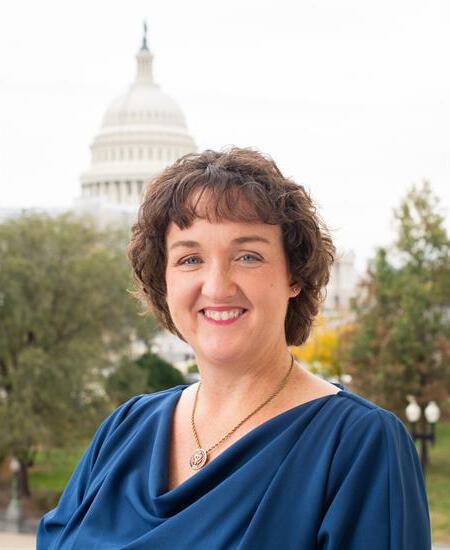
Rep. Katie Porter
Sponsored bills
Maddy summaryHRES 1003 is a symbolic resolution recognizing the contributions of Vietnamese Americans. It acknowledges that approximately 800,000 Vietnamese refugees resettled in the U.S. after the Vietnam War and that over 1.7 million Vietnamese Americans now live in the U.S., forming the fourth largest Asian American group. The resolution highlights their achievements in fields like business, education, the military, and public service, as well as their support for democracy and cultural diversity. As a non-binding resolution, it has no legal effect or direct impact on policy or individuals.
Maddy summaryHRES 1002 is a symbolic House resolution recognizing the cultural and historical significance of Lunar New Year (celebrated as the Year of the Dragon in 2024). It acknowledges the holiday's 4,000-year history in China, its celebration across Asia (including Seollal and Tết), and its significance to Asian Americans and others in the U.S. The resolution expresses respect for those observing the holiday and wishes them a happy new year, but it does not create new laws, policies, or funding. As a ceremonial resolution, it has no direct effect on legislation or constituents.
Maddy summaryHR 7288, the Armenian Protection Act of 2024, repeals the waiver authority that allows the President to bypass restrictions on U.S. aid to Armenia. Specifically, it prevents the waiver of Section 907 of the Freedom Support Act for fiscal years 2024 and 2025, which currently blocks U.S. assistance to Armenia due to historical disputes. This bill directly affects Armenia's eligibility for certain U.S. foreign aid programs by removing the possibility of executive branch waivers for those years. The key mechanism is the permanent removal of the waiver option under the specified appropriations law, changing the policy landscape for U.S.-Armenia aid relations.
Maddy summaryHR 7184, the Congressional Budget Office Data Access Act, amends the Privacy Act of 1974 to allow federal agencies to disclose certain personal data to the Congressional Budget Office (CBO). This change directly affects federal agencies that collect personal information under the Privacy Act, enabling them to share data with the CBO when performing its budget analysis duties. The key provision adds a new exception (paragraph (11)) to the Privacy Act, explicitly permitting disclosures to the CBO Director or their authorized representatives for the CBO's official budgetary work. This streamlines data access for the CBO without altering privacy protections for individuals.
Maddy summaryThe JOBS Act of 2023 would expand Federal Pell Grant eligibility to cover certain short-term job training programs that prepare students for high-demand careers. It defines "eligible job training programs" as those offering 150-600 hours of instruction over 8-15 weeks, aligned with in-demand industry sectors, and leading to recognized credentials that help students meet hiring requirements and take licensure exams. The bill would allow students in these programs to receive Pell Grants under standard terms, with the minimum Pell Grant amount reduced from 10% to 5% of the maximum. It also requires accrediting agencies to evaluate these programs and creates data-sharing between Education and Labor departments to track program effectiveness.
Maddy summaryHR 7212, the PEER Support Act, establishes a formal profession for peer support specialists - individuals with lived experience in mental health or substance use recovery who provide support to others. It requires the Office of Management and Budget to add "peer support specialist" to the Standard Occupational Classification system by January 2025 and creates a new Office of Recovery within SAMHSA to lead workforce development, share best practices, and support training and certification. The bill also mandates a report analyzing state criminal background check policies for peer specialists, aiming to reduce barriers to certification. This directly affects states implementing certification systems, peer specialists seeking employment, and SAMHSA’s operations in mental health services.
Maddy summaryHR 7210, the Help America Run Act, allows campaign funds to cover essential personal expenses like child care, elder care, and health insurance premiums for candidates running for office. This amendment to the Federal Election Campaign Act (Section 313) treats these payments as authorized campaign expenses if necessary for campaign activities, while limiting total payments to the same cap as candidate salary. The bill directly affects working parents, caregivers, and lower-income candidates who might otherwise be unable to run due to unaffordable basic living costs. It aims to remove financial barriers that currently prevent many everyday Americans from seeking office, particularly impacting working mothers and caregivers. The policy change does not alter overall campaign finance limits but expands permissible uses of campaign funds for critical personal needs.
Maddy summaryThis symbolic resolution (HRES 989) urges the U.S. House of Representatives to recognize January as "Muslim-American Heritage Month" to honor the contributions of Muslim Americans. It highlights their historical and contemporary roles in U.S. society across fields like business, science, sports, and public service. The resolution calls for public observance through ceremonies and programs but has no legal effect or policy changes. It does not allocate funding, alter laws, or directly affect any specific group beyond raising awareness of Muslim-American heritage.
Maddy summaryHRES 990 is a non-binding resolution expressing the House of Representatives' support for fair treatment of paraprofessionals (like instructional assistants) and education support staff (such as clerical, custodial, and food service workers) in schools. It states these over 3 million frontline workers deserve livable wages, affordable health care, job security, paid leave, professional development, and safe working conditions. The resolution lists specific recommendations, including eligibility for family medical leave and protections against retaliation for reporting workplace issues. It does not create new laws but formally recognizes these staff as essential to school success and calls for policies addressing their current challenges.