

Maddy summaryThis bill amends the Federal Employees' Compensation Act to include physician assistants and nurse practitioners as eligible providers for injured federal workers. It defines "other eligible provider" as a nurse practitioner or physician assistant within their state-authorized scope of practice. The law updates key sections to replace "physician" with "physician or other eligible provider" for treatment, certification, and claim processes. The Secretary must finalize implementing regulations within six months of enactment.
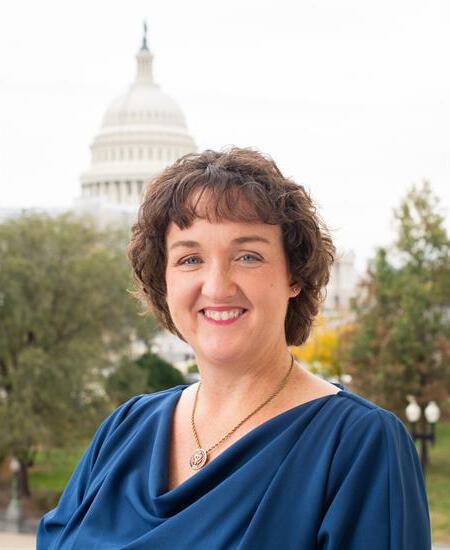
Rep. Katie Porter
Sponsored bills
Maddy summaryThis bill (HR 2365, Public Law 118-66) directs the U.S. Department of Health and Human Services (HHS) to establish the National Parkinson’s Project. It requires HHS to create and update a coordinated national plan for preventing, diagnosing, treating, and researching Parkinson’s disease and related disorders (including multiple system atrophy and progressive supranuclear palsy), while coordinating federal research and care efforts across agencies like the NIH, CDC, and VA. The law mandates annual progress assessments, an advisory council with patient advocates and diverse experts, and annual reports to Congress on federal Parkinson’s programs and recommendations for improvement. It affects federal agencies managing Parkinson’s-related programs and aims to improve care coordination and research efficiency for patients and caregivers, with the law sunsetting in 2035.
Maddy summaryHRES 1332 is a symbolic resolution recognizing June as LGBTQIA+ Pride Month. It encourages the celebration of Pride Month to honor the historical struggles and achievements of LGBTQIA+ people in the United States, while acknowledging the ongoing challenges they face. This resolution does not create new laws or policies, but serves as a formal recognition of LGBTQIA+ rights as human rights and highlights their integral role in American history. The resolution was introduced by multiple members of Congress and passed by the House of Representatives.
Maddy summaryThe SAFES Act creates a federal tax credit for individuals who purchase gun safes, allowing them to deduct 90% of the cost, up to $500 per person or $1,000 for joint returns. For purchases made before 2030, any qualifying gun safe qualifies; after 2029, only safes meeting standards set by the Secretary of Health and Human Services (HHS) will be eligible, based on an HHS report required within five years of enactment. The bill prohibits requiring taxpayers to disclose firearm ownership details to claim the credit. This policy directly affects individual firearm owners seeking to reduce tax liability through safe storage purchases.
Maddy summaryThis bill requires background checks to block gun sales to people under court orders restricting firearm access before trial. It amends federal gun law to explicitly prohibit firearm purchases, possession, or receipt by individuals subject to such pretrial court orders. The law updates background check systems (like NICS) to include these orders, ensuring courts can prevent gun access during pending criminal cases. It directly affects individuals detained before trial who face court-mandated firearm restrictions.
Maddy summaryThis bill creates a federal framework for "extreme risk protection orders" (ERPOs) that temporarily remove firearms from individuals who pose a risk of harming themselves or others. Family members or law enforcement officers can petition a federal court for a temporary order (up to 14 days) based on probable cause, followed by a hearing within 72 hours to determine if a longer-term order (up to 180 days) is warranted. The bill requires clear and convincing evidence of risk at the hearing and mandates respondents to surrender firearms to law enforcement within 48 hours. It also includes provisions for reporting, training law enforcement on ERPOs, and a federal grant program to support state ERPO implementation, without preempting state laws.
Maddy summaryHRES 901 is a U.S. House resolution expressing support for democracy and human rights in Pakistan. It calls on the U.S. President and Secretary of State to collaborate with Pakistan to uphold democratic processes, human rights, and the rule of law. The resolution urges Pakistan to protect freedoms of speech, assembly, and press, and to avoid arbitrary detention or suppression of political participation. It also condemns efforts to undermine Pakistan's electoral or judicial systems, including harassment of citizens during protests or interference with elections.
Maddy summaryThe Gun Theft Prevention Act requires licensed firearm dealers to implement specific security measures, including locked cabinets, security systems, and site hardening, to prevent gun thefts. It mandates annual security plan certifications with inventory reconciliation, employee background checks before firearm possession, and 30-day reporting of stolen firearms to authorities. The bill increases inspections (annual for high-risk dealers, triennial for others) and establishes civil penalties of up to $20,000 for violations. These requirements apply to all federally licensed gun dealers nationwide, with a one-year transition period for implementation, while maintaining state law authority over firearm dealing.
Maddy summaryHR 8830, the High Court Gift Ban Act, sets strict limits on gifts federal judges may accept. It prohibits judges from receiving gifts valued over $50 from a single source in a year, unless the total from that source stays under $100 annually. Key exceptions include gifts paid for by the judge, gifts from relatives, honorary degrees from educational institutions, and public opportunities available to all federal employees. The bill also outlines enforcement mechanisms, requiring the Judicial Conference to refer violations to the Attorney General for civil or criminal penalties. This directly affects all federal judges, including Supreme Court justices and lower court judges, by restricting gifts from sources that may have business before them.
Maddy summaryThis resolution, introduced around World Refugee Day, expresses congressional support for U.S. efforts to protect refugees and displaced persons globally and within the United States. It highlights that over 117 million people are displaced worldwide, references the U.S. resettling 60,000 refugees in fiscal year 2024, and calls on federal agencies to maintain the Refugee Admissions Program, uphold asylum protections, and support host countries. The resolution does not create new laws but reaffirms existing commitments to refugee resettlement, safety, and integration through current programs.