

Jobs, On-the-Job 'Earn-While-You-Learn' Training, and Apprenticeships for Young African Americans Act This bill makes changes to the national apprenticeship system aimed at promoting diversity. Specifically, the bill establishes the Diversity and Inclusion Administrator in the Office Apprenticeship within the Office of Employment and Training Administration at the Department of Labor, requires every apprenticeship program that registers or renews an apprenticeship with the Office of Apprenticeship to submit a plan to increase participation by individuals who are African American, and requires the Diversity and Inclusion Administrator to award grants to create or expand diversity in registered apprenticeship programs.
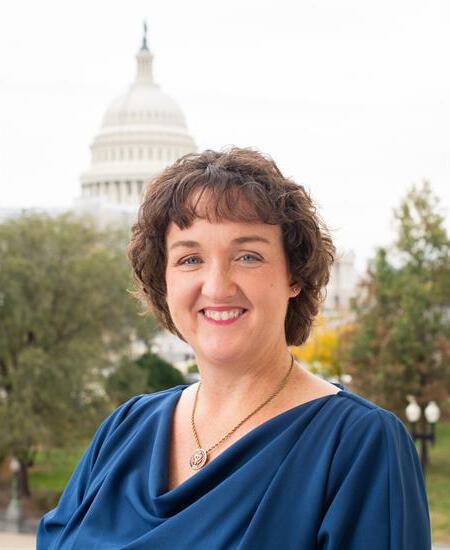
Rep. Katie Porter
Sponsored bills
SOS: Sustaining Outpatient Services Act This bill allows for payment under the Medicare prospective payment system for hospital outpatient department services of certain items and services that are furnished at off-campus outpatient departments. Specifically, the bill allows for payment of items and services for which payments to physician specialists (under the Medicare physician fee schedule) did not exceed $2 million during the previous year.
This resolution condemns the acts of gun violence that led to the tragic loss of eight lives in Georgia on March 16, 2021.
Enhanced Whistleblower Engagement Act This bill modifies requirements with respect to whistleblower protections for employees of an office of inspector general (OIG). The bill specifies that the whistleblower protection coordinator in each OIG shall educate that office's employees on specified matters, including prohibitions against retaliation for protected disclosures and rights and remedies against such retaliation. The bill also specifies that best practices developed by the Council of the Inspectors General on Integrity and Efficiency shall include best practices for the handling and consideration of protected disclosures and allegations of reprisal that are internal to an OIG.
Ghost Army Congressional Gold Medal Act This bill directs the Speaker of the House of Representatives and the President pro tempore of the Senate to award a Congressional Gold Medal to the 23rd Headquarters Special Troops and the 3133d Signal Service Company, known as the Ghost Army , collectively, in recognition of its service during World War II.
This resolution expresses support for the designation of National CASA/GAL Volunteers Day to commend the work of court-appointed special advocate (CASA) and guardian ad litem (GAL) volunteers.
This resolution expresses support for the designation of DIPG Awareness Day. DIPG is diffuse intrinsic pontine glioma, a terminal childhood brain cancer.
Institutional Grants for New Infrastructure, Technology, and Education for HBCU Excellence Act or the IGNITE HBCU Excellence Act This bill establishes a grant program to support long-term improvements of historically Black colleges and universities (HBCUs) and graduate programs at HBCUs. Specifically, the bill requires the Department of Education (ED) to award grants to HBCUs to improve campus facilities. A recipient must use grant funds for certain activities, such as constructing or renovating facilities, carrying out major repairs, and strengthening the safety and security of a campus. Any new construction, modernization, or renovation projects must meet building code and energy and water conservation requirements. Further, HBCUs must seek to procure contracts from certain small businesses, including those owned and controlled by veterans and service-disabled veterans. The bill prohibits the use of grant funds for specified activities, including for the payment of routine and predictable maintenance costs, minor repairs, and utility bills. The Government Accountability Office must study the implementation of the grant program. The bill also requires ED to repay the outstanding balance of principal, interest, fees, and costs and any related reimbursements for certain capital financing loans.
Medicare for All Act of 2021 This bill establishes a national health insurance program that is administered by the Department of Health and Human Services (HHS). Among other requirements, the program must (1) cover all U.S. residents; (2) provide for automatic enrollment of individuals upon birth or residency in the United States; and (3) cover items and services that are medically necessary or appropriate to maintain health or to diagnose, treat, or rehabilitate a health condition, including hospital services, prescription drugs, mental health and substance abuse treatment, dental and vision services, and long-term care. The bill prohibits cost-sharing (e.g., deductibles, coinsurance, and copayments) and other charges for covered services. Additionally, private health insurers and employers may only offer coverage that is supplemental to, and not duplicative of, benefits provided under the program. Health insurance exchanges and specified federal health programs terminate upon program implementation. However, the program does not affect coverage provided through the Department of Veterans Affairs or the Indian Health Service. The bill also establishes a series of implementing provisions relating to (1) health care provider participation; (2) HHS administration; and (3) payments and costs, including the requirement that HHS negotiate prices for prescription drugs. Individuals who are age 18 or younger, age 55 or older, or already enrolled in Medicare may enroll in the program starting one year after enactment of this bill; other individuals may buy into the program at this time. The program must be fully implemented two years after enactment.
COVID - 19 Hate Crimes Act This bill requires a designated officer or employee of the Department of Justice (DOJ) to facilitate the expedited review of COVID-19 (i.e., coronavirus disease 2019) hate crimes and reports of COVID-19 hate crimes. It defines COVID-19 hate crime as a violent crime that is motivated by two things: (1) the actual or perceived characteristic (e.g., race or ethnicity) of any person, and (2) the actual or perceived relationship to the spread of COVID-19 of any person because of that characteristic. The bill requires DOJ to issue guidance for state and local law enforcement agencies on (1) the establishment of online hate crime reporting processes and the availability of online reporting in multiple languages, and (2) the expansion of culturally competent education campaigns. Additionally, DOJ and the Department of Health and Human Services must issue guidance on best practices for mitigating racially discriminatory language in describing the COVID-19 pandemic.