

Pell Grant Preservation and Expansion Act of 2021 This bill makes various changes to the Federal Pell Grant program, including by expanding student eligibility for Pell Grants. The bill also revises student eligibility for federal student-aid programs. Specifically, the bill provides funding to increase the maximum Pell Grant award for each eligible student. Further, the bill requires the award amount to be adjusted for inflation. Next, the bill allows students who receive means-tested federal benefits (e.g., Medicaid) to automatically qualify for the maximum Pell Grant award plus an additional award amount. In addition, the bill moves the Iraq and Afghanistan Service Grant program into the Pell Grant program. Next, the bill raises from 12 to 18 the total number of semesters during which a student may receive a Pell Grant. The bill makes Dreamer students (i.e., students who have been granted Deferred Action for Childhood Arrivals status) who entered the United States before the age of 18 and who meet certain educational criteria eligible for federal financial aid. The bill also revises satisfactory academic progress requirements for federal student-aid programs, including by allowing a student who has not been enrolled in an institution of higher education for two years to regain eligibility for federal student aid.
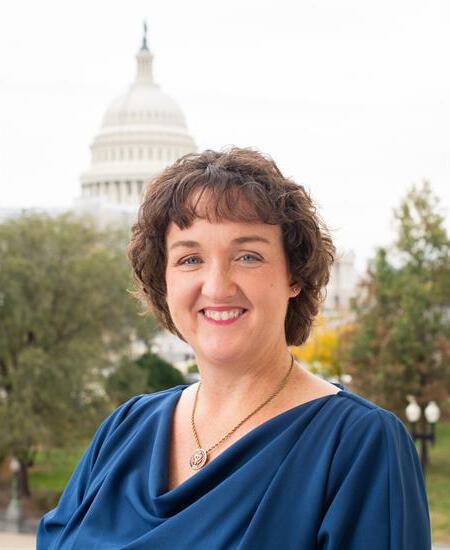
Rep. Katie Porter
Sponsored bills
Shark Fin Sales Elimination Act of 20 21 This bill addresses the sale of shark fins and the inclusion of rays and skates in the Seafood Traceability Program. The Seafood Traceability Program has data reporting and recordkeeping requirements at the time of entry for imported fish or fish products entered into U.S. commerce. The bill makes it illegal to possess, buy, or sell shark fins or any product containing shark fins, except for certain dogfish fins. A person may possess a shark fin that was lawfully taken consistent with a license or permit under certain circumstances. Penalties are imposed for violations under the Magnuson-Stevens Fishery Conservation and Management Act. The Department of Commerce must revise its regulations to include rays and skates as species that are subject to the Seafood Traceability Program.
Puerto Rico Self-Determination Act of 2021 This bill establishes a process for the people of Puerto Rico to vote on the political status (e.g., statehood) of the territory. Congress may ratify the decision through a joint resolution. The bill declares that the legislature of Puerto Rico has the authority to call a status convention regarding the political status of the territory. The bill provides for public financing of delegate elections to the status convention and establishes a Congressional Bilateral Negotiating Commission to provide advice and consultation to delegates of the status convention. The status convention must provide self-determination options for a referendum of the people of Puerto Rico. Ranked-choice voting is a permitted format for the referendum. Delegates shall carry out an educational campaign through traditional paid media related to the referendum. The bill provides for congressional consideration of a joint resolution to ratify the self-determination option selected through the referendum.
Puerto Rico Statehood Admission Act This bill establishes a process for the admission of Puerto Rico into the union as a state, on an equal footing with all other states, based on a majority vote of the people of Puerto Rico.
Philippine Human Rights Act This bill imposes limitations on providing assistance to the police or military of the Philippines. No federal funds may be used to provide such assistance until the Philippines government has taken certain actions, including (1) investigating and successfully prosecuting members of its military and police forces who have violated human rights, (2) withdrawing the military from domestic policing activities, and (3) establishing that it effectively protects the rights of journalists and civil society activists. The President shall also direct U.S. representatives at multilateral development banks to vote against providing loans to the police or military of the Philippines.
Supplemental Security Income Restoration Act of 2021 This bill modifies eligibility for, and other components of, the Supplemental Security Income (SSI) program, including by (1) increasing applicable income and resource limits used to determine SSI eligibility, (2) equalizing treatment of married couples when both spouses receive SSI as compared to two unmarried individuals, and (3) eliminating the penalty on SSI applicants or recipients who transfer resources to another individual for less than fair market value.
Nullifying Opportunities for Variants to Infect and Decimate Act or the NOVID Act This bill establishes the Pandemic Preparedness and Response Program to coordinate and carry out the U.S. government's global health response to COVID-19, its variants, and other pathogens with pandemic potential. As part of the program, the bill requires, within 30 days, the development of a comprehensive strategy to end the COVID-19 pandemic. The strategy must outline efforts to increase COVID-19 vaccinations worldwide, including through the immediate release of the COVID-19 vaccine doses that the United States committed to sending abroad. The bill also requires a long-term strategy for the program to prevent future pandemics.
FAIR Leave Act or the Fair Access for Individuals to Receive Leave Act This bill repeals the limit on the aggregate number of workweeks of family and medical leave that spouses employed by the same employer may be entitled to during any 12-month period. The current limit is 12 aggregate workweeks.
Paycheck Fairness Act This bill addresses wage discrimination on the basis of sex, which is defined to include pregnancy, sexual orientation, gender identity, and sex characteristics. Specifically, it limits an employer's defense that a pay differential is based on a factor other than sex to only bona fide job-related factors in wage discrimination claims, enhances nonretaliation prohibitions, and makes it unlawful to require an employee to sign a contract or waiver prohibiting the employee from disclosing information about the employee's wages. The bill also increases civil penalties for violations of equal pay provisions. Additionally, the Equal Employment Opportunity Commission (EEOC) and the Office of Federal Contract Compliance Programs must train EEOC employees and other affected parties on wage discrimination. The bill directs the Department of Labor to (1) establish and carry out a grant program to provide training in negotiation skills related to compensation and equitable working conditions, (2) conduct studies to eliminate pay disparities between men and women, and (3) make available information on wage discrimination to assist the public in understanding and addressing such discrimination. The bill establishes the National Award for Pay Equity in the Workplace for an employer who has made a substantial effort to eliminate pay disparities between men and women. It also establishes the National Equal Pay Enforcement Task Force to address compliance, public education, and enforcement of equal pay laws. Finally, the bill requires the EEOC to issue regulations for collecting from employers compensation and other employment data according to the sex, race, and national origin of employees for use in enforcing laws prohibiting pay discrimination.
Disaster Learning and Life Saving Act of 2021 This bill establishes within the executive branch a National Disaster Safety Board to study the underlying causes of disaster-related fatalities and property damage nationwide and make policy recommendations, and authorizes appropriations for the board through FY2025. Specifically, the board shall review and establish the facts, circumstances, and cause or probable cause of the loss of life, human injury, and economic injury due to a natural hazard with 10 or more fatalities. The board shall initiate a review of an incident by monitoring the situation and assessing available facts to determine the appropriate review response without interfering in any ongoing lifesaving and life sustaining efforts underway by other entities; disseminate best practices to develop disaster investigation and review capacity within state, tribal, and local governments; and establish an office to review and make recommendations to mitigate and prevent the loss of life, or human or economic injury, for vulnerable populations. The Government Accountability Office shall audit the programs and expenditures of the board at least once every two years. The bill defines natural hazard to mean a major disaster that is naturally occurring, to include any naturally occurring heat wave, storms, or wildfires, and to exclude a technological disaster.