

Stopping Corrupt Actors from Making Political Action Committees Act or the SCAM PAC Act This bill generally prohibits a political committee from disbursing funds to an entity that is owned or controlled by an individual, or the immediate family member of an individual, who has authority to carry out specified activities for the committee (e.g., soliciting funds) or is employed by the committee to provide it with professional services. This prohibition does not apply to (1) a political committee that certifies that a majority of the funds disbursed by the committee were for expenses other than administrative costs, fundraising costs, and employee salaries; or (2) an authorized committee of a candidate, a committee of a political party, or a separate segregated fund of a corporation or labor organization. Further, the bill prohibits a political committee from employing these individuals or allowing them to volunteer on its behalf if the related entity accepted funds from a political committee.
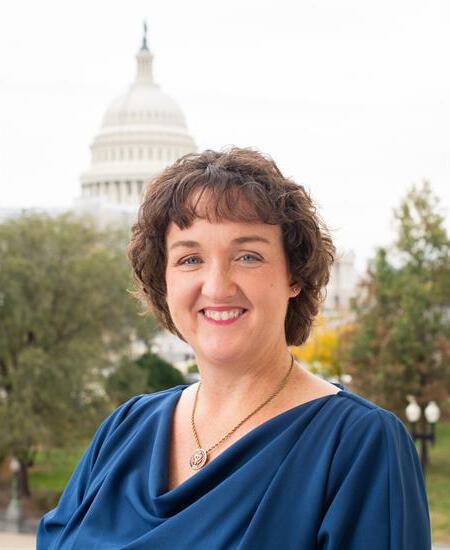
Rep. Katie Porter
Sponsored bills
Albatross and Petrel Conservation Act This bill authorizes the United States Fish and Wildlife Service (USFWS) and the National Marine Fisheries Service (NMFS) to issue regulations to implement and enforce the Agreement on the Conservation of Albatrosses and Petrels, done at Cape Town, South Africa, on February 2, 2001. Specifically, the USFWS and the NMFS may take action to protect albatrosses and petrels and their habitats. The bill prohibits the taking of an albatross or petrel without a permit, authorization, or exemption. The FWS, in consultation with the NMFS, may authorize the taking of an albatross or petrel under exceptional circumstances or incidental to otherwise lawful activities. The bill gives the USFWS, the NMFS, and the Coast Guard authority to enforce this bill. Finally, the bill authorizes cooperation with other countries to achieve and maintain a favorable conservation status of albatrosses and petrels.
Climate Risk and Emergency Support In Livable Inclusive and Equitable Neighborhoods and Communities Everywhere Act or the Climate RESILIENCE Act This bill makes changes to the Robert T. Stafford Disaster Relief and Emergency Assistance Act to take into account climate change. The bill includes extreme temperature events, such as heat waves or freezes, within the scope of the act and defines resilience for purposes of disaster assistance and mitigation efforts. Federal and state preparedness and mitigation assistance may be used for reducing the impacts of extreme temperatures and improving air quality and mitigating against wildfire smoke.. The bill authorizes implementing predisaster hazard mitigation measures that will be cost-effective and equitable long-term and provide enhanced protection to the community. The Federal Emergency Management Agency (FEMA) must (1) provide technical assistance to underserved and disadvantaged communities for such measures; and (2) provide guidance to implement the latest published editions of relevant consensus-based codes, specifications, and standards that incorporate the latest hazard-resistant designs. The bill includes within the hazard mitigation program requirements the abatement of lead, mold, mildew, radon, asthma, and allergen triggers, or other pollutants and hazardous materials directly caused by a major disaster or emergency. FEMA must report to Congress regarding challenges posed by FEMA requirements for determining the cost-effectiveness of mitigation activities and how such requirements may disproportionately burden underserved or disadvantaged communities.
This resolution expresses support for the goals and ideals of Korean American Day and honors the 119th anniversary of the arrival of the first Korean immigrants to the United States.
PrEP Access and Coverage Act This bill requires private health insurance plans to cover prescription drugs that prevent HIV, including related screenings, diagnostic procedures, administrative fees, and clinical follow-ups, without any cost-sharing obligation for the plan holder. Further, insurance plans must not impose any preauthorization requirement for this coverage. These coverage requirements also apply to public health insurance programs, including Medicare, Medicaid, and the Children's Health Insurance Program. Additionally, the bill prohibits denying, limiting, or qualifying coverage or increasing premiums for disability insurance, long-term care insurance, or life insurance policies based on an individual taking medication for HIV prevention. The bill further requires the Department of Health and Human Services to award grants to states, or directly to eligible local organizations, to provide uninsured individuals and underinsured individuals access to prescription drugs and related services that prevent HIV. The Centers for Disease Control and Prevention also must develop a public awareness campaign that focuses efforts in communities with a high need for HIV prevention treatment.
Accelerating Access to Critical Therapies for ALS Act This bill establishes grant programs to address neurodegenerative diseases, such as amyotrophic lateral sclerosis (also known as ALS or Lou Gehrig's disease), and contains other related provisions. The Department of Health and Human Services (HHS) shall award grants to eligible entities for scientific research utilizing data from expanded access to investigational ALS treatments for individuals who are not otherwise eligible for clinical trials. The Food and Drug Administration (FDA) shall award grants to public and private entities to cover the costs of research and development of drugs that diagnose or treat ALS and other rare neurodegenerative diseases. HHS shall also establish the Public-Private Partnership for Neurodegenerative Diseases between the National Institutes of Health, the FDA, and at least one eligible entity (generally, an institution of higher education or a nonprofit organization). The partnership shall support the development and regulatory review of drugs that address ALS and other rare neurodegenerative diseases. The FDA shall publish on its website a five-year action plan for fostering the development of drugs that improve or extend the lives of people living with rare neurodegenerative diseases. The Government Accountability Office must report to Congress about the grants provided under this bill, including an analysis of the impact of such grants on research and development of treatments for ALS.
Designates the facility of the United States Postal Service located at 3045 Sacramento Street in Placerville, California, as the "Deputy Sheriff Brian Ishmael Post Office."
Protecting Our Democracy Act This bill addresses issues involving (1) abuses of presidential power; (2) checks and balances, accountability, and transparency; and (3) election integrity and security. Specifically, regarding abuses of presidential power, the bill requires the Department of Justice (DOJ) and the President to submit to Congress specified materials relating to certain pardons, prohibits presidential self-pardons, suspends the statute of limitations for federal offenses committed by a sitting President or Vice President, prohibits the acceptance of foreign or domestic emoluments, and sets forth provisions regarding Office of Government Ethics and Office of Special Counsel jurisdiction and enforcement authority. To address checks and balances, accountability, and transparency, the bill authorizes specified actions to enforce congressional subpoenas, imposes limits on presidential declarations of emergencies, requires DOJ to maintain a log of specified communications between it and the White House, requires cause for removal of inspectors general, increases whistleblower protections, and requires a candidate for President or Vice President to provide copies of tax returns for the 10 most recent taxable years to the Federal Election Commission. To address election integrity and security, the bill requires federal campaign reporting of foreign contacts, makes various changes to requirements concerning foreign donations to political campaigns and candidates and foreign contributions to online electioneering communications, prohibits distribution of materially deceptive audio or visual media prior to an election (i.e., deepfakes), and establishes a program to support states and localities transition to ranked choice voting systems.
Forbidding Airlines from Imposing Ridiculous Fees Act of 2021 or the FAIR Fees Act of 2021 This bill directs the Department of Transportation to prescribe regulations (1) prohibiting an air carrier from imposing specified fees relating to a flight in passenger air transportation that are unreasonable or disproportional to the costs it incurs, and (2) establishing standards for assessing whether such fees are reasonable and proportional to those costs.
Humane Cosmetics Act of 2021 This bill generally prohibits animal testing in the evaluation of cosmetic products, and it prohibits the sale or transport of cosmetics developed using animal testing, subject to civil penalties. These prohibitions begin one year after enactment. The bill specifies exceptions to these prohibitions, including if such animal testing (1) is conducted outside the United States to comply with a foreign regulatory authority; (2) is pursuant to a specified finding that there are no nonanimal alternatives to test the safety of a potentially dangerous cosmetic product or ingredient; (3) is of a product or ingredient for a drug or device subject to regulation by the Food and Drug Administration (FDA); or (4) is required for a noncosmetic purpose pursuant to a state, federal, or foreign regulatory authority. Further, no animal-testing evidence may be used to establish the safety of a cosmetic product or ingredient that is regulated by the FDA after the effective date of this bill, subject to limited exceptions.