

Federal Contracting for Peace and Security Act This bill requires executive agencies to terminate their contracts with companies conducting business operations in Russia. This requirement ends when Russia takes steps to restore the safety, sovereignty, and condition of Ukraine. The bill shall not apply to the procurement of products or services for (1) the benefit, either directly or through the efforts of regional allies, of Ukraine; or (2) humanitarian purposes to meet basic human needs. The bill provides for a waiver where in the national interest of the United States.
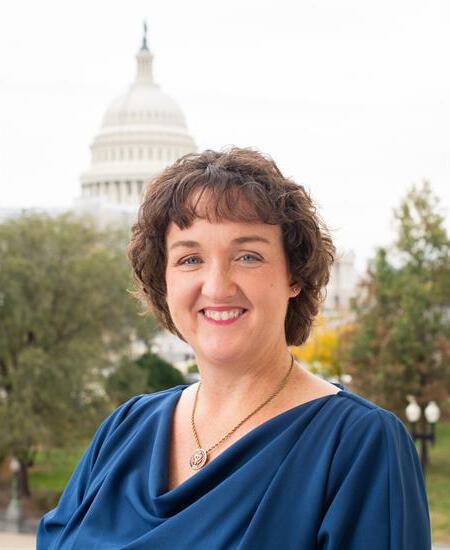
Rep. Katie Porter
Sponsored bills
Postal Service Reform Act of 202 2 This bill addresses the finances and operations of the U.S. Postal Service (USPS). The bill requires the Office of Personnel Management (OPM) to establish the Postal Service Health Benefits Program within the Federal Employees Health Benefits Program under which OPM may contract with carriers to offer health benefits plans for USPS employees and retirees. The bill provides for coordinated enrollment of retirees under this program and Medicare. The bill repeals the requirement that the USPS annually prepay future retirement health benefits. Additionally, the USPS may establish a program to enter into agreements with an agency of any state government, local government, or tribal government, and with other government agencies, to provide certain nonpostal products and services that reasonably contribute to the costs of the USPS and meet other specified criteria. The USPS must develop and maintain a publicly available dashboard to track service performance and must report regularly on its operations and financial condition. The Postal Regulatory Commission must annually submit to the USPS a budget of its expenses. It must also conduct a study to identify the causes and effects of postal inefficiencies relating to flats (e.g., large envelopes). The USPS Office of Inspector General shall perform oversight of the Postal Regulatory Commission.
Educators Expense Deduction Modernization Act of 2022 This bill increases the tax deduction for the expenses of eligible educators from $250 to $1,000, An eligible educator is, with respect to any taxable year, an individual who is a kindergarten through grade 12 teacher, instructor, counselor, principal, or aide in a school for at least 900 hours during a school year.
Ensuring Lasting Smiles Act This bill requires private health insurance plans to cover diagnosis and treatment of congenital anomalies and birth defects, such as reconstructive services and items. Coverage must include services and items that functionally improve, repair, or restore any body part that is medically necessary for normal bodily functions or appearance, as determined by the treating physician. Coverage limits and cost-sharing requirements for such services and items may not be more restrictive than those applicable to all medical and surgical benefits under the plan.
Student Mental Health Rights Act This bill addresses mental health and substance use at institutions of higher education (IHEs). Specifically, the bill requires the Department of Education (ED) to conduct a study on mental health conditions and substance use conditions at IHEs. In addition, ED must issue guidance on IHEs' (1) compliance with federal law on mental health, (2) legal obligations to students with mental health conditions and students with substance use conditions, and (3) policies that may have a discriminatory impact on such students.
Children's Act for Responsible Employment and Farm Safety of 2022 or the CARE Act of 20 22 This bill revises labor provisions for protecting child workers, including those employed in agriculture, and increases the civil penalties for violations of such provisions and imposes new criminal penalties for violations resulting in the death or serious injury or illness of a child worker. Specifically, the bill revises the definition of oppressive child labor to prohibit the employment of children under 14 years of age and imposes new employer reporting requirements for work-related injuries or deaths of agricultural employees under the age of 18. The Department of Labor must analyze, collect, and report on data concerning children under the age of 18 who are employed in agriculture and each work-related injury, illness, or death of any such child. Labor must also revise regulations to prohibit the employment of a child under the age of 18 as a pesticide handler.
Gender Equity in College Sports Commission Act This bill establishes a Commission on Gender Equity in College Sports. The commission must (1) compare how the National Collegiate Athletic Association (NCAA) operates men's and women's championship tournaments with respect to the treatment of the participating men's and women's teams, and (2) report to Congress on its findings with recommendations on how the NCAA can improve gender equity.
This bill excludes from the gross income of a taxpayer up to $10,200 in unemployment compensation issued to the taxpayer for calendar year 2020, but not received until 2021. This exclusion applies to taxable years beginning after December 31, 2020.
This resolution expresses the sense of the House of Representatives that prior to introducing U.S. Armed Forces into hostilities, the House should also determine whether such introduction is for the purpose of a just cause, such as stopping a genocide or ethnic cleansing; whether the proposed action will be in response, and will be proportional, to the underlying just cause, and will be undertaken with the intent to reestablish peace; whether the presumed benefits of the proposed action outweigh the harm done; whether there is a reasonable probability that the proposed action will succeed; and whether all alternatives to military action have been exhausted.
Strengthen Kids' Mental Health Now Act of 2022 This bill establishes several requirements to support the provision of behavioral health services under Medicaid and other programs, particularly for children. For example, the bill temporarily requires payment for pediatric mental, emotional, and behavioral health services under Medicaid to align with Medicare payments to providers. The bill provides for a 100% Federal Medical Assistance Percentage (i.e., federal matching rate) for any associated additional expenditures. The Centers for Medicare & Medicaid Services must issue guidance on how state Medicaid programs may expand the availability of telehealth services and mental, emotional, and behavioral health services. In addition, the Health Resources and Services Administration must award grants to support (1) pediatric behavioral health care integration in communities, (2) pediatric mental health and substance use disorder workforce training, and (3) the infrastructure of pediatric hospitals and rural health clinics with respect to behavioral health services.