

Consumer Fuel Price Gouging Prevention Act This bill prohibits any person from selling, during a proclaimed energy emergency, a consumer fuel at a price that (1) is unconscionably excessive, and (2) indicates that the seller is exploiting the emergency to increase prices unreasonably. The President may issue a proclamation of such an emergency that specifies the consumer fuel and geographic area covered and how long the proclamation applies. The bill provides for enforcement of these provisions by the Federal Trade Commission and state attorneys general. Civil penalties collected by the commission through such enforcement must be used to provide assistance under the Low Income Home Energy Assistance Program. Additionally, the commission must investigate whether the price of gasoline is being manipulated through reducing refinery capacity or other manipulative practices. The commission also must establish a Transportation Fuel Monitoring and Enforcement Unit to collect, monitor, and analyze crude oil and transportation fuel market data. The bill further includes specified transportation fuels within the prohibitions against (1) manipulative market practices, and (2) reporting false price information. It also increases the penalty for violations of those prohibitions. Finally, the Energy Information Administration must survey energy companies to facilitate transparent and competitive crude oil and transportation fuel markets.
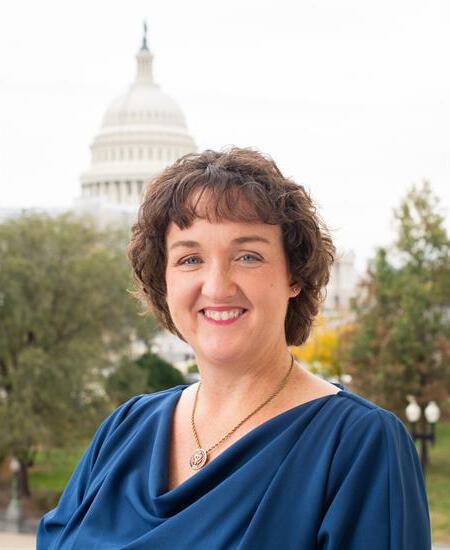
Rep. Katie Porter
Sponsored bills
Cattle Price Discovery and Transparency Act of 2022 This bill requires the Department of Agriculture (USDA) to take various actions to address transparency in contract terms and pricing in the cattle industry. Among these requirements, USDA must maintain a publicly available library or catalog of contracts entered into between meat packers and livestock producers for the purchase of cattle, including any schedules of premiums or discounts associated with the contracts and other specific details. USDA must make this information available to producers and other interested parties in a monthly report. The bill further requires USDA to establish five to seven regions encompassing the entire continental United States that reasonably reflect similar fed cattle purchase practices for processing plants and establish mandatory minimums for each region (i.e., the minimum percentage of cattle purchases that are required to be made through approved pricing mechanisms from producers that are not packers). Under the bill, approved pricing mechanisms are generally purchases of fed cattle made through a negotiated purchase, through a negotiated grid purchase, at a stockyard, or through trading systems or platforms where multiple buyers and sellers can regularly make and accept bids and offers. The bill also establishes a maximum penalty for mandatory minimum violations by covered packers. Under the bill, a covered packer is a packer that has slaughtered an average of 5% or more of the number of fed cattle slaughtered nationally during the immediately preceding five calendar years.
Accountability for Online Firearms Marketplaces Act of 2022 This bill removes the federal liability protection that a provider of an interactive computer service (e.g., a social media company) receives for content provided by third parties (sometimes referred to as Section 230 protection) if the provider operates an online firearms marketplace. Online firearms marketplace refers to an interactive computer service that (1) facilitates firearm-related transactions, (2) advertises or otherwise makes available proposals for transferring firearms, or (3) makes digital instructions for programming a three-dimensional printer to make a firearm.
Health Care Providers Safety Act of 2022 This bill authorizes the Department of Health and Human Services to award grants to health care providers for security services and other expenses related to physical security and cybersecurity.
Rights for the Transportation Security Administration Workforce Act of 2022 or the Rights for the TSA Workforce Act of 2022 This bill modifies the workplace rights, protections, and benefits applicable to Transportation Security Administration (TSA) personnel. Specifically, the bill by December 31, 2022, eliminates personnel authorities of the Department of Homeland Security (DHS) and the Department of Transportation governing the conditions of employment for TSA employees, thus making TSA employees subject to the personnel management system applicable to other federal employees; sets forth transition rules that protect the pay rates, leave rights, and other rights of TSA employees; and requires DHS to consult with the exclusive representative of TSA screening employees to carry out the conversion of those positions. The bill also permits the TSA to consult with organizations representing federal air marshals to address concerns, including mental health and suicide rates; directs the TSA to ensure its employees are provided proper guidance regarding prevention and protections against COVID-19; requires the TSA to provide a one-time bonus payment of $3,000 to each TSA employee carrying out duties that require substantial contact with the public during the COVID-19 national emergency; and requires the Government Accountability Office to report on implementation of the bill, TSA recruitment efforts, and specified TSA personnel policies.
Price Gouging Prevention Act of 2022 This bill generally makes it unlawful to sell or offer for sale a good or service at an unconscionably excessive price during an exceptional market shock. The bill also provides additional funding to the Federal Trade Commission.
Desalination Research Advancement Act This bill reauthorizes through FY2026 the Desalination and Water Purification Research Program at the Bureau of Reclamation and increases the amount of funding available to institutions of higher education. The bill also expands the program's research priorities to include minimizing the impacts of seawater desalination on aquatic life and coastal ecosystems.
Federal Firefighters Fairness Act of 2022 This bill makes it easier for federally employed firefighters who contract certain illnesses to qualify for federal workers' compensation. Specifically, the bill provides that chronic obstructive pulmonary disease, mesothelioma, and specified other cancers of those employed in fire protection activities for at least five years are presumed to be proximately caused by such employment for purposes of a disability or death claim under the federal workers' compensation program. This presumption also applies to federal employees employed in fire protection activities for at least five years who experience a sudden cardiac event or stroke within 24 hours of performing a fire protection activity. The bill also requires the Department of Labor to conduct a review to determine whether breast cancer, gynecological cancer, and rhabdomyolysis should be included under the presumption and to conduct periodic reviews to determine whether other diseases should be included. In addition, a person may petition Labor to include another disease under the presumption. An employee in fire protection activities is a firefighter, paramedic, emergency medical technician, rescue worker, ambulance personnel, or hazardous material worker who (1) is trained in fire suppression; (2) has the legal authority and responsibility to engage in fire suppression; (3) is engaged in the prevention, control, and extinguishing of fires or response to emergency situations where life, property, or the environment is at risk, including the prevention, control, suppression, or management of wildland fires; and (4) performs such activities as a primary responsibility.
Student Protection Act This bill expands the list of actions that may result in the change of control of an institution of higher education (IHE) to include a court-ordered receivership. Such changes of control disqualify an IHE from participating in federal student-aid programs unless the IHE establishes that it meets specific requirements following the change of control.
Accountability in Student Loan Data Act of 2022 This bill revises the method for calculating a cohort default rate (the measurement of how many borrowers default on their federal student loans within a certain time period), and it establishes penalties for institutions of higher education that have a certain percentage of graduates who default on their student loans.