

VA Loan Informed Disclosure Act of 2022 or the VALID Act of 2022 The bill requires a Federal Housing Administration mortgage notice to a veteran to contain comparative rate and fee information about loans available under the Veterans Affairs home loan program.
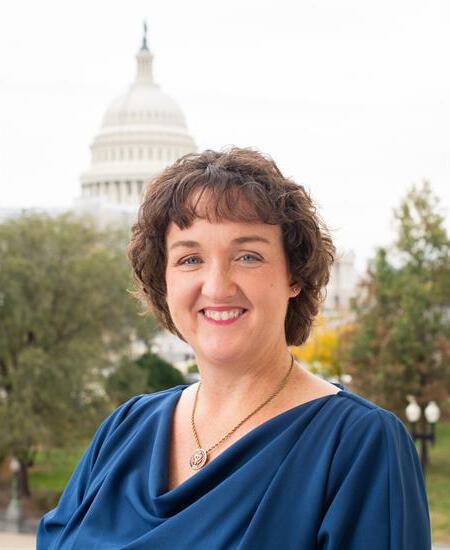
Rep. Katie Porter
Sponsored bills
This bill imposes a 100% excise tax on the purchase of a single-family home by a specified large investor (i.e., any person, other than a tax-exempt charitable organization or a governmental entity, with assets having a fair market value exceeding $20 million). The tax does not apply if the home is used as the principal residence of the investor or the sale to the investor is pursuant to a governmental program for providing housing to low-income individuals.
Net Neutrality and Broadband Justice Act of 2022 This bill expressly classifies broadband internet as a telecommunications service rather than an information service for purposes of regulation by the Federal Communications Commission. (Current law treats providers of telecommunications services as common carriers and subjects them to more stringent requirements.)
Billionaire Minimum Income Tax Act This bill imposes a minimum tax on individual taxpayers whose net worth for the taxable year exceeds $100 million. The tax is equal to 20% of the sum of a taxpayer's taxable income, plus net unrealized gains for the taxable year. The tax may not exceed 40% of the amount by which the taxpayer's net worth exceeds $100 million.
National Plan to End Parkinson's Act This bill requires the Department of Health and Human Services (HHS) to carry out a project to prevent and cure Parkinson's disease (a progressive brain disorder that causes unintended or uncontrollable movements) and related conditions. Among other components of the project, HHS must (1) implement and periodically update a national plan to coordinate and guide efforts to prevent and cure the disease; (2) improve diagnosis, treatment, and care of those with the disease; and (3) address health and other disparities related to the disease. HHS must also conduct annual assessments on the preparation for and response to the increased burden of Parkinson's disease. In addition, the bill establishes a council, comprised of federal and nonfederal stakeholders, to advise HHS on and make recommendations concerning the prevention and cure of Parkinson's disease. The bill's provisions terminate at the end of calendar year 2035.
Securing and Enabling Commerce Using Remote and Electronic Notarization Act of 2022 or the SECURE Notarization Act of 2022 This bill allows a notary public commissioned under state law to remotely notarize electronic records and perform notarizations for remotely located individuals. The bill provides technical requirements for such notarizations, including the creation and retention of video and audio recordings and the use of communication technologies (i.e., video chat). Additionally, the bill requires U.S. courts and states to recognize notarizations—including remote notarizations of electronic records and notarizations of remotely-located individuals—that occur in or affect interstate commerce and are performed by a notary public commissioned under the laws of other states. The bill also allows a notary public to remotely notarize electronic records involving an individual located outside of the United States, subject to certain requirements.
Gabriella Miller Kids First Research Act 2.0 This bill reauthorizes through FY2027 a pediatric disease research initiative within the National Institutes of Health (NIH) and requires the NIH to coordinate pediatric research activities to avoid duplicative efforts. Additionally, the Department of Health and Human Services must report, within five years, to Congress about research funded through the initiative.
Protect Sexual and Reproductive Health Act of 2022 This bill requires the Department of Health and Human Services (HHS) to undertake activities to promote access to sexual and reproductive health and well-being. The bill renames HHS's Office of Population Affairs as the Office of Sexual and Reproductive Health and modifies its responsibilities. Among other activities, the office must develop and implement a strategy to promote sexual and reproductive health and well-being. This strategy must include recommendations to integrate sexual and reproductive health equity and reproductive justice into federal programs. HHS must also award grants for improving access to sexual and reproductive health care to nonprofit or community-based organizations that assist individuals seeking abortion services through programs that are unbiased and medically and factually accurate. Grant funds may not be used to pay for abortion services. Additionally, HHS and the Director of the White House Gender Policy Council must jointly establish an interagency task force to coordinate and promote federal programs and activities related to sexual and reproductive health and well-being.
Shirley Chisholm Congressional Gold Medal Act This bill provides for the posthumous presentation of a Congressional Gold Medal in commemoration of Shirley Chisholm, in recognition of her activism, independence, and groundbreaking achievements in politics, election as the first African American woman in Congress, and campaign to be the first African American to gain the nomination of a major political party for President of the United States. Following its award, the gold medal shall be given to the Smithsonian Institution where it shall be available for display and research.
Credit Reporting Accuracy After a Legal Name Change Act of 2022 This bill prohibits, upon a consumer's request, a credit reporting agency from including on a consumer credit report a consumer's prior name after a legal name change.