

National Discovery Trails Act This bill amends the National Trails System Act to include national discovery trails as part of the national trails system. Such trails (1) shall be extended, continuous, interstate trails located to provide for outstanding outdoor recreation and travel and to connect representative examples of America's trails and communities; (2) shall provide for the conservation and enjoyment of significant natural, cultural, and historic resources and be so located as to represent metropolitan, urban, rural, and back country regions of the Nation; and (3) may be designated on federal lands and, with the owner's consent, on nonfederal lands. The 6,000-mile American Discovery Trail extending from Cape Henlopen State Park in Delaware, to Point Reyes National Seashore in California, splitting into northern and southern routes near Cincinnati, Ohio, and rejoining at Denver, Colorado, is designated as a national discovery trail. The bill sets forth requirements for designation of a trail as a national discovery trail. The appropriate federal department for each national discovery trail shall (1) administer the trail in cooperation with at least one competent trailwide volunteer-based organization; and (2) submit a comprehensive plan for the trail's protection, management, development, and use.
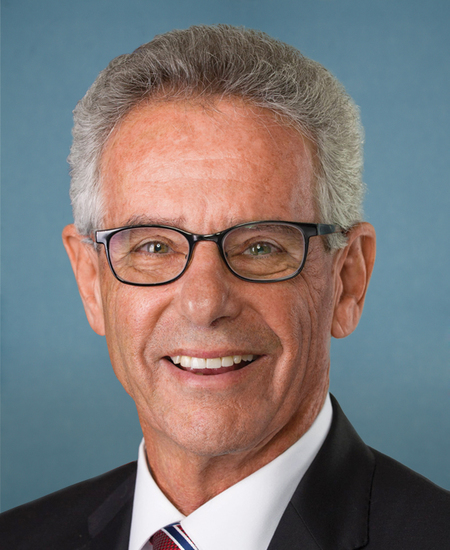
Rep. Alan S. Lowenthal
Sponsored bills
This resolution recognizes the significance of the 47th anniversary of Black April and the Fall of Saigon on April 30, 1975. The resolution honors the contributions of Vietnamese Americans and honors the service of members of the U.S. Armed Forces and the South Vietnamese forces who fought in Vietnam, including those who gave their lives.
Clean Energy Minerals Reform Act of 2022 This bill addresses mineral leasing, exploration, and development on federal land. For example, the bill prohibits the issuance of a patent for certain mining or millsite claims; establishes a permitting and leasing system for hardrock mining; establishes a 12.5% royalty on new mining operations and an 8% royalty on existing operations, with an exemption for small miners; protects special places, such as wilderness study areas, roadless areas, and wild and scenic rivers, from hardrock mining activity; requires consultation prior to undertaking any mineral activities that may have a substantial direct impact on the lands or interests of Indian tribes; establishes an environmental standard for mining activities to ensure that mining activities prevent undue degradation of public lands and resources; prescribes requirements for the exploration permit process and for operations permits, including financial assurances; and authorizes the Hardrock Minerals Reclamation Fund to be used for responding to hazardous substance releases on abandoned hardrock mine land, including efforts to reclaim the land.
Armenian Genocide Education Act This bill requires the Library of Congress to maintain a public website and otherwise support educational initiatives to promote understanding about the Armenian Genocide.
Time Off to Vote Act This bill requires an employer, upon the request of an employee, to provide the employee with a minimum of two consecutive hours of paid leave in order to vote in a federal election. The employer may determine the two-hour period, excluding any lunch break or other break. Taking such leave shall not result in the employee losing accrued employment benefits. The bill makes it unlawful for an employer to interfere with the right to take such leave or for an employer to discriminate against an employee for taking such leave. Further, the bill makes it unlawful for any employer to retaliate against an employee for (1) opposing any practice made unlawful by this bill; (2) filing a charge, or instituting or causing to be instituted any proceeding, under or related to this bill; or (3) testifying or preparing to testify in an inquiry or proceeding relating to such leave. The bill specifies penalties for employers who violate these provisions.
This resolution recognizes the discrimination that Sikhs have faced and continue to face in the United States and elsewhere and condemns all acts of bias and hatred against the Sikh community. The resolution also expresses respect and gratitude for the contributions of all Sikh Americans.
Maddy summaryHR 7477, the CERTS Tax Exemption Act, ensures that grants provided under the Coronavirus Economic Relief for Transportation Services Act are tax-free for eligible transportation service providers. The bill directly affects companies and organizations providing transportation services that receive these specific federal grants. Key provisions state that grant amounts cannot be counted as taxable income, deductions related to grant-funded costs cannot be denied, and tax attributes (like basis increases) must be treated as tax-free for partnerships and S corporations. This change simplifies tax treatment for recipients by preventing unintended tax liabilities on relief funds.
Burma Unified through Rigorous Military Accountability Act of 2022 or the BURMA Act of 2022 This bill imposes sanctions pertaining to Burma (Myanmar) and addresses related issues. The President must impose property- and visa-blocking sanctions on certain foreign persons (i.e., an individual or entity), including those that (1) knowingly operate in Burma's defense sector, (2) are responsible for or complicit in undermining Burma's democratic processes, or (3) are senior leaders in Burma's military or government. The Department of the Treasury must prohibit or impose strict conditions on certain accounts used to facilitate transactions for such sanctioned persons. The President may impose sanctions on Myanma Oil and Gas Enterprise if such sanctions would support certain objectives, including reducing the Burmese military's ability to undermine democracy in Burma. Before removing certain foreign persons from a list of specially designated nationals and blocked persons (commonly known as the SDN list), the President must certify to Congress that the person in question has not knowingly engaged in certain activities, such as supporting terrorism. The bill authorizes Department of State and U.S. Agency for International Development activities in Burma and the surrounding region to support democracy activists, humanitarian assistance, and reconciliation efforts. The State Department may (1) continue to assist organizations supporting political prisoners in Burma, and (2) provide assistance to entities investigating crimes against humanity. The President must direct U.S. representatives to the United Nations to vote and advocate for certain actions related to Burma, such as cutting off assistance to Burma's government.
Postal Service Reform Act of 202 2 This bill addresses the finances and operations of the U.S. Postal Service (USPS). The bill requires the Office of Personnel Management (OPM) to establish the Postal Service Health Benefits Program within the Federal Employees Health Benefits Program under which OPM may contract with carriers to offer health benefits plans for USPS employees and retirees. The bill provides for coordinated enrollment of retirees under this program and Medicare. The bill repeals the requirement that the USPS annually prepay future retirement health benefits. Additionally, the USPS may establish a program to enter into agreements with an agency of any state government, local government, or tribal government, and with other government agencies, to provide certain nonpostal products and services that reasonably contribute to the costs of the USPS and meet other specified criteria. The USPS must develop and maintain a publicly available dashboard to track service performance and must report regularly on its operations and financial condition. The Postal Regulatory Commission must annually submit to the USPS a budget of its expenses. It must also conduct a study to identify the causes and effects of postal inefficiencies relating to flats (e.g., large envelopes). The USPS Office of Inspector General shall perform oversight of the Postal Regulatory Commission.
Increase Federal Disaster Cost Share Act of 2021 This bill increases the federal cost share from 75% to 90% for any emergency or major disaster declared by the President beginning on January 1, 2020, and ending on December 31, 2020.