

Federal Firefighters Fairness Act of 2022 This bill makes it easier for federally employed firefighters who contract certain illnesses to qualify for federal workers' compensation. Specifically, the bill provides that chronic obstructive pulmonary disease, mesothelioma, and specified other cancers of those employed in fire protection activities for at least five years are presumed to be proximately caused by such employment for purposes of a disability or death claim under the federal workers' compensation program. This presumption also applies to federal employees employed in fire protection activities for at least five years who experience a sudden cardiac event or stroke within 24 hours of performing a fire protection activity. The bill also requires the Department of Labor to conduct a review to determine whether breast cancer, gynecological cancer, and rhabdomyolysis should be included under the presumption and to conduct periodic reviews to determine whether other diseases should be included. In addition, a person may petition Labor to include another disease under the presumption. An employee in fire protection activities is a firefighter, paramedic, emergency medical technician, rescue worker, ambulance personnel, or hazardous material worker who (1) is trained in fire suppression; (2) has the legal authority and responsibility to engage in fire suppression; (3) is engaged in the prevention, control, and extinguishing of fires or response to emergency situations where life, property, or the environment is at risk, including the prevention, control, suppression, or management of wildland fires; and (4) performs such activities as a primary responsibility.
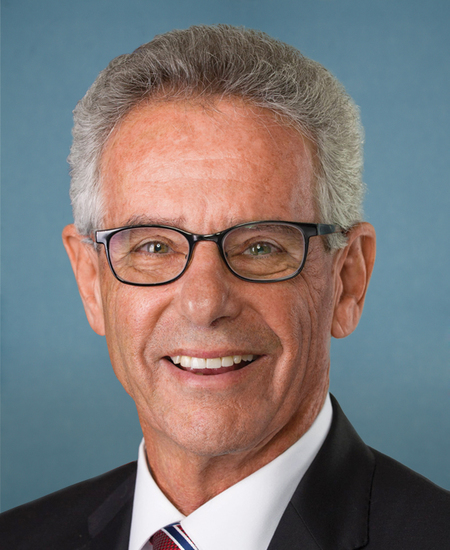
Rep. Alan S. Lowenthal
Sponsored bills
Benjamin Berell Ferencz Congressional Gold Medal Act This bill provides for the award of a Congressional Gold Medal to Benjamin Berell Ferencz in recognition of his service to the United States and the international community during the post-World War II Nuremberg trials and his lifelong advocacy for international criminal justice and the rule of law.
Roadless Area Conservation Act of 2021 This bill bars the Department of Agriculture from allowing the construction of roads, the reconstruction of roads, or logging in an inventoried roadless area where those activities are prohibited by the Roadless Rule (i.e., certain federal regulations relating to roadless area management).
This resolution extends collective bargaining rights prescribed in the Congressional Accountability Act of 1995 to employees of the House of Representatives.
Displaced Afghan Women and Girls Education Act of 2022 This bill provides certain educational resources to certain displaced Afghan women and girls domiciled in the United States. For example, the bill (1) requires such displaced Afghan women and girls to receive in-state tuition rates at public institutions of higher education, and (2) provides funding for and establishes the Displaced Afghan Women and Girls Scholarship Grant.
Maddy summaryHRES 1093 is a symbolic House resolution designating May 2022 as "Mental Health Awareness Month." It expresses support for raising public awareness about mental health, emphasizes that mental well-being is as important as physical health, and encourages efforts to reduce stigma and improve access to services. The resolution does not create new laws or allocate funding but calls for recognizing mental health as a national priority and applauds existing efforts by organizations. It was introduced by multiple representatives and passed in the House on May 6, 2022, as a non-binding gesture.
Transportation Assistance for Olympic Cities Act of 2022 This bill authorizes through FY2034 the Department of Transportation (DOT) to prioritize providing grants for surface transportation projects relating to international Olympic, Paralympic, and Special Olympics events, including for temporary facilities, equipment, operations, and maintenance that meet the extraordinary needs associated with hosting such events. DOT must take all reasonable efforts to provide assistance for such events, including by developing intermodal transportation plans and expediting federal review of requests with regards to the events. Authority under the bill to provide grants and assistance terminates on September 30, 2034.
Pride in Mental Health Act This bill expands programs that prevent and treat child abuse and neglect to address issues facing youth who are lesbian, gay, bisexual, transgender, queer or questioning, nonbinary, or gender-variant members of indigenous communities (e.g., Two Spirit). Specifically, these programs include (1) research and reporting requirements, (2) providing technical assistance, (3) grants to states and local agencies to train child-welfare personnel, and (4) community-based prevention-service grants. The bill also establishes a grant program to provide mental and behavioral health resources for such youth, including trauma-informed care.
This resolution urges (1) the President to issue a proclamation recognizing Earth Day; and (2) governments and people to continue building upon the Paris Agreement and other efforts to ensure that future generations inherit a livable, sustainable, and ecologically rich planet. The resolution reaffirms that immediate action is needed to reduce greenhouse gas emissions and ameliorate environmental injustices in order to protect our planet, public health, and overall well-being of all people and wildlife. In addition, it encourages the American people to mark Earth Day by working to address environmental challenges, uplift indigenous environmental knowledge and stewardship practices, educate others about the need for year-round action, and honor the stewardship ethic for which Senator Gaylord Nelson stood.
Maddy summaryHRES 1054 is a symbolic resolution recognizing Vietnamese Americans' contributions to U.S. society. It acknowledges that approximately 1.7 million Vietnamese Americans - the fourth largest Asian-American group - have overcome challenges to contribute significantly in fields like business, education, the military, and public service. The resolution highlights their role in strengthening U.S. communities, supporting democracy globally, and enriching cultural diversity. As a non-binding resolution, it does not create new laws or policies but formally expresses the House's recognition of these accomplishments.