Maddy summaryHR 5322, the Time Off to Vote Act, requires most private employers (with 25+ employees) to provide two consecutive hours of paid leave for employees to vote in federal elections. Employers must grant this leave upon request, can schedule it during early voting periods if permitted by state law, and cannot include lunch breaks in the leave period. The bill prohibits retaliation against employees who take this leave and ensures it does not affect accrued employment benefits. Violations could result in civil penalties up to $10,000 per offense, enforced by the Department of Labor.
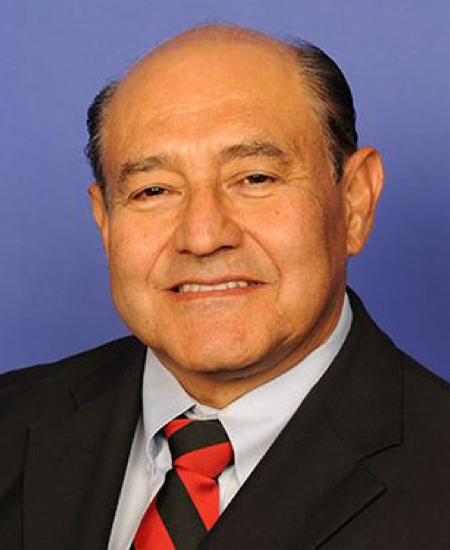
Rep. J. Luis Correa
Sponsored bills
Maddy summaryThis bill renames a U.S. Postal Service facility in Escondido, California, to honor Captain E. Royce Williams. It officially designates the building at 1157 West Mission Avenue as the "Captain E. Royce Williams Post Office Building" and updates all federal references to the location to use this new name. The change affects only official documents and records, not the building's operations or services. This is a purely administrative naming action with no policy or funding implications.
Maddy summaryHR 5295, the Expanding the VOTE Act, modifies Section 203 of the Voting Rights Act to expand language access for voters. It requires states and localities to provide voting materials (including ballots and instructions) in the language of covered language minority groups, with new provisions for American Indian and Alaska Native languages requiring tribal government consultation for unwritten languages. The bill creates $15 million in grants to help jurisdictions provide voting materials in languages that don’t currently trigger Section 203 coverage, while mandating continued provision for those groups in future elections. It also directs a study to evaluate lowering population thresholds for language protections and expanding the definition of covered languages.
Maddy summaryHRES 645 is a non-binding House resolution recognizing August as "Chicano Heritage Month" to celebrate the contributions of Mexican Americans to U.S. history. It highlights historical figures like labor leaders Cesar Chavez and Dolores Huerta, landmark court cases (e.g., *Mendez v. Westminster* ending school segregation), and cultural impacts such as Selena's influence on music. The resolution does not create new laws or policies but serves as a symbolic acknowledgment by the House to honor this heritage. It encourages the public and institutions to observe the month with events celebrating Mexican American contributions.
Maddy summaryThis bill amends the definition of manufactured homes under federal law by removing the requirement that they be "built on a permanent chassis." The change directly affects manufactured home owners and manufacturers by potentially expanding eligibility for certain housing programs and financing options previously restricted to traditional homes. Within 90 days of enactment, a federal committee must develop revised safety standards for manufactured homes to implement this definition change. The core provision simplifies regulatory classification, aiming to make manufactured housing more accessible as a homeownership option.
Maddy summaryThis bill requires the Department of Homeland Security (DHS) to establish a new Joint Task Force focused on combating transnational criminal organizations operating along U.S. land borders. The task force must prioritize disrupting smuggling and trafficking of people (especially children and families) and fentanyl/fentanyl precursors across borders, with specific performance metrics and quarterly reports to Congress. It also mandates DHS to create an integrated border intelligence cell within U.S. Customs and Border Protection to track migrant surges and trafficking routes, and to strengthen international partnerships with Canada, Mexico, and Central/South American countries to combat drug and human trafficking. The bill directly affects DHS operations, border security agencies, and international law enforcement partners by mandating new structures and coordination mechanisms.
Maddy summary# Summary of the "Protecting Our Democracy Act" This comprehensive legislation aims to strengthen democratic processes, increase government transparency, and prevent foreign interference in elections. Key provisions include: ## Ethics and Transparency - **Ethics Pledge**: Requires all appointees to sign an ethics pledge committing to: - Ban on gifts from registered lobbyists - 2-year revolving door ban (prohibiting participation in matters related to former employers) - Golden parachute ban (no special payments from former employers) - Commitment to decision-making based on public interest - **Tax Transparency**: Requires presidential and vice presidential candidates to disclose 10 years of tax returns, with sitting presidents submitting returns within 30 days of enactment ## Campaign Finance and Foreign Interference - **Foreign Contact Reporting**: Requires political committees to report any contact with "covered foreign nationals" within 1 week - **Enhanced Penalties**: Criminal penalties of up to $1 million and 5 years in prison for violations - **Online Advertising Rules** ("Honest Ads Act"): - Requires clear disclosure of who paid for political ads online - Mandates machine-readable public databases of political ads - Requires visible sponsor identification that remains when ads are shared - Defines "qualified political advertisements" to include various online formats ## Preventing Patronage Systems - Limits exceptions to competitive service for federal positions - Restricts transferring positions between competitive and excepted service - Requires employee consent for position transfers ## Use of Federal Property - Prohibits holding national political conventions on federal property - Requires publicly available visitor records at White House and other official locations (with privacy exceptions) The legislation establishes detailed definitions, reporting requirements, and enforcement mechanisms across multiple agencies, with the goal of increasing transparency, preventing foreign interference, and ensuring ethical conduct in government service.

Maddy summaryHR 4932, the End Employer Collusion Act, prohibits agreements between employers (including franchises or contractors) that restrict hiring from each other's current or former employees. The bill makes it unlawful for employers to enter into, enforce, or threaten to enforce such "restrictive employment agreements." Employees harmed by these agreements can sue for actual damages, punitive damages, and legal fees in federal court, while the Federal Trade Commission can also enforce the law. This directly affects workers by preventing employer agreements that limit job opportunities and competition for their services.
Maddy summaryHRES 578 is a non-binding House resolution calling for the immediate release of Eyvin Hernandez, a U.S. citizen and Los Angeles County public defender wrongfully detained by Venezuela since March 2022. The resolution urges U.S. officials, including the President and Secretary of State, to press Venezuela for his release and condemns Venezuela’s practice of detaining U.S. citizens for political purposes. It specifically references Hernandez’s wrongful detention without evidence or fair trial, noting his status as a Department of State-designated wrongfully detained individual. The resolution expresses support for Hernandez and other Americans detained abroad, without creating new legal requirements or funding.
Maddy summaryThis bill establishes new federal requirements for employers to prevent heat-related illness and injury among workers. It mandates that employers provide safe work environments by implementing specific measures, including access to cool water, scheduled rest breaks in shaded areas, employer-paid cooling equipment, and training for employees and supervisors on recognizing heat illness symptoms. The Secretary of Labor must create these standards within one year, requiring employers in high-heat occupations (like construction, agriculture, and outdoor labor) to adopt engineering controls, administrative schedules, and health protocols. Key provisions include ensuring hydration, rest, and language-accessible training, while preserving existing safety protections and allowing for updates as scientific evidence evolves.