

Maddy summary# Summary of Proposed Immigration Legislation This comprehensive immigration bill proposes sweeping reforms across multiple areas of U.S. immigration policy. The key provisions can be categorized as follows: ## Family Immigration Reforms - Expands eligibility for family-based visas - Creates new pathways for family reunification - Reforms the "child out" rule for H-4 visa holders who age out - Establishes new procedures for sponsors of unaccompanied children ## Employment-Based Immigration - Increases diversity visas from 55,000 to 80,000 - Creates new categories for doctoral STEM graduates - Eliminates per-country limits for employment-based visas - Addresses visa backlogs by creating new categories for beneficiaries with priority dates over 10 years old - Increases visa numbers for certain employment-based categories (e.g., 23.55% instead of 28.6% for certain categories) - Creates a Regional Economic Development Immigrant Visa Pilot Program (10,000 visas annually) ## Diversity and Integration Programs - Creates a United States Citizenship and Integration Foundation to promote citizenship preparation - Establishes pilot programs for immigrant integration at state and local levels - Creates English as a Gateway to Integration grant program ($100 million for 2024-2025) - Creates Workforce Development and Shared Prosperity grant program ($100 million for 2024-2025) - Requires in-state tuition rates for refugees, asylees, and certain special immigrants - Waives English requirements for seniors applying for naturalization ## Immigration Court Reforms - Increases immigration judge numbers by 55 annually through 2028 - Creates a right to counsel for vulnerable individuals (children, victims of abuse, etc.) - Establishes an Immigration Counsel Fund with a $25 surcharge on immigration fees - Requires all noncitizens to receive legal orientation programs - Modernizes court technology for improved efficiency - Creates procedures for ensuring court appearance compliance ## Refugee and Asylum Processing - Expands alternatives to detention for family units - Improves processing for asylum seekers - Creates programs to facilitate safe and efficient repatriation - Establishes reintegration support for repatriated individuals ## Naturalization and Citizenship - Creates citizenship pathways for U.S. high school graduates - Waives English requirements for seniors - Creates a National Citizenship Promotion Program - Establishes naturalization ceremonies at historic locations The bill aims to create a more efficient immigration system, address backlogs in immigration courts, promote immigrant integration, create clearer pathways to citizenship, and reform both family-based and employment-based immigration systems. It represents a comprehensive approach to modernizing U.S. immigration policy.
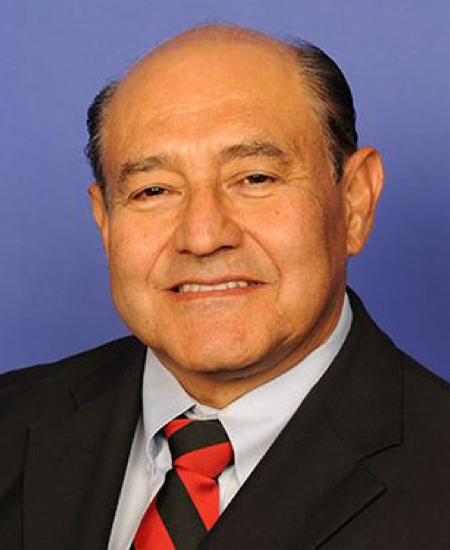
Rep. J. Luis Correa
Sponsored bills
Maddy summaryThe PROTECT 340B Act of 2023 prohibits pharmacy benefit managers (PBMs), health insurance plans, and health insurance issuers from discriminating against healthcare providers participating in the 340B drug pricing program. It specifically bans these entities from paying less for 340B drugs than they would for similar drugs dispensed by non-340B providers, imposing special requirements on 340B providers, or requiring identification of 340B drugs in billing. The bill establishes civil penalties of up to $5,000 per violation per day for PBMs that violate these protections and requires the Health Resources and Services Administration to create implementing regulations. It directly affects safety-net hospitals, clinics, and health centers that serve low-income patients, particularly those in rural areas, by protecting their ability to use 340B drug discounts to provide affordable care.
Maddy summaryHR 2474, the "Strengthening Medicare for Patients and Providers Act," changes how Medicare pays physicians for services. It replaces the previous two-part payment system (used through 2025) with a single annual payment rate update starting in 2024. This update will be based on the Medicare Economic Index (MEI), which tracks costs for medical providers. The change directly affects Medicare-certified doctors and clinics who receive payments under the physician fee schedule.
Maddy summaryThis bill would require Medicare to cover FDA-approved blood tests that screen for multiple cancers simultaneously (like breast, lung, or colorectal cancer) for beneficiaries. It directly affects Medicare recipients aged 65+ who could access these new screenings once per year, without prior authorization. The key provision adds "multi-cancer early detection screening tests" to Medicare's covered services under Part B, defining them as blood tests analyzing cell-free DNA, while maintaining existing coverage for standard screenings like mammograms. The bill does not change current coverage for individual cancer screenings but ensures Medicare keeps pace with new medical technology.
Maddy summary# Summary of Proposed Election Reform Legislation This document outlines a comprehensive federal election reform bill with multiple titles addressing various aspects of voting rights, election administration, and election integrity. ## Key Provisions: ### 1. Democracy Restoration (Title I) - Restores voting rights to citizens with felony convictions who are not serving a felony sentence in a correctional institution - Requires states to notify individuals of restored voting rights upon release from prison, completion of probation, or sentencing - Prohibits states from conditioning voting rights on payment of fines or fees - Requires states to provide notification of voting rights to citizens with criminal convictions ### 2. Voter Identification Requirements (Title II) - Establishes a broad definition of acceptable identification documents (including utility bills, bank statements, student IDs, etc.) - Requires states to provide free identification to voters who lack one - Authorizes $5 million annually for 5 years to cover costs of providing identification - Sets procedures for provisional voting when identification is not presented ### 3. Voter List Maintenance (Title III) - Prohibits "voter caging" (using undeliverable mail to challenge voter registration) - Bans use of unverified match lists to remove voters from registration lists - Sets strict conditions for removing voters from registration lists - Requires states to provide notice to voters removed from registration lists ### 4. Election Integrity Measures (Title V) - Prohibits hindering or interfering with voter registration (Section 2001) - Restricts removal of local election administrators (Section 3001) - Prohibits harassment of election workers (Section 3101) - Bans deceptive practices in elections (Section 3201), including false statements about voting locations, eligibility, or endorsements ### 5. Additional Provisions - Requires states to provide notice of voting rights restoration to citizens - Establishes private rights of action for violations of the law - Sets criminal penalties for violations (up to $100,000 fines and 5 years imprisonment) - Includes provisions for federal funding to be contingent on compliance with voting rights restoration This legislation represents a significant overhaul of voting rights and election administration procedures across the United States, with a focus on expanding voting access, protecting voter rights, and ensuring fair election administration.
Maddy summaryHR 589, the MAHSA Act, imposes U.S. sanctions on Iran's Supreme Leader, President, and affiliated entities responsible for human rights abuses and terrorism. It targets the Supreme Leader's Office, the President's cabinet, security forces involved in the crackdown following Mahsa Amini's death, and entities financing abuses. The bill requires the President to annually determine and apply existing sanctions - like property blocking and visa bans - against these individuals and entities. This directly affects Iran's top leadership and security apparatus, aiming to hold them accountable for abuses including the Morality Police's role in Amini's detention and the subsequent violent suppression of protests.
Maddy summaryHR 549, the Metastatic Breast Cancer Access to Care Act, removes waiting periods for disability and Medicare coverage for people diagnosed with metastatic breast cancer. Specifically, it amends Social Security Act sections to allow immediate eligibility for disability insurance benefits (eliminating the standard waiting period) and immediate Medicare coverage (waiving the 24-month waiting period) for these patients. The bill directly affects individuals with metastatic breast cancer who would otherwise face delays in accessing critical benefits. These changes apply to applications filed or benefits beginning after the bill's enactment date. The law makes no other policy changes beyond these specific eligibility adjustments.
Maddy summaryThe EACH Act of 2023 would require federal health programs - including Medicaid, Medicare, the Indian Health Service, and TRICARE - to cover abortion services without restrictions. It repeals a provision in the Affordable Care Act that allowed states to limit abortion coverage in health insurance plans sold through state marketplaces. The bill also prohibits the federal government from restricting abortion coverage in private health insurance plans. This would directly affect millions of people, particularly low-income individuals and people of color, who are disproportionately enrolled in Medicaid and currently face barriers to abortion care due to coverage restrictions.
Maddy summaryThis bill authorizes a single Congressional Gold Medal to honor the members of Escuadrón 201 (the "Aztec Eagles"), a Mexican air squadron that fought alongside U.S. forces in the Pacific during WWII. The medal, to be struck by the Treasury and displayed at the Smithsonian, commemorates their 795 combat sorties, 2,000 combat flight hours, and seven pilot fatalities while supporting U.S. and Philippine ground forces. The bill is purely commemorative, with no policy changes or direct effects on current legislation or constituents. It recognizes historical military collaboration between Mexico and the U.S. during World War II.
Maddy summaryHR 1361 establishes a federal grant program to fund community gun buyback initiatives. It authorizes $360 million annually (2022-2024) for states, local governments, and licensed gun dealers to conduct buybacks using "smart prepaid cards" loaded with 125% of a firearm's market value. The program prohibits using these cards to purchase guns or ammunition, requires recycling collected firearms within 60 days, and bans resale. It directly affects communities through local programs and licensed dealers participating in the buyback system, with criminal penalties for misusing the cards in firearm transactions.