

Maddy summaryThe Access to Family Building Act establishes legal rights for individuals seeking fertility care and health care providers offering assisted reproductive technology (ART) services. It prohibits states or localities from imposing unreasonable restrictions on ART access - such as excessive costs, health barriers, or arbitrary limitations - that don’t advance safety or health outcomes. The bill allows patients, providers, or insurers to sue to enforce these rights, while explicitly preserving state health/safety regulations that protect patient safety. It does not override existing state insurance laws or require changes to medical facility safety standards. This bill directly affects patients pursuing fertility treatment, fertility clinics, and health insurers covering ART services.
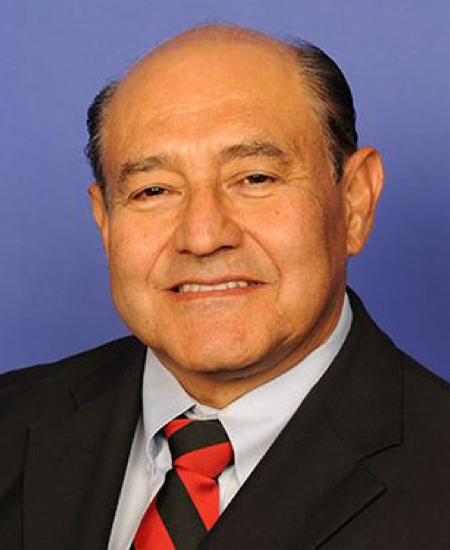
Rep. J. Luis Correa
Sponsored bills
Maddy summaryThe Credit for Caring Act of 2025 creates a federal tax credit for family caregivers of elderly or disabled relatives. It allows eligible caregivers (with over $7,500 in earned income) to claim a credit equal to 30% of qualified caregiving expenses exceeding $2,000, capped at $5,000 per year. Qualified expenses include human assistance, home modifications, respite care, counseling, lost wages for unpaid time off, and transportation, all requiring certification from a licensed healthcare provider that the care recipient has long-term needs. The credit phases out for higher earners (over $75,000 single/$150,000 joint) and requires documentation of expenses and care recipient certification.
Maddy summaryHR 2029, the "Stop Comstock Act," amends federal obscenity laws to remove outdated restrictions on abortion and contraception. It deletes references to "indecent" materials and abortion-related language from Title 18 (e.g., removing "or means for procuring abortion" from section 552 and revising definitions in sections 1461 and 1462). The bill clarifies that federal law does not prohibit the distribution of materials related to abortion or contraceptives, updating how "obscene" is defined. These changes directly affect federal enforcement of obscenity laws, particularly regarding medical information and devices. The bill focuses on modernizing statutory language to align with current legal standards for protected speech and healthcare access.
Metastatic Breast Cancer Access to Care Act This bill expedites payment of Social Security Disability Insurance (SSDI) benefits and eligibility for Medicare coverage for those with metastatic breast cancer (i.e., breast cancer that has spread to other sites in the body). Specifically, the bill eliminates the 5-month waiting period for SSDI benefits and the subsequent 24-month waiting period for Medicare coverage for individuals with metastatic breast cancer. Under current law, individuals generally must wait 5 months after the onset of disability to begin receiving SSDI benefits and an additional 24 months to become eligible for Medicare.
Maddy summaryThis bill requires the Transportation Security Administration (TSA) to transition its workforce from a special personnel management system to the standard federal personnel system under Title 5 of the U.S. Code by December 31, 2025. It protects TSA employees by ensuring no reduction in pay, benefits, or retirement rights during the transition, while preserving collective bargaining rights for screening agents. The legislation also mandates consultation with labor unions during the process and requires several reports on workforce issues including recruitment, harassment policies, and workplace safety.
Maddy summaryThis bill requires the U.S. Customs and Border Protection (CBP) to develop a detailed plan within 180 days of enactment, outlining how it will identify, integrate, and deploy emerging technologies like AI, advanced sensors, and automated systems to enhance border security operations. The plan must assess privacy impacts, evaluate CBP Innovation Teams' work, identify technologies used by other agencies, and detail how new systems will replace outdated legacy programs. It also mandates annual reporting to Congress on technology pilots, transition progress to operational programs, and metrics for measuring effectiveness. The bill directly affects CBP and the Department of Homeland Security, focusing on concrete procedural requirements for technology adoption rather than specific policy outcomes.
Maddy summaryThis bill amends the 2023 National Defense Authorization Act to require the Department of Homeland Security to submit annual reports on counter-illicit tunnel operations, replacing a one-time reporting requirement with ongoing updates. It directly affects DHS officials responsible for border security operations and Congress, which receives these reports for oversight. The key mechanism is the annual reporting mandate, ensuring continuous assessment of tunnel threats rather than a single strategic plan development.
Maddy summaryThis bill (HR 1988) provides unemployment benefits eligibility for certain federal workers and military members during government shutdowns. It deems eligible employees - such as military personnel, NOAA Commissioned Corps members, and excepted civilian workers performing emergency duties - as "totally separated from federal service" during funding gaps. This allows them to access unemployment benefits immediately, without waiting periods, for weeks of unemployment starting March 14, 2025. The bill directly affects federal employees who remain on duty but are unpaid due to shutdowns.
Maddy summaryThis bill authorizes a posthumous Congressional Gold Medal for actor James Earl Jones to recognize his career achievements in theater and film. It directs the Treasury Secretary to strike a gold medal bearing his name, which will be presented to his son, Flynn Earl Jones, following Jones' passing. The bill also permits the sale of bronze duplicates to cover costs. As a ceremonial honor with no policy changes, it does not affect legislation or government operations.
Maddy summaryHR 471, the Fix Our Forests Act, establishes a new system for identifying and managing high-risk wildfire areas called "firesheds" and creates a centralized Fireshed Center to coordinate wildfire risk management across federal agencies. The bill streamlines environmental reviews for wildfire risk reduction projects, allowing for faster implementation of hazardous fuels management activities in designated areas. It includes provisions for community wildfire risk reduction programs, water source protection, and specific initiatives for restoring white oak forests. The legislation also includes litigation reforms to expedite forest management projects and reduce delays from legal challenges. These provisions aim to reduce wildfire risk and improve forest health through more coordinated, data-driven management approaches.