

Maddy summaryH.J. Res. 80 would declare the Equal Rights Amendment (ERA) part of the U.S. Constitution, asserting it has been ratified by 38 states (three-fourths of the states) despite the original 1972 deadline. If passed, this resolution would formally establish the ERA as a constitutional amendment, requiring all federal and state laws to align with its gender equality protections. The bill does not create new laws but confirms the ERA's status as part of the Constitution, affecting how laws are interpreted and enforced. It is a procedural step to resolve the legal dispute over the ERA's validity after decades of debate.
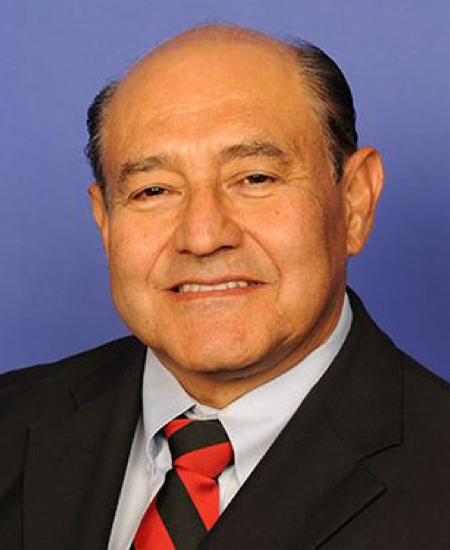
Rep. J. Luis Correa
Sponsored bills
Maddy summaryThis resolution (HRES 234) is a symbolic gesture expressing the U.S. House of Representatives' support for designating March as "Zoroastrian Legacy and Heritage Month." It does not create new laws or directly affect any individuals or groups; instead, it formally recognizes the cultural and historical significance of Zoroastrianism. The resolution highlights Zoroastrian contributions to human rights (citing the Cyrus Cylinder), the spring festival of Nowruz, and the religion's emphasis on environmental stewardship. It is purely a statement of support, not a policy with legal or administrative impact.
Maddy summaryThe SLOT Act of 2025 raises the tax reporting threshold for slot machine winnings from $1,200 to $5,000 per play, meaning casinos no longer need to report winnings under this amount to the IRS. It directly affects slot machine players who win less than $5,000 in a single play and casino operators who previously filed tax forms for smaller wins. The threshold will automatically increase annually after 2026 based on inflation, rounded to the nearest $100. The change applies to winnings occurring after December 31, 2025.
Maddy summaryThis bill (HR 2199) prevents private health insurance plans from discriminating against patients with end-stage kidney disease (ESRD) who require dialysis. It amends the Social Security Act to prohibit plans from treating dialysis coverage differently than other medical services or applying network restrictions that disproportionately harm ESRD patients. The law clarifies that plans cannot deny or limit benefits for dialysis based on a patient’s diagnosis, while preserving a plan’s right to choose which dialysis providers are in their network. It directly affects ESRD patients and their private health insurance coverage, ensuring dialysis is treated equally with other covered medical services. The bill does not require plans to include specific dialysis providers but stops them from unfairly restricting access to necessary care.
Maddy summaryThis bill modifies Medicare's physician self-referral rules to improve access for rural communities. It creates a new exemption for "covered rural hospitals" (defined as facilities in rural areas more than 35 miles from another hospital or critical access hospital) from certain restrictions on physicians owning hospitals. The bill also removes a prohibition on expanding existing physician-owned hospitals, allowing such expansions after the law's enactment. These changes directly affect rural hospitals seeking Medicare participation and physicians who own or operate hospitals in underserved areas.
Maddy summaryThe Medical Supply Chain Resiliency Act (HR 2213) establishes a framework for the U.S. to form agreements with foreign countries that commit to reliable medical supply chains during emergencies. It allows the President to negotiate "trusted trade partner agreements" that reduce trade barriers (like duties and quotas) for medical goods with countries meeting specific criteria, such as maintaining open trade during health crises and protecting intellectual property. These agreements require Congressional review and approval, with ongoing monitoring to ensure partners uphold commitments. The bill directly affects U.S. trade policy, foreign governments seeking partnerships, and the medical supply industry by aiming to diversify sources and secure critical products like pharmaceuticals and medical devices.
Maddy summaryThe Prevent Homelessness Act of 2025 creates a $100 million annual Housing Stabilization Fund under HUD to provide short-term financial assistance to extremely and very low-income families facing imminent homelessness. The fund provides grants to "continuums of care" (local homelessness service networks) to cover specific housing-related costs like overdue rent, utilities, repairs, and legal aid, with limits on duration (max 8 months within 12 months) and cost (based on local market rates). To qualify, families must demonstrate financial hardship (e.g., eviction notices, health crises) and programs must coordinate with local homeless prioritization systems. The fund’s allocation prioritizes areas with higher homeless or severely cost-burdened populations, using HUD’s Point-In-Time Homeless Count data.
Homes for Every Local Protector, Educator, and Responder Act of 2025 or the HELPER Act of 2025 This bill establishes a program administered by the Department of Housing and Urban Development to provide mortgage assistance to law enforcement officers, elementary and secondary school teachers, firefighters, or other first responders. Specifically, these individuals may be eligible for a first-time mortgage on a primary family residence with no down payment. Instead, the mortgage is subject to a one-time, up-front mortgage insurance premium.
Maddy summaryHR 2129, the "No Round Up Act," repeals outdated provisions from the 1940 Alien Registration Act within U.S. immigration law. It specifically removes requirements for aliens to register, provide fingerprints, and submit forms under sections 261-266 of the Immigration and Nationality Act. This directly affects immigrants who would have been subject to these mandatory registration procedures under the repealed law. The bill eliminates these specific administrative mandates without creating new requirements or altering broader immigration enforcement mechanisms.
Maddy summaryHRES 216 is a resolution condemning the leadership of the House Republican Conference for allowing a social media post that falsely questioned the immigration status and patriotism of Congressman Adriano Espaillat (Chairman of the Congressional Hispanic Caucus). The resolution specifically names House Speaker Mike Johnson, Majority Leader Steve Scalise, Majority Whip Tom Emmer, and other top Republican leaders as responsible for the post. It characterizes the post as xenophobic and inappropriate, stating such rhetoric violates the standards of conduct expected of members of Congress.