

Maddy summaryHR 8251, the HCT/P Modernization Act of 2024, streamlines regulatory classification for human cell and tissue products (HCT/Ps) like regenerative therapies and tissue grafts. It requires the FDA to respond within 70 days to manufacturers’ inquiries about whether their products fall under the less stringent section 361 of the Public Health Service Act (instead of drug/biologic approval pathways) and mandates a public meeting to clarify definitions of "minimal manipulation" and "homologous use." The bill also directs the FDA to update regulations within 12 months to reduce regulatory burden while maintaining current approval pathways, and requires annual reports to Congress on inquiry volumes and classification decisions. This directly affects manufacturers, tissue banks, and medical researchers developing HCT/P therapies by clarifying regulatory requirements.
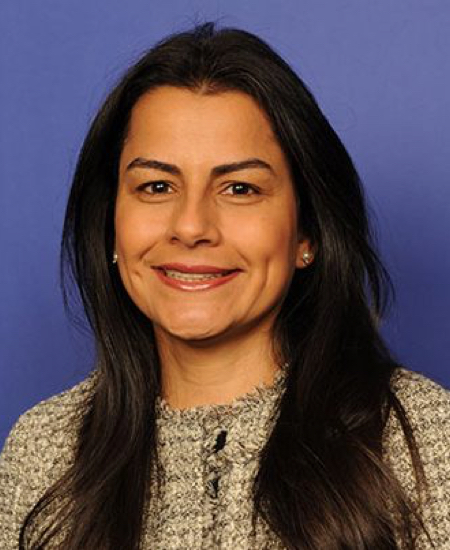
Rep. Nanette Diaz Barragán
Sponsored bills
Maddy summaryThis bill authorizes the placement of a memorial honoring women who contributed to World War II efforts on the National Mall or adjacent federal land in Washington, D.C. It specifically removes a location restriction (under 40 U.S.C. § 8908) to allow the memorial - previously authorized by the 2023 Consolidated Appropriations Act - to be situated within Area I of the National Mall or the National Mall Reserve. The memorial would commemorate over 18 million women who worked as pilots, engineers, mechanics, and codebreakers during the war. The bill directly affects the Women Who Worked on the Home Front Foundation, which is tasked with establishing the memorial.
Maddy summaryThe BUILD GREEN Infrastructure and Jobs Act establishes a $50 billion annual grant program (2025-2034) to fund electrified transportation infrastructure projects that reduce greenhouse gas emissions and improve transportation access. It prioritizes projects in frontline, vulnerable, or disadvantaged communities (requiring 40% of funds), with 30-40% allocated to rural areas and 60-70% to urban areas. The bill mandates recipients use 5% of grant funds for workforce training, pay a minimum wage of $17 per hour (increasing annually), and use renewable energy sources for project operations. Eligible projects include electric buses, rail systems, port infrastructure with EV charging, and micromobility initiatives that reduce emissions and improve transportation services.
Maddy summaryThis bill names a specific United States Postal Service facility at 24355 Creekside Road in Santa Clarita, California, as the "William L. Reynolds Post Office Building." It directly affects the physical location of this post office by changing its official designation. The key provision is a simple name change, with all existing references to the building in federal documents automatically updated to reflect the new name. This is a ceremonial designation with no policy or funding changes.
Maddy summaryHR 8200, the Pediatric Access to Critical Healthcare Act, creates federal grants to strengthen pediatric healthcare infrastructure. It provides $600 million annually (2025-2034) for eligible entities like children’s hospitals, facilities serving Medicaid/CHIP patients, or nonprofits treating individuals under 21. Grantees may use funds for building expansions, workforce training, digital upgrades, and emergency preparedness, but must match 50% of grant costs with non-federal funds. The bill prioritizes facilities serving over 60% Medicaid/CHIP patients or diverse, underserved populations, and requires annual reports on project impacts and outcomes.
Maddy summaryHRES 1186 is a non-binding House resolution recognizing the critical role of Guatemala's Indigenous communities - including Maya, Garifuna, and Xinka peoples - in defending democratic elections after the 2023 vote, despite systemic discrimination and marginalization. It highlights historical inequities (e.g., 75% Indigenous poverty vs. 36% non-Indigenous) and urges the Guatemalan government to honor commitments to represent all citizens equitably. The resolution specifically directs U.S. officials to encourage transparency in Guatemala, monitor corruption ties, and support Indigenous-led democracy efforts. It does not create new laws but formally expresses U.S. support for Indigenous rights and democratic processes in Guatemala. (HRES 1186, April 30, 2024)
Maddy summaryThis bill increases federal funding for states that have laws allowing civil lawsuits against people who remove sexual protection barriers (like condoms or dental dams) without consent during sexual activity. States with such laws can receive up to a 20% increase in their annual Violence Against Women Act (VAWA) Sexual Assault Services Program funding for a 4-year period, with a maximum of four such increases. The bill authorizes $5 million annually from 2025-2029 to cover these funding increases. It directly affects states that implement the required legal provisions, tying federal grant support to their enforcement of consent protections during sexual contact. The policy change focuses on incentivizing state-level legal frameworks addressing nonconsensual barrier removal through federal funding mechanisms.
Maddy summaryHR 8188, the Stealthing Act of 2024, creates a federal civil remedy allowing victims of non-consensual condom or sexual barrier removal (known as "stealthing") to sue perpetrators in court. The bill directly affects individuals who experience this non-consensual act, which the bill defines as removing a condom or barrier without consent during sexual contact. Key provisions establish federal jurisdiction for such civil actions when the conduct involves interstate commerce, payments, communications, or occurs within U.S. territories. Victims may seek compensatory damages, punitive damages, and other court-ordered relief. This legislation does not criminalize the act but provides a legal pathway for victims to pursue civil remedies under specific federal jurisdictional conditions.
Maddy summaryHRES 1166 is a symbolic resolution expressing congressional support for Earth Day. It urges the President to issue an Earth Day proclamation, encourages Americans to take specific environmental actions (like addressing pollution and supporting indigenous stewardship), and calls for global efforts to advance climate goals. The resolution does not create new laws or directly affect any groups - it serves as a non-binding statement of support for environmental action. It references historical environmental milestones but focuses on reaffirming the need for year-round climate and environmental protection efforts.
Maddy summaryThe DROUGHT Act of 2024 increases federal funding for water infrastructure projects in areas facing severe drought or serving disadvantaged communities. It allows the Environmental Protection Agency to cover up to 90% of project costs (instead of standard limits) for projects in states or counties with severe drought (as defined by the U.S. Drought Monitor for 4+ weeks in the past 3 years or a governor's emergency declaration) or in communities designated as disadvantaged by EPA's screening tool or meeting state affordability criteria. The bill prioritizes projects that address both drought conditions and serve disadvantaged populations. This directly affects water infrastructure projects in eligible drought-impacted regions and communities with historical water access challenges.