

Maddy summaryHRES 1017 is a non-binding congressional resolution recognizing that air pollution and extreme heat pose significant health risks to pregnant women and infants, particularly in Latino communities. It highlights that Latina mothers face higher exposure to pollution, double the risk of heat-related birth complications compared to White mothers, and systemic barriers like language gaps and healthcare inequities. The resolution expresses the House's support for specific actions, including bilingual public alerts, air quality monitoring in Latino neighborhoods, improved heat guidelines at health facilities, and community-based programs to reduce exposure. It does not create new laws but calls for equitable interventions and policy considerations to address these vulnerabilities.
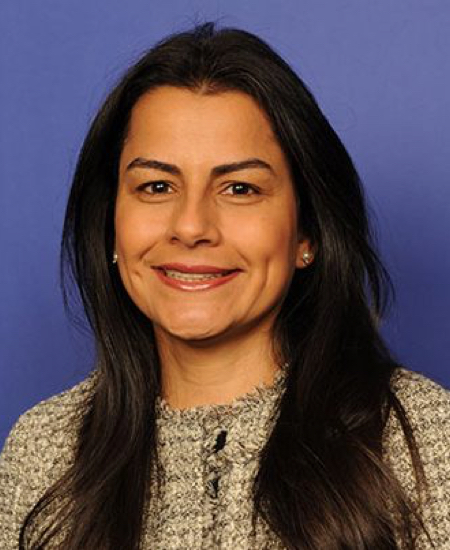
Rep. Nanette Diaz Barragán
Sponsored bills
Maddy summaryThe Language Access for All Act of 2026 requires federal agencies to ensure meaningful access to government services for people with limited English proficiency (LEP). Agencies must translate vital documents into languages commonly spoken in the U.S. (based on Census data), provide multilingual digital tools, interpretation services, and use bilingual staff as an alternative to professional interpreters. Each agency must create a language access plan within one year, detailing how it will serve LEP populations - including during emergencies - and annually certify compliance with technical standards. Noncompliance is treated as discrimination under civil rights law, with enforcement by the Department of Justice.
Maddy summaryHRES 1013 proposes creating a Permanent Select Committee on Aging in the U.S. House of Representatives. This committee would study aging-related issues affecting older Americans - including income, health, housing, employment, and long-term care - without having the power to pass laws. It would also work to coordinate government and private programs supporting seniors and review recommendations from the President or White House Conference on Aging. The resolution, introduced by Rep. Magaziner and Rep. Salazar, is currently referred to the House Rules Committee.
Maddy summaryThis bill establishes two new programs under the National Affordable Housing Act to increase affordable rental housing on property owned by faith-based organizations and institutions of higher education. It provides $25 million annually (2026-2031) for technical assistance to help these groups remove barriers to developing housing for low-income households, including those at risk of homelessness, veterans, and people with disabilities. Additionally, it creates $50 million annually in competitive challenge grants for local governments and states to adopt policies removing barriers and produce housing for households earning below 60% of area median income, with priority for well-resourced neighborhoods. The programs require public planning and reporting to ensure funds directly support affordable housing development on eligible properties.
Maddy summaryThis bill directs the Commerce Secretary to create a public education campaign about artificial intelligence within 180 days. It aims to improve consumer understanding of AI's daily uses (like recommendations, voice assistants, and deepfakes), teach best practices for detecting AI-generated content, and provide targeted outreach to vulnerable groups like seniors. The campaign will develop multilingual materials, a mobile-friendly website, and annual updates, while coordinating with small businesses and state/local governments. The effort expires after 5 years with no new federal funding required.
Maddy summaryHR 7100 establishes a Department of Justice Task Force on Anti-Sikh Hate and Discrimination to address systemic bias against Sikhs. The Task Force must draft a formal definition of anti-Sikh hate for DOJ use, develop educational programs for law enforcement and schools, and produce annual reports on hate crimes and trends. It requires quarterly collaboration with Sikh organizations and translation of materials into Punjabi. The bill directly affects Sikhs in the U.S. (who face disproportionate targeting as noted in FBI data) and mandates federal agencies to improve hate crime data collection and response. This is a policy-focused measure to standardize definitions, enhance reporting, and support community safety through DOJ action.
Maddy summaryThe Find It Early Act requires most health insurance plans, Medicare, Medicaid, TRICARE, and VA benefits to cover certain breast cancer screenings without cost-sharing for specific at-risk groups. It affects individuals at increased breast cancer risk (as determined by medical guidelines), those with dense breast tissue (as defined by the American College of Radiology), and others requiring screening due to factors like age, race, ethnicity, or family history. The bill mandates coverage for various screening methods including mammograms, ultrasounds, MRI, and other technologies at frequencies recommended by the National Comprehensive Cancer Network. This requirement takes effect for plan years beginning January 1, 2026, removing financial barriers to early detection.
Maddy summaryHRES 996 is a resolution introduced by multiple House members to impeach Kristi Lynn Arnold Noem, the Secretary of Homeland Security, for alleged violations of law and the Constitution. It outlines three articles of impeachment: obstructing congressional oversight by denying access to detention facilities and withholding funds, violating public trust through warrantless arrests and excessive force (including tear gas on children), and self-dealing by awarding federal contracts to associates without competitive bidding. If approved by the House, this resolution would formally charge Noem, triggering a Senate trial to determine her removal from office. The resolution itself does not enact new policy but initiates the constitutional impeachment process against a sitting Cabinet official.
Maddy summaryThe Returning Home Act establishes a federal grant program to provide rental assistance and housing support for individuals recently released from prison, jail, juvenile facilities, or halfway houses. It allocates $100 million annually to fund 24 months of rental assistance, family stipends for household support, and services like housing counseling, case management, and help with security deposits. The program prioritizes people at risk of homelessness after incarceration, requiring grantees to use at least 60% of funds for direct rental payments and 15% for landlord incentives. It explicitly replaces "offender" language with "individual" throughout to focus on people reentering communities, not criminal labels.
Maddy summaryHRES 995 is a symbolic resolution supporting Korean American Day, commemorating January 13 as the anniversary of the 1903 arrival of the first large wave of Korean immigrants to the U.S. It urges all Americans to recognize Korean Americans' contributions to U.S. society, economy, and U.S.-South Korea relations, honoring their historical journey and ongoing impact. The resolution has no legal effect or policy changes - it serves solely as a formal acknowledgment of cultural heritage.