

Maddy summaryHR 7346, the Drain ICE Act of 2026, repeals specific funding provisions (sections 90003 and 100052) from the "One Big Beautiful Bill Act" and cancels all unspent funds allocated under those sections. This bill directly affects ICE’s detention budget by removing existing financial authority for detention operations. It does not change immigration enforcement practices or directly impact individuals; it solely modifies budgetary allocations. The bill focuses on eliminating funding mechanisms, not on policy changes for migrants or enforcement. (Procedural bill; summary limited to 2 sentences as specified.)
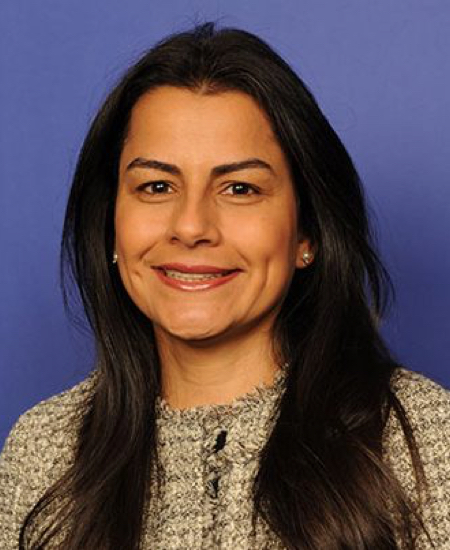
Rep. Nanette Diaz Barragán
Sponsored bills
Maddy summaryHR 7335 establishes comprehensive humanitarian standards for individuals held in U.S. Immigration and Customs Enforcement (ICE) and U.S. Customs and Border Protection (CBP) custody. The bill requires facilities to provide immediate health screenings within 12 hours (6 hours for high-risk individuals like children, pregnant people, or those with medical conditions), ensure access to adequate water, sanitation, food (with 2,000+ calories daily for adults), and age-appropriate shelter. It mandates specific facility standards including separate housing for males and females, accessible accommodations for people with disabilities, daily outdoor access for those detained over 48 hours, and proper medical equipment and personnel on-site. The bill also requires regular inspections, staff training on humanitarian protocols, and public reporting of sexual abuse complaints. These standards directly affect all individuals detained by ICE or CBP, with special protections for vulnerable groups like children, pregnant people, and those with medical needs.
Maddy summaryHR 5658, the Child Care for Every Community Act, establishes a federal framework to create universal, high-quality child care and early learning programs available to all young children not yet required to attend school. The bill requires that covered children (children below compulsory school age) be entitled to participate in these programs, with no fees for low-income families and sliding-scale fees for others based on family income. Key provisions include requiring full-working-day, full-calendar-year care; setting national quality standards for staff qualifications and facilities; mandating comprehensive services including health, nutrition, and family support; and requiring coordination with schools to support children's transitions to kindergarten. The bill directly affects families seeking child care, child care providers, and local communities that would administer these programs through designated "prime sponsors."
Maddy summaryThis bill amends federal energy conservation law to require federal agencies to consider mechanical insulation as a standard energy-saving measure during building evaluations. It defines "mechanical insulation property" as materials that reduce energy loss in mechanical systems while meeting ASHRAE 90.1 standards, including insulation placed in service with those systems. The law adds mechanical insulation to the list of measures agencies must evaluate for potential installation in federal buildings as part of their required energy and water assessments. This directly affects federal agencies managing buildings, ensuring they formally assess this specific efficiency measure during routine evaluations.
Maddy summaryThe Family Violence Prevention and Services Improvement Act of 2026 amends federal law to enhance support for victims of family violence, domestic violence, and dating violence. The bill authorizes $270 million annually for fiscal years 2027-2031 to fund state, tribal, and community programs, with specific funding reserved for tribal programs (12.5%), national hotlines ($20.5 million for general hotline, $4 million for Indian hotline), and services for underserved populations. It requires grantees to provide trauma-informed, culturally appropriate services while prohibiting discrimination and protecting victim confidentiality, and mandates accessibility for people with disabilities and limited English proficiency. The bill also establishes new technical assistance centers, Tribal resource centers, and community-based prevention programs to address the needs of underserved populations including Native Hawaiians, Alaska Natives, and racial and ethnic minorities.
Maddy summaryHR 6616, the Clean Water Justice Act, amends criminal penalties under the Federal Water Pollution Control Act. It increases maximum fines for water pollution violations: from $5,000 to $25,000, $50,000 to $250,000, and $100,000 to $500,000. The bill also requires annual adjustments to these fines based on the Consumer Price Index, published in the Federal Register, to account for inflation. These changes directly affect polluters who violate federal water pollution laws. The provisions modify existing penalty structures without creating new regulations.
Maddy summaryHR 7279, the Nurse Faculty Shortage Reduction Act of 2026, creates a federal program to address nurse faculty shortages by covering the pay gap between nursing faculty salaries and clinical nursing salaries. It authorizes $15 million annually (2027-2031) for nursing schools to supplement faculty salaries for up to three years, targeting faculty who previously worked in clinical practice or are new hires. Schools must submit detailed salary data comparing clinical nurse pay to faculty pay and demonstrate plans to sustain funding after the grant period. The program prioritizes schools in health professional shortage areas, serving vulnerable populations, or focusing on underrepresented faculty, with a report due to Congress within three years of enactment.
Maddy summaryHJRES 144 is a congressional disapproval resolution targeting a specific rule issued by the Department of Veterans Affairs (VA) on December 31, 2025, which addressed "Reproductive Health Services" (90 Fed. Reg. 61310). This resolution directs Congress to disapprove the VA rule under Chapter 8 of Title 5, U.S. Code, meaning the rule would have no legal effect if passed. The bill directly affects the VA's implementation of reproductive health services for veterans, as it seeks to nullify the agency's existing policy. This is a procedural measure, not a substantive policy change, aimed solely at blocking the VA's rule through congressional action.
Maddy summaryThe Prison Libraries Act of 2026 establishes a federal grant program to fund library services in state and territorial correctional facilities, directly benefiting incarcerated individuals. It requires grantees (states/territories) to submit plans demonstrating need, including demographic data on prison populations, and prohibits using funds for non-library purposes like food or facility maintenance. Grant funds must support library services such as digital access, educational programming (including job training and post-secondary curriculum), literacy initiatives, and partnerships with public libraries. The program authorizes $10 million annually from 2026-2031, prioritizes measurable outcomes like increased literacy and post-release employment opportunities, and mandates free access to all library resources for incarcerated people.
Maddy summaryHCONRES 68 would require the President to remove U.S. military forces from Venezuela unless Congress has explicitly authorized their use through a declaration of war or a specific law. This applies to any U.S. Armed Forces currently stationed in Venezuela without such authorization. The resolution is based on the War Powers Resolution, which mandates congressional oversight of military deployments. It directs the immediate withdrawal of unapproved forces without adding new time limits or conditions.