

Maddy summaryThe GAIN Act of 2024 establishes a 5-year demonstration project to provide guaranteed monthly income payments of at least $500 to individuals enrolled in Medicaid. It directly affects Medicaid participants, who would receive unconditional, non-taxable payments via direct deposit or check, with no restrictions on how funds are spent. Eligible local governments, tribes, or nonprofit organizations would administer the program, measuring health impacts through required surveys on mental/physical health, employment, and financial circumstances. The project aims to evaluate how stable income affects health outcomes, with reports to Congress analyzing results after two years.
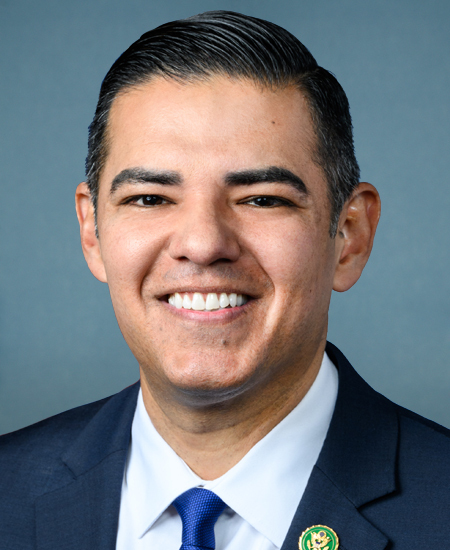
Rep. Robert Garcia
Sponsored bills
Maddy summaryThe End Polluter Welfare Act of 2024 eliminates numerous subsidies and tax benefits for fossil fuel companies by repealing provisions that provide royalty relief, reducing royalty rates, and ending tax incentives for oil, natural gas, and coal production. The bill prohibits federal funding for fossil fuel projects by restricting international financial institutions, the Export-Import Bank, and the Department of Transportation from supporting fossil fuel infrastructure. It also repeals recent legislation that provided fossil fuel subsidies, including parts of the Fiscal Responsibility Act and Inflation Reduction Act. This comprehensive approach directly affects oil, gas, and coal producers by removing financial benefits that have historically supported the fossil fuel industry, while directing studies to identify and eliminate additional fossil fuel subsidies.
Maddy summary# Summary of Long-Term Care Workforce Support Act This comprehensive legislation aims to improve conditions for the long-term care workforce (referred to as "direct care professionals") through multiple key components: 1. **Workforce Development & Safety**: Establishes workplace violence prevention standards requiring covered employers to develop written violence prevention plans, conduct incident investigations, provide training, and maintain records. 2. **Paid Sick Time Requirements**: Mandates that employers provide direct care professionals with at least 1 hour of paid sick time for every 30 hours worked (up to 56 hours per year), with specific uses including: - Medical care for the employee - Caring for family members - Domestic violence, sexual assault, or stalking situations - Public health emergencies (with additional paid sick time provided during emergencies) 3. **National Compensation Strategy**: Creates a National Direct Care Professional Compensation Strategy requiring the Secretary of Health and Human Services to develop and update a strategy for providing direct care professionals with livable wages, including recommendations on: - Calculating fair labor costs - Medicaid and public payer policies for compensation - Setting clear employer expectations for compensation - Tying training/certification to increased compensation 4. **Advisory Council**: Establishes a National Direct Care Professional Compensation Advisory Council with diverse representation to advise on compensation strategies. 5. **Evaluation & Accountability**: Requires evaluation of the legislation's implementation and outcomes, tracking spending by states, and analyzing impacts on workforce retention, compensation, working conditions, and service delivery. The legislation addresses multiple challenges in the direct care workforce, including low pay, high turnover, workplace violence, and lack of benefits, with the goal of improving both worker conditions and the quality of care for individuals receiving long-term services.
Maddy summaryThe Community Housing Act of 2024 significantly increases federal investment in affordable housing through major funding boosts, including $44.5 billion for the Housing Trust Fund and $1.5 billion for the Capital Magnet Fund over the next decade. It repeals the Faircloth amendment, which had limited public housing construction since 1992, allowing public housing authorities to build new units without the previous cap. The bill establishes a permanent emergency rental assistance program providing $3 billion annually through 2029 to help low-income households with rent payments and creates the Unlocking Possibilities program to fund local efforts to streamline housing regulations and reduce zoning barriers. These provisions directly affect low- and moderate-income households, community land trusts, and rural communities facing housing insecurity and affordability challenges.
Maddy summaryHR 7142 (Alternatives to PAIN Act) requires Medicare Part D plans to cover non-opioid pain management drugs with no deductible and at the lowest copay level starting in 2025. It defines "qualifying non-opioid drugs" as FDA-approved medications that don’t act on opioid receptors (like certain NSAIDs or nerve pain treatments), excluding opioids and schedule I-III drugs. The bill prohibits Medicare plans from forcing patients to try opioids first (step therapy) or requiring prior approval for these non-opioid options. It directly affects Medicare beneficiaries needing pain management, especially those seeking alternatives to opioids for post-surgical or acute pain. The policy change aims to improve access to non-addictive pain treatments while preserving doctors' authority to prescribe medically appropriate care.
Maddy summaryHR 7038, the Guaranteed Income for Foster Youth Act, creates a federal program providing automatic $12,000 annual cash benefits to former foster youth who exited care after age 16 but before age 27. Eligible youth aged 18-27 receive benefits for up to five years with no requirements to prove need, and states must enroll them automatically upon turning 18. Benefits are disregarded for other federal program eligibility, and states must offer financial literacy education while reporting detailed data on participants (including race, disability status, and housing). The program takes effect October 1, 2025, with states required to submit annual reports on outcomes.
Maddy summaryThe Marriage Equality for Disabled Adults Act removes a rule requiring disabled adult children to remain unmarried to receive Social Security benefits. It ensures married disabled adult children, or their spouses, can maintain eligibility for Social Security Disability Insurance and Medicaid without losing benefits due to marriage. The bill changes how income and resources are counted, so a spouse's income and resources are no longer deemed against the disabled adult child for benefit calculations. It also requires states to preserve Medicaid eligibility for these individuals at the same level as if they were unmarried.
Maddy summaryHR 6063, the Empowering Striking Workers Act of 2023, modifies unemployment insurance rules to provide benefits for workers unable to work due to strikes or lockouts. It directs that unemployment compensation begins 14 days after a strike starts, or earlier if permanent replacements are hired, a lockout begins, or the dispute ends. The bill directly affects workers participating in labor disputes by making them eligible for benefits under these specific conditions, rather than requiring them to meet standard job search requirements. This change is implemented through amendments to the Internal Revenue Code and Social Security Act.
Maddy summaryHR 5840, the Transportation Security Screening Modernization Act of 2024, simplifies the process for transportation workers to obtain multiple TSA security credentials. It requires the TSA to allow individuals to apply for and renew programs like the TWIC (Transportation Worker Identification Credential) and HAZMAT Endorsement through a single enrollment at any TSA center, with a combined fee lower than separate applications. The bill mandates coordinated expiration dates for all credentials and ensures state-issued commercial driver's licenses reflect the correct HAZMAT endorsement validity. These changes aim to reduce duplication and costs for workers needing multiple security clearances. The TSA must implement these changes within two years and publish details online.
Maddy summaryThe MORE Act (HR 5601) would federally decriminalize cannabis by removing it from the Schedule I list of controlled substances under the Controlled Substances Act. It requires federal courts to expunge non-violent cannabis convictions and associated arrests, with a focus on addressing racial disparities in cannabis enforcement. The bill creates an Opportunity Trust Fund that would allocate 50% of funds to criminal justice programs, 20% to small business assistance for minority cannabis entrepreneurs, and 20% to community reinvestment grants for individuals impacted by the War on Drugs. It also prohibits federal agencies from denying benefits or security clearances based on cannabis use or past cannabis convictions, and establishes a Cannabis Justice Office to administer these programs.