

Maddy summaryThis bill (HR 1555, Public Law 118-211) designates the U.S. Postal Service facility at 2300 Sylvan Avenue in Modesto, California, as the "Corporal Michael D. Anderson Jr. Post Office Building." It directly affects the postal facility and all official references to it, requiring future documents to use the new name. The bill has no policy provisions - its sole purpose is to honor Corporal Michael D. Anderson Jr. through this commemorative naming. It was passed by Congress and signed into law on January 2, 2025.
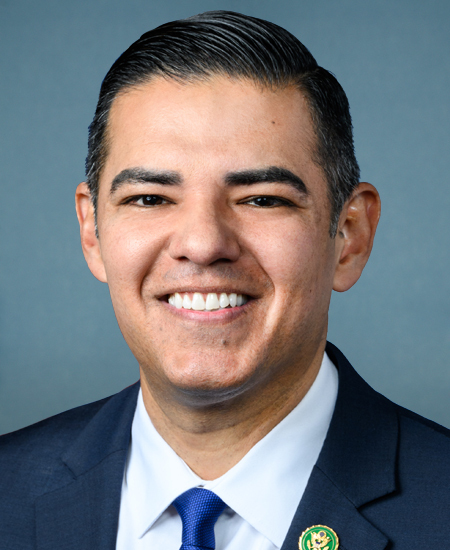
Rep. Robert Garcia
Sponsored bills
Maddy summaryThe Eliminate Useless Reports Act of 2024 requires federal agencies to identify outdated or duplicative reports they submit to Congress as part of their annual budget justifications. Agencies must list all recurring reports, determine which are outdated or duplicative, and recommend actions like sunsetting, modifying, consolidating, or reducing frequency. For each report, agencies must cite the legal basis for the requirement, explain their recommendation, and estimate resources spent preparing the report. This bill directly affects all federal agencies that submit recurring reports to Congress. The goal is to reduce unnecessary reporting burdens while maintaining necessary congressional oversight.
Maddy summaryThis bill, HR 1097 (Everett Alvarez, Jr. Congressional Gold Medal Act of 2023), authorizes the award of a Congressional Gold Medal to Everett Alvarez, Jr., in recognition of his service as a U.S. Navy pilot and Vietnam War prisoner of war. It directly honors Alvarez, who was the first U.S. pilot shot down in the Vietnam War, spent over 8.5 years in captivity, and later served in the Peace Corps and Veterans Administration. The bill’s key mechanism is directing the U.S. Mint to strike a gold medal bearing his name and image, with bronze duplicates available for sale to cover costs. It does not create new policies or affect any group beyond the honoree.
Maddy summaryThis bill creates a task force within Homeland Security to reunite children separated from parents or guardians at the U.S.-Mexico border between January 20, 2017, and January 20, 2021, under the Zero-Tolerance Policy. The task force must identify all affected children, recommend legal pathways for reunification (including parole, visas, or services like mental health support), and consult with affected families and organizations. It must report to Congress every 60 days and will sunset within 120 days of all reunifications or by January 20, 2039, whichever comes first. The bill directly affects children separated during that specific policy period and requires federal agencies to coordinate on practical solutions.
Maddy summaryThis bill (HR 10237) requires U.S. Customs and Border Protection (CBP) to create new guidelines within 180 days for handling personal belongings of individuals arrested, restrained, or confined by CBP. The guidelines must ensure detainees can keep as much property as operationally feasible, return all stored items upon release, and specify essential categories like medical devices, IDs, phones, and legal documents that must remain with or be returned to the individual. CBP must also provide written receipts for stored items, detail circumstances for discarding property, and track compliance through annual reports to Congress. The bill mandates consultation with advocacy groups and includes oversight by the Comptroller General to review implementation and effects on CBP operations.
Maddy summaryHR 9896, the ICE Security Reform Act of 2024, restructures U.S. Immigration and Customs Enforcement (ICE) by transferring its Homeland Security Investigations (HSI) division to become a separate entity within the Department of Homeland Security (DHS). The bill requires the Secretary of DHS to complete this transfer within two years of enactment, establishes a new Director for HSI appointed by the President with Senate approval, and renames the remaining ICE entity "U.S. Immigration Compliance Enforcement." It mandates updated investigative guidelines for HSI within two years, covering surveillance technology use, data protection, and alignment with national priorities, while preserving existing legal matters and ongoing cases. This bill directly affects DHS operational structure and internal agency responsibilities, not public-facing policies or enforcement targets.
Maddy summaryThe ASSET Act eliminates asset limits for low-income households applying for federal assistance programs like Temporary Assistance for Needy Families (TANF), SNAP (food assistance), and LIHEAP (energy help). This means families can save money in bank accounts or build financial resources without risking loss of benefits. The bill also updates Supplemental Security Income (SSI) resource limits to $20,000 for individuals and $10,000 for couples in 2024, with future annual inflation adjustments. The changes take effect 30 days after the bill's enactment, with states given up to two years to implement if new legislation is needed.
Maddy summaryThe Patient Debt Relief Act requires Medicare-participating hospitals to establish clear financial assistance policies by January 2026, including publicly available eligibility criteria and 30-day pre-payment screening for charity care. It prohibits hospitals from placing home liens, garnishing wages, or selling debt to collectors without offering income-based repayment plans (capping payments at 4% of gross monthly income) and eliminates interest for patients earning under 250% of the poverty line. Hospitals failing to comply face civil penalties up to $1 million per violation. The bill also creates a $100 million grant program to fund nonprofits that discharge medical debt for individuals meeting income thresholds (5% of income or under 400% of poverty line), with quarterly reporting requirements. These provisions apply directly to hospitals and low-income patients with medical debt.
Maddy summaryHR 9061 increases federal funding to support child welfare caseworkers by raising the annual appropriation under the Social Security Act from $345 million to $385 million. It specifically boosts the reserved amount for caseworker recruitment, retention, and training from $20 million to $60 million annually, and adds a requirement to include worker safety and well-being in these efforts. The bill directly affects state child welfare agencies and their caseworkers by providing more resources to address staffing challenges. The changes take effect in the first fiscal year after enactment.
Maddy summaryHR 8796, the "Stop Comstock Act," removes outdated restrictions from federal law that previously banned the distribution of materials related to contraception and abortion as "obscene" or "indecent." The bill amends Title 18 and the Tariff Act by deleting references to "indecent," "immoral," "unlawful abortion," and "procuring abortion" from provisions governing obscene materials. It clarifies that the law only prohibits "obscene materials" in commerce, eliminating broad restrictions on reproductive health information. This directly affects internet platforms, healthcare providers, and individuals sharing reproductive health resources by removing legal barriers to their distribution.