

Maddy summaryThis bill amends the definition of "chronically homeless" under the McKinney-Vento Homeless Assistance Act to better support people in transitional housing. It changes how shelter time is counted - allowing either continuous shelter for one year or cumulative shelter for one year over three years - instead of requiring four separate stays. Crucially, it adds that individuals in transitional housing programs who've lived there fewer than 90 days remain considered chronically homeless if they met the prior criteria before entering the program. The bill requires the Department of Housing and Urban Development to update federal regulations within 180 days to reflect these changes.
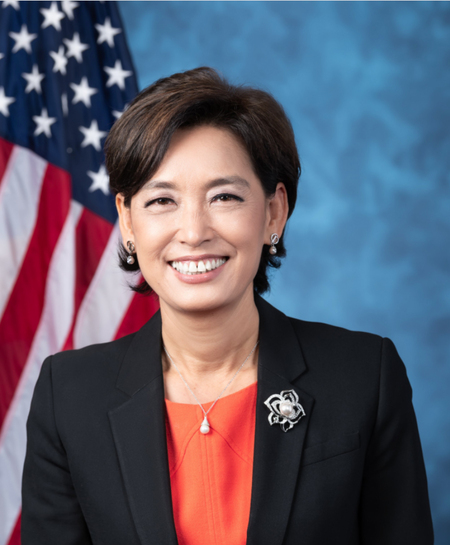
Rep. Young Kim
Sponsored bills
Maddy summaryHR 6033, the SPEAK Act of 2024, creates a task force within the Department of Health and Human Services to address telehealth barriers for patients with limited English proficiency (LEP). The task force - comprising healthcare providers, tech vendors, language services, and patient advocates - will assess current obstacles and develop best practices for improving access to telehealth platforms, video interpretation, and digital patient portals. Within 90 days of each annual report, the Secretary must publish a public website sharing these best practices, including guidance on integrating interpreters and making telehealth instructions accessible. The bill directly affects LEP patients and healthcare providers who serve them, aiming to make digital health tools more usable through concrete, evidence-based recommendations.
Maddy summaryThis bill modifies Medicaid and CHIP rules to let eligible out-of-state healthcare providers enroll without extra state screening. It applies to providers already in Medicare or their home state program, with low fraud risk, serving children under 21 with complex medical conditions. Providers would receive 5 years of enrollment under this streamlined process, eliminating state-level barriers. The change directly affects children seeking specialized care across state lines and the providers who serve them.
Maddy summaryThe JUDGES Act of 2024 authorizes new federal district court judgeships across multiple states to address rising case backlogs in the federal judiciary. It specifies new permanent judgeships for districts including California (multiple districts), Florida, Texas, Delaware, Indiana, Iowa, New Jersey, and New York, with implementation phased through 2035, and creates temporary judgeships for Oklahoma districts with specific vacancy rules. The bill authorizes funding for these positions and requires reports on judicial caseloads and detention space needs, while mandating public access to the Judicial Conference's judgeship recommendations. The bill directly affects federal district courts in the specified locations by increasing judicial staffing to handle growing case volumes.
Maddy summaryHRES 1444 designates the week of September 14-20, 2024, as "National Birth Center Week" to symbolically recognize birth centers across the U.S. The resolution acknowledges these facilities for providing midwifery-led, family-centered care that supports safe childbirth and postpartum health. It encourages healthcare providers, policymakers, and communities to learn about birth centers' documented safety and cost-effectiveness, without creating new laws or funding. The resolution directly addresses birth centers (over 400 nationwide) and their role in perinatal care, based on existing data showing their value for diverse patient groups.
Maddy summaryHRES 1447 is a non-binding resolution expressing support for designating the week of September 22-28, 2024, as "Gold Star Families Remembrance Week." It directly honors families who lost loved ones while serving in the U.S. military (referred to as "Gold Star Families") and families of veterans. The resolution encourages Americans to observe the week by performing community service and celebrating the sacrifices of fallen service members, without creating new laws or obligations. It aligns with existing recognition of Gold Star Mother’s Day (the last Sunday in September) but expands the focus to all affected families.
Maddy summaryHR 9568, the SAW Act, makes it illegal to intentionally use a motor vehicle to run over, strike, or kill wolves or coyotes on U.S. public lands (excluding tribal trust lands). The law prohibits this action except when avoiding personal injury, protecting property, or conducting authorized wildlife management. Violators face fines up to $5,000, up to one year in prison, or both. The Secretary of the Interior is responsible for investigating violations and can collaborate with state and local law enforcement. This bill specifically targets motor vehicle use against wolves and coyotes on federal lands, with no broader wildlife protections.
Maddy summaryThis bill designates the U.S. Postal Service facility at 130 South Patterson Avenue in Santa Barbara, California, as the "Brigadier General Frederick R. Lopez Post Office Building." It updates all official U.S. government references to the building to reflect this new name, with no policy changes or funding impacts.
Maddy summaryHR 4741, the Securing Global Telecommunications Act, requires the U.S. State Department to develop a strategy within 90 days to promote secure telecommunications infrastructure globally, focusing on countering security risks from untrusted vendors like Huawei. The strategy must address mobile networks, data centers, 6G technology, and satellite systems, emphasizing collaboration with allies and developing nations to encourage the use of "trusted" equipment providers. It also mandates reports on Chinese and Russian influence at the International Telecommunication Union (ITU) and opportunities for multilateral financing to support secure telecom projects. The bill directly affects U.S. government agencies (State Department, FCC, development finance entities) and foreign countries selecting telecom infrastructure providers. It does not impose direct restrictions but outlines U.S. policy actions to strengthen global telecom security and market leadership for allied vendors.
Maddy summaryHR 554, the Taiwan Conflict Deterrence Act of 2023, requires the U.S. Treasury to report annually for three years on financial assets held by specific Chinese Communist Party officials involved with Taiwan, including Politburo members and certain Central Committee members. It mandates that U.S. financial institutions cannot engage in significant transactions with these officials or their immediate family (spouses, children, parents) if the Treasury finds they benefit from funds detailed in the reports. The prohibition on financial transactions expires either 30 days after the President certifies the threat to U.S. interests has ended or 25 years after the final report is submitted. The law aims to deter actions by China that threaten Taiwan by targeting financial ties of high-level officials.