

Maddy summaryThe Wildfire Emergency Preparedness Act of 2025 establishes a national training plan for structural firefighters to respond to wildfires and wildland-urban interface fires, with $5 million annually for training grants. It creates an Under Secretary of Agriculture for Fire Coordination to improve federal-state-local coordination in wildfire response and authorizes $20 million annually for research on firefighter health, including PFAS exposure in firefighting equipment. The bill also provides $100 million for supplemental grants to fire departments and EMS organizations for wildfire response equipment and training, and sets criteria for mental health support for first responders. It requires reports to Congress on training effectiveness and coordination challenges within one year of enactment.
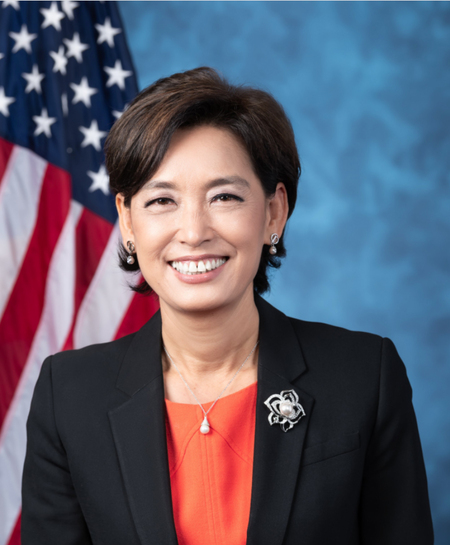
Rep. Young Kim
Sponsored bills
Maddy summaryThis bill, HR 4826 (Cutting Paperwork for Taxpayers Act), modifies the tax code to exclude interest paid on overpaid taxes from taxable income. It directly affects individuals and eligible small businesses (as defined under Section 44(b)(1)) who receive interest from the IRS on tax refunds. The key provision adds a new section to the Internal Revenue Code, stating that such interest is not counted as gross income. This change simplifies tax reporting for affected taxpayers by removing the need to include this interest in their annual income calculations. The policy change applies to taxable years beginning after the bill's enactment date.
Maddy summaryHJRES 111 is a joint resolution seeking congressional disapproval of a U.S. Fish and Wildlife Service rule on barred owl management. The rule, published in September 2024, outlined strategies to reduce barred owl populations to protect the endangered spotted owl. Under the Congressional Review Act, this resolution would nullify the rule, preventing its implementation. If enacted, the rule would have no legal effect, and the agency could not enforce the barred owl management strategy.
Maddy summaryThe Partner with Korea Act creates a new visa category for South Korean nationals to work in specialty occupations in the U.S., with an annual cap of 15,000 visas. Employers must file an attestation with the Department of Labor, which the Secretary of Labor must certify before the visa is approved. The visa limit applies only to the principal worker and excludes spouses or children. This bill directly affects South Korean workers seeking specialty jobs and U.S. employers hiring them under this new category.
Maddy summaryHR 345, the Fire Department Repayment Act of 2025, requires federal agencies (Agriculture, Interior, Homeland Security, and Defense) to establish clear procedures for reimbursing local fire departments under existing fire suppression cost share agreements. The bill mandates that agencies review and update current agreements within one year to align with cooperative fire protection agreements and set specific payment timelines. It requires federal agencies to reimburse fire departments promptly after a fire when they submit proper invoices, with Congress urging repayment within one year of the fire suppression event. This directly affects local fire departments that participate in federal reimbursement programs for firefighting costs.
Maddy summaryHR 4606, the Ally’s Act, requires private health insurance plans (including employer-sponsored plans and individual coverage) to cover hearing implants and related services. It directly affects people with hearing loss who need cochlear implants, bone conduction devices, or external sound processors, as determined by a physician or audiologist. The bill mandates coverage for devices, maintenance, repairs, upgrades every 5 years, hearing assessments, surgery, and rehabilitation - without separate cost-sharing or stricter limits than other medical services. Insurers cannot deny coverage if a provider deems the service medically necessary. The law applies to all applicable health plans and takes effect for plan years beginning January 1, 2026.
Maddy summaryThis bill prohibits life, disability, and long-term care insurers from denying coverage, canceling policies, or increasing premiums based solely on a person's status as a living organ donor. It directly protects living organ donors by preventing insurance discrimination unrelated to actual health risks. The bill also requires the Health and Human Services Secretary to update public educational materials about organ donation benefits, risks, and insurance impacts within six months of enactment. These materials will include information on the new insurance protections established by the bill. The law relies on state insurance regulators for enforcement of the insurance provisions.
Maddy summaryHR 4620 amends federal law to include rioting as a form of racketeering activity under Title 18, United States Code. This change would allow prosecutors to charge individuals who organize or participate in riots as part of a larger criminal enterprise under federal racketeering laws. The bill specifically targets coordinated riot activities linked to organized crime, not isolated or spontaneous protests.
Maddy summaryThis bill amends the Family and Medical Leave Act (FMLA) and federal employee leave rules to clarify that recovery from organ donation surgery qualifies as a "serious health condition." It directly affects private-sector workers covered by the FMLA and federal civil service employees. The key change adds "including recovery from surgery related to organ donation" to the definitions of serious health conditions in both the FMLA and federal leave statutes. This ensures eligible employees can use their existing family and medical leave benefits to recover after donating an organ, without requiring new leave entitlements.
Maddy summaryHR 4335, the Abraham Accords Defense Against Terror Act, streamlines U.S. defense exports to countries that have normalized relations with Israel (via the Abraham Accords) and cooperate with the U.S. on countering Iran and Iran-aligned threats in the Middle East and North Africa. The bill authorizes the Secretary of State to identify qualifying countries and fast-tracks approval for military sales, leases, or transfers to them, requiring a 15-day congressional notification with specific safeguards. Key safeguards include ensuring sensitive U.S. technology isn’t shared with China or Russia and mandating regular strategy reports to Congress on implementation, threat assessments, and pending defense deals over $25 million. This directly affects participating Middle Eastern nations and U.S. defense export processes, aiming to accelerate security cooperation without altering Israel’s military edge. The bill focuses on procedural changes to expedite defense cooperation, not on new funding or policy outcomes.