Harlem Hellfighters Congressional Gold Medal Act This bill provides for the award of a Congressional Gold Medal to the 369th Infantry Regiment, commonly known as the Harlem Hellfighters, in recognition of their bravery and outstanding service during World War I.
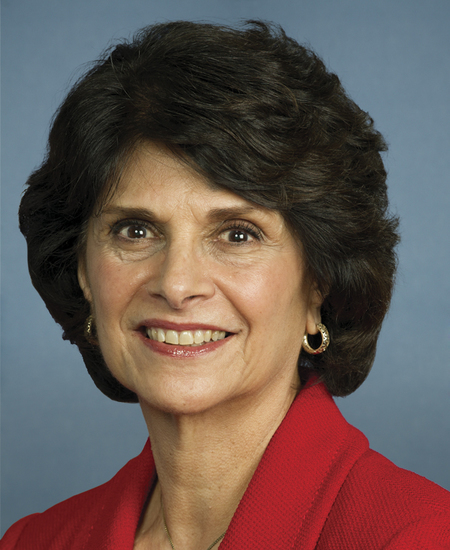
Rep. Lucille Roybal-Allard
Sponsored bills
Puppies Assisting Wounded Servicemembers for Veterans Therapy Act or the PAWS for Veterans Therapy Act This bill implements a program and a policy related to service dog therapy for veterans. Specifically, the bill requires the Department of Veterans Affairs (VA) to implement a five-year pilot program to provide canine training to eligible veterans diagnosed with post-traumatic stress disorder as an element of a complementary and integrative health program. Eligible veterans are those who are enrolled in the VA health care system and have been recommended for participation by a qualified mental health care provider or clinical team. The VA must seek to enter agreements containing specified elements with accredited nongovernmental entities that have demonstrated ability to provide canine training. Veterans who participate in the program are authorized to adopt the dog they assisted in training if their health provider determines it is in the best interest of the veteran. The VA must establish processes to document and track the progress of participating veterans with respect to health benefits and improvements. The Government Accountability Office must brief Congress and submit a report on the program. The bill also authorizes the VA to provide service dogs to veterans with mental illnesses, regardless of whether they have a mobility impairment.
This resolution supports (1) the goals of Wildfire Preparedness Week, and (2) resources and educational initiatives that communicate how affected communities can prevent wildfires and react during a wildfire.
Federal Disaster Housing Stability Act of 2021 This bill imposes limits on foreclosures and evictions in areas affected by a declared disaster or emergency. A servicer of certain federally backed residential mortgages for a property in such an area may not initiate the foreclosure process or take other foreclosure-related actions relating to that property unless the property is vacant or abandoned. These restrictions shall be in place for six months after the disaster or emergency is declared. Similarly, the landlord of a dwelling in such an area may not (1) initiate eviction proceedings against a tenant in that dwelling for nonpayment of rent or fees; (2) charge that tenant a penalty for nonpayment of rent; (3) increase the rent; (4) prevent a tenant who has temporarily relocated from returning; or (5) otherwise require the tenant to vacate the dwelling. Landlords must also provide notice to tenants regarding available federal assistance. These restrictions shall be in place for 90 days beginning (1) when the disaster or emergency is declared; or (2) in the case of a dwelling eligible for assistance, when such assistance is received or when eligibility for such assistance has expired.
School Food Modernization Act This bill provides for loan guarantees and grants to support healthy meals under the National School Lunch Program and School Breakfast Program. The bill directs the Department of Agriculture (USDA) to issue loan guarantees to local educational agencies (LEAs), school food authorities, tribal organizations, and other eligible entities to finance infrastructure improvements or equipment purchases to facilitate their provision of healthy meals through the school meal programs. USDA must also award competitive matching grants to assist LEAs, school food authorities, and tribal organizations in purchasing the durable equipment and infrastructure they need to serve healthier meals and improve food safety. USDA must give preference under both programs to applicants that demonstrate a substantial or disproportionate need for food service infrastructure or durable equipment, and shall establish fees for the loan guarantee program. In addition, USDA must award competitive matching grants to experienced third-party training institutions to provide school food service personnel with the training and technical assistance they need to (1) meet or exceed nutrition standards under the school meal programs, and (2) improve the efficacy and efficiency of the school meal programs.
This resolution establishes a House Permanent Select Committee on Aging.
Children's Mental Health Infrastructure Act of 2021 This bill provides funding through FY2026 to the Health Resources and Services Administration for grants to improve the capacity of children's hospitals to provide pediatric behavioral health services, including by modernizing sites of care and enhancing telehealth capabilities.
Helping Kids Cope Act of 2021 This bill provides funding through FY2026 to the Health Resources and Services Administration (HRSA) for grants to enhance access to and provider training in pediatric behavioral health care. Specifically, HRSA must award grants to pediatricians, children's hospitals, and other providers to support pediatric behavioral health integration and coordination within communities. Grant-funded activities may include hiring community navigators to assist families in accessing appropriate services, incorporating behavioral health services in pediatric practices, and delivering services via telehealth. In addition, HRSA must award grants to children's hospitals to expand training for providers in the pediatric behavioral health workforce.
This bill requires airports to broadcast in terminals automated announcements about the penalty for interfering with cabin or flight crews.
Central American Women and Children Protection Act of 2021 This bill temporarily authorizes the Department of State to enter into bilateral compacts with the governments of El Salvador, Guatemala, and Honduras to strengthen criminal justice systems, social supports, and other means to protect women and children from domestic and gender-based violence. At least 15 days before entering a compact, the State Department must submit to Congress a copy of the proposed agreement and related materials. Authority to enter a compact terminates on September 30, 2023, and a compact may last no more than six years. To support the objectives outlined in a compact, the State Department may provide assistance to international organizations, civil society, or other private entities for programs and activities to prevent and respond to domestic and gender-based violence in a compact country. The bill bars the provision of assistance to the government of a compact country as direct budgetary support. The State Department may suspend or terminate the assistance if a compact country or entity receiving the assistance engaged in conduct contrary to U.S. national security interests or inconsistent with the objectives of the compact. The State Department must notify Congress at least 15 days before suspending or terminating assistance. The bill also requires the State Department to annually report on progress made under each compact, including its effect on reported violence against women and children and other domestic and gender-based violence indicators.