

Sickle Cell Disease Comprehensive Care Act This bill establishes and provides funds for a demonstration project for state Medicaid programs to improve outpatient care for individuals with sickle cell disease, with a focus on young adults and pregnant women. The Centers for Medicare & Medicaid Services must award planning grants to at least 10 states and must select between 5 and 10 states to participate in the project. Participating states must provide specified services and support for individuals with sickle cell disease, including multidisciplinary care teams, appropriate treatments, mental health services, and specialist services. The bill provides a 100% Federal Medical Assistance Percentage (i.e., federal matching rate) for services provided through the project.
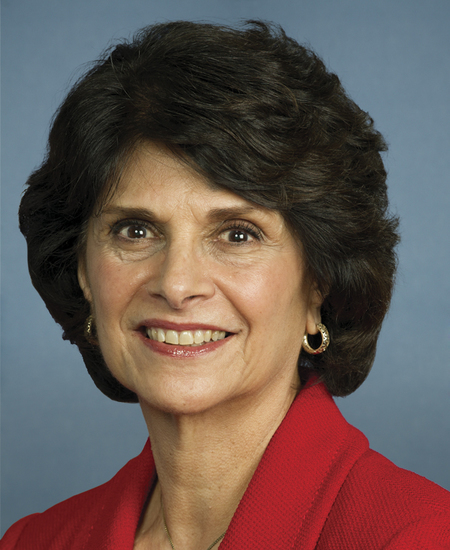
Rep. Lucille Roybal-Allard
Sponsored bills
Stillbirth Health Improvement and Education for Autumn Act of 2021 or the SHINE for Autumn Act of 2021 This bill authorizes grants and establishes other programs to improve data collection on stillbirths. Specifically, the Department of Health and Human Services (HHS) may award grants for surveillance and data collection on stillbirths, and HHS must issue guidelines for health departments and vital statistics units concerning the collection of stillbirth data. HHS must also develop educational awareness materials about stillbirths and make them publicly available. Furthermore, HHS must implement a fellowship program to provide training in perinatal autopsy pathology and otherwise support research on stillbirths and fetal autopsies. The bill also requires HHS to issue a report with educational guidelines on stillbirths and stillbirth risk factors.
Ocean Shipping Reform Act of 2021 This bill revises provisions related to ocean shipping policies and is designed to support the growth and development of U.S. exports and promote reciprocal trade in the common carriage of goods by water in the foreign commerce of the United States. Among other provisions, the bill sets forth requirements for operating a shipping exchange involving ocean transportation in the foreign commerce of the United States; requires ocean common carriers to report to the Federal Maritime Commission (FMC) each calendar quarter on total import and export tonnage and the total loaded and empty 20-foot equivalent units per vessel that makes port in the United States; requires the FMC to publish and annually update all its findings of false certifications by ocean common carriers or marine terminal operators and all penalties assessed against such carriers or operators; revises annual reporting requirements for the FMC on foreign laws and practices to include practices by ocean common carriers; prohibits ocean common carriers and marine terminal operators from retaliating or discriminating against shippers because such shippers have patronized another carrier, or filed a complaint; directs the FMC to establish rules prohibiting ocean common carriers and marine terminal operators from adopting and applying unjust and unreasonable demurrage and detention fees; authorizes the FMC to initiate investigations of an ocean common carrier's fees or charges and apply enforcement measures, as appropriate; directs the Department of Transportation to seek to enter into an agreement with the National Academy of Sciences to study the U.S. supply chain industry, including data constraints that impede the flow of maritime cargo and add to supply chain inefficiencies; and provides authority for the FMC to issue an emergency order requiring ocean common carriers or marine terminal operators to share directly with relevant shippers, rail carriers, or motor carriers information relating to cargo throughput and availability.
Radiation Exposure Compensation Act Amendments of 2021 This bill expands two programs that compensate individuals who were exposed to radiation during certain nuclear testing or uranium mining and subsequently developed medical conditions, including cancers. First, the bill expands and extends a program that compensates individuals who were exposed to radiation from atmospheric nuclear testing or other sources and subsequently developed specified cancers. Under current law, this program compensates individuals who were present in a designated geographic area during a period of nuclear testing and certain individuals employed in uranium mining. The bill expands the designated areas to include Colorado, Idaho, Montana, New Mexico, and Guam and additional areas in Arizona, Nevada, and Utah; makes more individuals who worked in uranium mining eligible for the program; increases the amount of compensation awarded to and provides medical benefits for eligible claimants; and extends for 19 years following the bill's enactment the fund that supports this program and the statute of limitations for filing claims (currently, the program terminates on July 10, 2022). Second, the bill makes certain individuals employed in uranium mines or mills eligible for a program that compensates workers, including Department of Energy employees and contractors, for illnesses caused by occupational exposure to radiation and hazardous substances during development and testing of the nation's nuclear weapons stockpile. The bill also establishes a grant program in the National Institute of Environmental Health Sciences for institutions of higher education to study the epidemiological impacts of uranium mining and milling among individuals without occupational exposure.
Rosie the Riveter National Historic Site Expansion Act This bill adds to the Rosie the Riveter/World War II Home Front National Historical Park in California Nystrom Elementary School--The Maritime Building and other areas as the Department of the Interior deems appropriate. Within the boundaries of the park, Interior may acquire lands, improvements, waters, or interests therein by donation, purchase, exchange, or transfer. Any lands, or interests therein, owned by California or any political subdivision of California may be acquired only by donation.
Maternal Vaccination Act This bill includes a focus on pregnant and postpartum individuals in existing public health activities to increase vaccination rates. First, the Centers for Disease Control and Prevention must incorporate a focus on pregnant and postpartum individuals, including by disseminating information to obstetric health care providers, into its existing public awareness campaign about the importance of vaccinations. Second, the bill expressly allows certain project grants for preventive health services to be used for activities to increase vaccination rates of pregnant and postpartum individuals (and their children).
Fair Pay for All Act of 20 21 This bill expands the statutory protection against wage discrimination based on sex to include discrimination based on an employee's gender identity, sexual orientation, sex characteristics, a sex stereotype, pregnancy, childbirth, or a related medical condition. It also revises the protection to incorporate nonbinary gender identities.
Expanding Access to Fertility Care for Servicemembers and Dependents Act This bill entitles members of the armed forces and their dependents (including the reserve components) who are performing active service and are entitled to medical care under TRICARE to assisted reproductive technology services (e.g., in vitro fertilization). Such services must be provided, regardless of (1) whether the assisted reproductive technology service is related to the treatment of a service-connected disability; (2) whether the member has a serious illness or injury resulting from a service-connected disability; (3) the ability of the member or dependent to conceive a pregnancy or carry a pregnancy to term; or (4) the sex, gender, sexual orientation, or marital status of the member or dependent.
Strength in Diversity Act of 2021 This bill establishes a program through which the Department of Education may award planning and implementation grants to specified educational agencies (e.g., local educational agencies) to improve diversity and reduce or eliminate racial or socioeconomic isolation in publicly funded early childhood education programs, public elementary schools, or public secondary schools.
This concurrent resolution expresses the sense of Congress that public health professionals are to be commended and thanked on Public Health Thank You Day for their important contributions to the nation.