

Maddy summaryHR 1439, the Vote at Home Act of 2023, would require states to mail ballots to all registered voters for federal elections at least two weeks before Election Day. The bill would eliminate unnecessary requirements for voting by mail, such as needing to provide a reason for voting by mail or obtaining a notary signature. It would also provide free postage for all voting mail and implement automatic voter registration through state motor vehicle offices. The law would take effect for elections held in 2024 and later, affecting all states conducting federal elections.
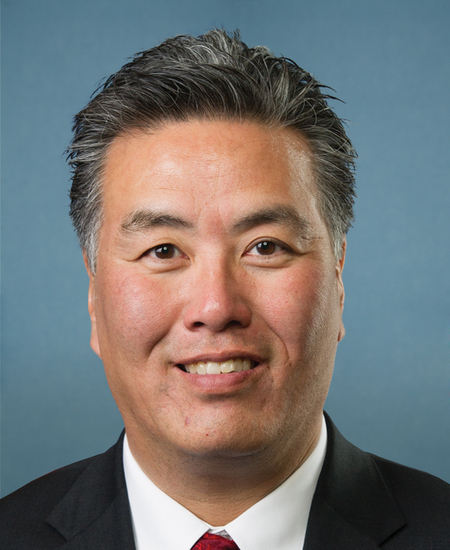
Rep. Mark Takano
Sponsored bills
Maddy summaryHRES 200 is a non-binding House resolution condemning two mass shootings in California: 11 victims in Monterey Park (January 21, 2023) at a Lunar New Year celebration and 7 victims in Half Moon Bay (January 23, 2023) at a farm. It honors all victims - primarily Asian-American seniors and immigrant farmworkers - expresses condolences to their families, and reaffirms the House’s commitment to supporting Asian-American and Pacific Islander communities. The resolution specifically addresses the rise in anti-Asian hate crimes during the pandemic and recognizes the vulnerability of immigrant communities. As a symbolic gesture, it does not create new laws or allocate funding but formally condemns the violence and affirms solidarity.
This resolution expresses the sense that the federal government should adopt a global health solidarity strategy to end medically avertable deaths and respond to the full burden of disease in poor countries; the federal government should use laws and diplomatic influence to stop ongoing economic harms to the global South; and it is the duty of the federal government to issue reparations, including for slavery and colonialism.
Maddy summaryHR 1388 authorizes the minting of commemorative coins to honor the 1865 Sultana steamboat disaster, the deadliest maritime tragedy in U.S. history. It specifies three coin types ($5 gold, $1 silver, and half-dollar) with defined weights and compositions, to be sold at face value plus surcharges ($35, $10, and $5 per coin, respectively). All surcharges collected will fund the Sultana Historical Preservation Society for museum development, including exhibits, artifact preservation, and facility construction. The coins are legal tender but intended for collectors, with sales limited to a one-year period starting January 2023.
Maddy summaryThe Farm System Reform Act of 2023 establishes a moratorium on new large concentrated animal feeding operations (CAFOs) and requires existing large CAFOs to cease operations by January 1, 2040. It creates a voluntary debt forgiveness and transition assistance program to help AFO owners pay off construction and operational debts while transitioning to alternative agricultural activities. The bill also amends the Packers and Stockyards Act to require packers to purchase 50% of livestock through spot market sales from nonaffiliated producers and prohibits certain unfair pricing practices. Additionally, it restores mandatory country of origin labeling for beef and pork and expands labeling requirements to include dairy products, requiring "Product of U.S.A." labels only when meat is exclusively derived from animals born, raised, and slaughtered in the United States.
Maddy summaryHR 1322 expands federal retirement benefits to include specific non-traditional law enforcement roles. It adds IRS employees focused on tax collection, U.S. Postal Inspection Service staff, Department of Veterans Affairs police officers, and U.S. Customs and Border Protection seized property specialists to the definition of "law enforcement officer" under federal retirement systems. Current employees in these newly covered positions must elect to pay deposits for past service to receive full retirement credit, while their agencies must contribute additional funds for that past service. The bill also temporarily prevents mandatory separation for current law enforcement officers for three years after enactment.
Maddy summaryHR 1332, the Thirty-Two Hour Workweek Act, would amend the Fair Labor Standards Act to reduce the standard workweek from 40 hours to 32 hours, phased in over three years (38 hours in year one, 36 in year two, 34 in year three, and 32 hours after year three). It would require overtime pay at 1.5 times the regular rate for hours worked beyond 32 in a week (or beyond 8 hours in a workday), and double pay for hours beyond 12 in a workday. The bill directly affects most private-sector workers covered by the Fair Labor Standards Act, excluding certain exempt employees. This is a concrete policy change to adjust standard work hours and overtime thresholds, not a procedural measure.
Maddy summaryThe Military Spouse Hiring Act expands the Work Opportunity Tax Credit to include military spouses. Employers who hire a spouse of an active-duty military member - certified by a local agency as meeting eligibility requirements on the hiring date - can claim this tax credit. The credit reduces the employer's federal tax liability for hiring such individuals. This provision applies to new hires after the bill's enactment date.
Maddy summaryThis resolution (HRES 184) formally recognizes and celebrates Black History Month as an annual observance in February. It highlights the significance of the 2023 theme "Black Resistance," acknowledging historical and ongoing Black American efforts to overcome oppression. The resolution does not create new laws or policies but serves as a commemorative statement to raise awareness of Black achievements and resistance history. It directly affects public awareness, encouraging all Americans to recognize this history during February.
Maddy summaryThis bill establishes pay equity for federal firefighters by adjusting how their retirement benefits are calculated and setting a standard workweek. It requires retirement annuities to include overtime hours worked as part of a firefighter's regular schedule (e.g., overtime during standard shifts), rather than excluding them. The bill also mandates a maximum 60-hour regular workweek for federal firefighters, set by the Office of Personnel Management within one year of enactment. These changes directly affect federal firefighters, aiming to improve pay comparability with municipal firefighters and other federal employees while supporting recruitment and retention.