

Maddy summaryThe Office of Gun Violence Prevention Act of 2023 establishes a new office within the Department of Justice to coordinate federal efforts on gun violence prevention. The office, led by a Director appointed by the Attorney General, will evaluate existing programs, identify data gaps, and make evidence-based policy recommendations to Congress and the President. It will work with an advisory council including DOJ officials and external members like gun violence survivors, community service providers, and public health experts. The office must produce an annual report to Congress on gun violence trends and policy recommendations, and the bill authorizes funding to support these activities.
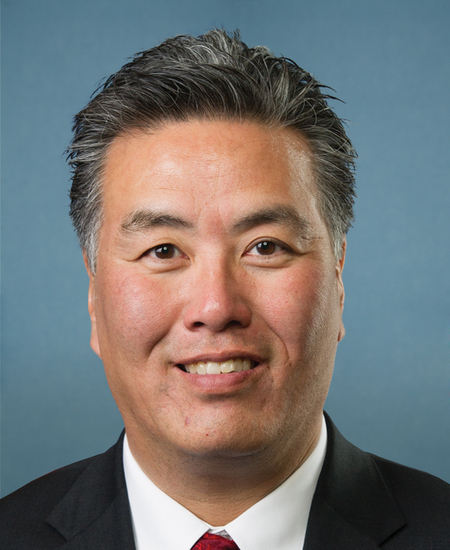
Rep. Mark Takano
Sponsored bills
Maddy summaryThe LOAN Act (HR 1731) makes significant changes to federal student financial aid programs. It doubles the maximum Federal Pell Grant amount for eligible students, expands Pell Grant eligibility to graduate students and "Dreamer" students (undocumented individuals who came to the U.S. as children), and restores the total semesters of Pell Grant eligibility from 12 to 18. The bill also eliminates interest capitalization on federal student loans, repeals origination fees, and creates automatic enrollment in income-driven repayment plans for borrowers who are delinquent or rehabilitating defaulted loans. Additionally, it establishes new refinancing programs for both federal and private student loans with interest rates capped at 5.0% for new loans.
Maddy summaryHR 1723, the Abortion is Health Care Everywhere Act of 2023, amends the Foreign Assistance Act to remove restrictions on using U.S. foreign aid funds for abortion services. It explicitly allows U.S. foreign assistance programs to fund comprehensive reproductive health care, including abortion services, training, and equipment. This change directly affects U.S. international health programs and recipient countries, enabling them to integrate safe abortion care into broader reproductive health services. The bill aims to align U.S. policy with global health guidelines by making abortion services a standard part of reproductive health care funded through foreign assistance.
Maddy summaryThis bill modifies federal highway funding rules to prioritize safety for cyclists and pedestrians. It allows states and local governments to receive 100% federal funding for projects that connect existing bike/pedestrian infrastructure or reduce safety risks for these users, instead of the usual lower federal share. The bill also requires projects to align with state safety plans focusing on vulnerable road users and includes specific "Proven Safety Countermeasures" for cyclists/pedestrians. These changes directly affect states administering federal highway funds and local governments seeking to improve non-motorized transportation infrastructure.
Maddy summaryThe Food Deserts Act creates a federal grant program to help establish grocery stores in underserved communities by funding state revolving funds. States receive capitalization grants (up to $150 million for FY2022) to provide low-interest loans to grocery stores that meet specific criteria, such as selling unprocessed, affordable healthy foods and matching 20% of the loan with non-federal funds. Priority is given to stores hiring local workers, offering nutrition education, sourcing from local farms, and having established supply chains. The program directly supports grocery store operators in areas with limited access to fresh food, aiming to improve community health outcomes through increased access to nutritious options.
California Clean Coast Act of 2023 This bill prohibits oil and gas exploration and leasing in areas of the outer Continental Shelf located off the coast of California.
Bipartisan Ban on Congressional Stock Ownership Act of 2023 This bill prohibits Members of Congress and their spouses from owning or trading stocks, bonds, commodities, futures, or any other form of security. Each current Member must divest within 180 days after the bill is enacted and each new Member must divest within 180 days after becoming a Member. However, Members and their spouses have 5 years to divest from specified complex investment vehicles. The bill does not apply to certain investments, such as investments in widely held investment funds that are diversified and do not present a conflict of interest and investments held in government employee retirement plans. A Member or spouse who violates the bill may be subject to a fine of up to $50,000 for each violation. The bill permits a Member or spouse who is required to divest property under the bill to avoid recognizing gain for income tax purposes from the sale of that property to the extent that the Member or spouse purchases permitted bonds or diversified investment funds within 60 days of the divestiture.
Maddy summaryThe TRACK Act of 2023 requires federal agencies (including HHS, NIH, Defense, and Veterans Affairs) to create a public database tracking all government funding for biomedical research and development. It compiles specific details about contracts, grants, licensing agreements, and tax benefits related to drug, device, and therapy development - including funding amounts, recipient organizations, product names/prices, and patent information. The database must be searchable by the public within one month of the bill’s enactment and updated every two weeks. This directly affects federal agencies managing biomedical funding and the private companies, institutions, and researchers receiving that support. The goal is to increase transparency about how taxpayer dollars fund medical product development.
Maddy summaryHR 1654, the DEPOSIT Act, imposes a new tax on certain bank executives' bonuses and stock profits when their bank fails and the FDIC becomes conservator or receiver. It specifically targets executives who earned over $250,000 (adjusted for excluded profits) in the year before their bank's failure and received bonuses within 60 days prior to the FDIC takeover or sold bank stock within that same period. The tax adds 90% of bonus profits and 100% of stock profit amounts to the executive's regular income tax. All revenue generated from this tax will be directed to the Deposit Insurance Fund, which protects bank deposits.
Maddy summaryThis bill authorizes a Congressional Gold Medal to honor the "Hello Girls" - female telephone operators who served in the Army Signal Corps during World War I. They provided critical battlefield communications in France (connecting 26 million calls), wore military uniforms, and faced combat risks, but were denied veteran benefits for 60 years due to being classified as civilian contractors. The medal recognizes their pioneering service, devotion, and the decades-long struggle to gain military recognition. The award follows similar recognition for other WWII women veterans and aims to correct the historical injustice they faced.