

Maddy summaryThis concurrent resolution (HCONRES 97) recognizes the gender wage gap, noting that women working full-time earn 84 cents for every dollar earned by men. It highlights racial disparities (e.g., Latinas earn 57 cents, Black women 69 cents) and the economic impact of the gap, including $965 billion in annual lost wages for women. As a symbolic resolution, it does not create new laws or policies but formally acknowledges the issue and reaffirms Congress’s commitment to addressing wage inequality.
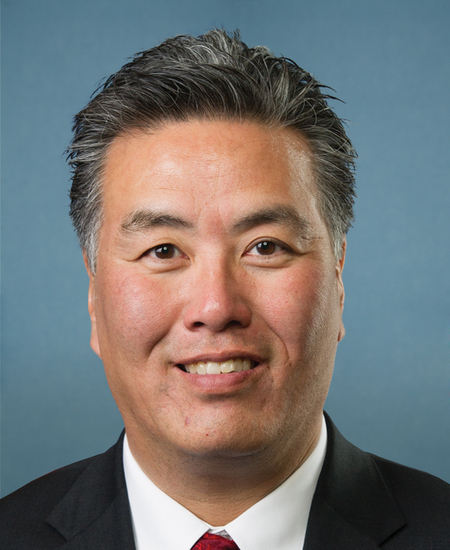
Rep. Mark Takano
Sponsored bills
Maddy summaryHRES 1074 is a symbolic House resolution reaffirming congressional support for a two-state solution to the Israel-Palestine conflict. It explicitly states the House supports Israel's right to exist as a Jewish, democratic state and recognizes Palestinians' right to sovereignty through a separate state. The resolution identifies a two-state solution as the best path to lasting peace and condemns efforts opposing this approach. As a non-binding resolution, it does not create new law or policy but formally expresses the House's position on this issue. It was introduced by multiple House members on March 12, 2024.
Maddy summaryHR 7629, the Protect Our Letter Carriers Act of 2024, allocates $1.4 billion annually (2025-2029) to the U.S. Postal Service for high-security collection boxes and replacing physical universal mailbox keys with electronic versions, directly affecting USPS operations and letter carriers. It requires the Attorney General to appoint specialized prosecutors in each district to coordinate investigations and prosecutions of postal-related crimes, such as assaults on carriers or mail theft. The bill also mandates the U.S. Sentencing Commission to adjust guidelines so that assaults or robberies against postal employees are treated with the same severity as assaults against law enforcement officers. These provisions aim to enhance safety through infrastructure upgrades, improved prosecution, and stricter sentencing for crimes targeting postal workers.
Maddy summaryHR 7639 establishes a 14-member National Advisory Council to address unpaid school meal fees in child nutrition programs. The Council, composed of diverse members including school nutrition directors, parents, FNS officials, and food service workers, will provide recommendations to the Food and Nutrition Service Administrator within three years. Its key focus is ensuring students aren’t shamed for unpaid fees while helping schools maintain financial stability for meal programs. The Council’s report will guide future policy guidance, but the bill itself creates no immediate changes to school meal eligibility or funding. This procedural bill sets up a process for studying the issue, not implementing new rules.
Maddy summaryThe American High-Speed Rail Act authorizes $35 billion annually for high-speed rail corridor development (with $3 billion for corridor planning), requiring at least 20% of project costs to come from non-Federal sources. It defines "high-speed rail" as services reaching 186+ mph and "higher-speed rail" as 110-186 mph, with no more than 20% of funds allocated to higher-speed rail projects. Key provisions include allowing advance acquisition of rail corridors before environmental reviews, creating tax exclusions for rail carriers selling property to high-speed rail projects, and requiring consideration of equity, sustainability, and economic development impacts in planning. The bill affects federal agencies, state and local governments, rail carriers, and communities along proposed rail corridors.
Maddy summaryThis bill requires states to immediately stop Medicaid recovery claims against beneficiaries' estates. Specifically, it mandates that states withdraw all existing liens within 90 days of enactment and notify affected individuals or their estates about the withdrawal. The law also prohibits states from initiating, maintaining, or collecting any future Medicaid recovery claims for benefits correctly paid. It directly affects Medicaid recipients and their heirs who were previously subject to state recovery efforts. The key mechanism is the 90-day deadline for states to remove existing liens and cease all new recovery actions.
Maddy summaryHRES 1032 is a symbolic resolution designating the week of February 26-March 1, 2024, as "Public Schools Week" in the U.S. House of Representatives. It expresses congressional support for public education, highlighting its role in preparing students and communities. The resolution has no legal effect or funding provisions - it solely serves as a formal expression of backing for public schools. It directly affects no individuals or entities but aims to raise awareness about public education. This is a non-binding gesture, not a policy change.
Maddy summaryThis resolution proposes creating a Permanent Select Committee on Aging in the U.S. House of Representatives. The committee would study issues affecting older Americans - such as income security, healthcare, housing, and long-term care - without having the power to pass laws. It would review existing government and private programs, develop coordination strategies for aging-related services, and assess recommendations from the President or the White House Conference on Aging. The committee’s work would inform future policy discussions but would not directly change legislation.
Maddy summaryThis bill requires the U.S. Department of Education to automatically send information about Supplemental Nutrition Assistance Program (SNAP) eligibility to college students with a zero expected family contribution (EFC) who submit the Free Application for Federal Student Aid (FAFSA). It directs the Secretary to provide written and electronic details about SNAP benefits, including how to apply and contact information for state SNAP agencies, in both formats. The bill mandates consultation between the Education and Agriculture Departments to design this communication. It directly affects low-income undergraduate students who qualify for federal aid but may not know about SNAP food assistance. The policy change aims to connect eligible students with existing nutrition support programs.
Maddy summaryThe Price Gouging Prevention Act of 2024 prohibits businesses from charging "grossly excessive" prices for goods or services during exceptional market shocks (like natural disasters or pandemics), directly affecting large corporations with over $100 million in annual U.S. revenue. Key provisions include presuming violations if prices rise more than 20% above pre-shock averages without justification, allowing companies to defend against claims by proving legitimate cost increases, and requiring major corporations to disclose pricing changes in SEC filings. Enforcement will be handled by the Federal Trade Commission (FTC) and state attorneys general, with civil penalties up to 5% of a company’s revenue. The bill defines "unfair leverage" for dominant firms and mandates annual inflation adjustments to revenue thresholds starting in 2025.