

Maddy summaryHRES 410 is a non-binding House resolution requiring President Trump to comply with the Constitution’s Foreign Emoluments Clause regarding a $400 million Boeing 747-8 jet gift from Qatar’s royal family. It directs the President to immediately submit all plans for the aircraft to Congress and obtain explicit congressional consent before accepting it, as required by the Constitution. The resolution cites historical precedent where all prior presidents sought Congress’s approval for foreign gifts, including items like medals, horses, and the Statue of Liberty. It emphasizes that accepting the jet without consent would violate the Constitution and pose national security risks. The bill focuses solely on procedural compliance, not the merits of the gift itself.
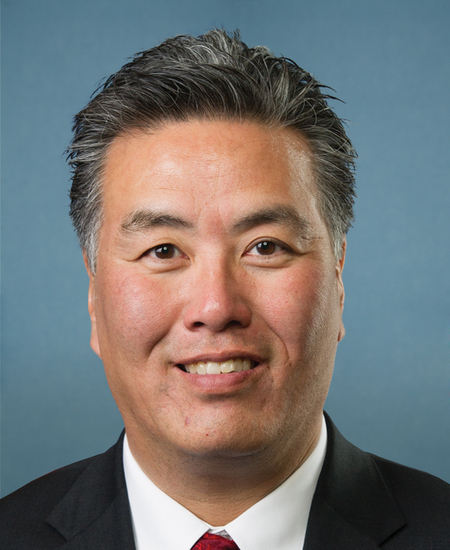
Rep. Mark Takano
Sponsored bills
Maddy summaryThis bill establishes minimum nurse-to-patient ratios for hospital units across the country, requiring hospitals to maintain specific staffing levels (such as 1:1 in trauma units, 2:1 in critical care units, and 3:1 in emergency rooms) to improve patient safety and quality of care. Hospitals must develop transparent staffing plans that account for patient acuity, involve direct care nurses in planning, and document actual staffing levels for each shift. The bill includes strong whistleblower protections for nurses who object to unsafe staffing levels and prohibits hospitals from retaliating against nurses who report violations. It requires hospitals to comply with these standards as a condition for receiving Medicare and Medicaid payments, with enforcement through audits and civil penalties of up to $50,000 for repeated violations. The bill also includes provisions to support nurse recruitment and retention through workforce initiatives and training programs.
Maddy summaryHRES 407 is a symbolic House resolution designating May 10, 2025, as "National Asian American, Native Hawaiian, and Pacific Islander Mental Health Day." It directly recognizes the mental health disparities faced by AANHPI communities, including lower service utilization rates and higher youth suicide rates. The resolution encourages federal, state, and local health agencies to improve mental health awareness and access for these communities. It does not create new laws or funding but formally supports efforts to address cultural barriers in mental health care. The designation aligns with May's existing observances of AANHPI Heritage Month and Mental Health Awareness Month.
Maddy summaryHR 3368, the "Born in the USA Act of 2025," prohibits federal funding for Executive Order 14160 (which aimed to restrict birthright citizenship for children born in the U.S.). The bill directly affects federal agencies that might implement the executive order by blocking their use of funds for that purpose. Its key provision is a funding ban targeting the executive order and any similar future policies, without changing citizenship law. The bill does not alter birthright citizenship rights but prevents federal resources from being used to enforce the controversial executive order. It is a procedural measure focused on funding, not a substantive policy change to citizenship rules.
Maddy summaryThis bill amends the Fair Labor Standards Act to prohibit children under 18 from having direct contact with tobacco plants or dried tobacco leaves on farms. It directly affects minors who might work on tobacco farms and tobacco farm employers who currently allow such employment. The key change adds tobacco farming to the list of occupations where children under 18 cannot work, closing a loophole that previously permitted this activity. This update explicitly excludes tobacco-related agriculture from exceptions allowing minors in certain farm jobs under federal law.
Maddy summaryHR 3013 amends U.S. Code to increase annual funding for programs supporting homeless veterans. It extends the funding authorization period through fiscal year 2024 and sets specific amounts: $350 million for 2025, with future years receiving "such sums as may be necessary." This directly affects homeless veterans by securing sustained federal funding for comprehensive service programs. The bill makes no changes to program requirements, only adjusting the authorized funding levels year by year.
Maddy summaryThe FAIR Veterans Act of 2025 (HR 2963) aims to prevent foreclosures on homes purchased by veterans with Department of Veterans Affairs (VA)-guaranteed mortgages. It amends a VA program (section 3732(a)(2)(A) of Title 38, U.S. Code) to clarify that the VA can directly pay lenders the unpaid loan balance plus interest to take over the mortgage, allowing veterans to stay in their homes. This change directly affects veterans with VA-guaranteed loans facing foreclosure, making it easier for the VA to intervene. The bill modifies existing program rules to prioritize keeping veterans housed, rather than creating new benefits or changing eligibility.
Maddy summaryHR 3316, the Stop Mental Health Stigma in Our Communities Act of 2025, requires the HHS Secretary to develop a national outreach strategy and conduct two systematic reviews targeting mental health disparities in Asian American, Native Hawaiian, and Pacific Islander (AANHPI) communities. The strategy mandates culturally tailored materials to reduce stigma, increase awareness of mental health services, and engage community members, funded at $3 million annually from 2026-2030. It also directs a year-long review of AANHPI youth mental health crises (including suicide rates) and a review of AANHPI behavioral health workforce shortages, both requiring disaggregated data reporting. The bill directly affects AANHPI individuals - particularly youth and underserved subgroups - by mandating federal action to address systemic barriers like language gaps and underrepresentation in care.
Maddy summaryHRES 400 is a ceremonial resolution recognizing May as Asian American, Native Hawaiian, and Pacific Islander Heritage Month. It formally celebrates the historical contributions of these communities to U.S. history and society, as documented in the resolution’s preamble. The resolution does not create new laws, allocate funding, or change policies - it serves solely as a symbolic acknowledgment by the House of Representatives. It highlights the diversity of these communities and their ongoing impact, referencing their growth, cultural milestones, and historical challenges. This recognition aligns with the existing statutory designation of May for Heritage Month under U.S. Code.
Maddy summaryThis bill prohibits corporal punishment in schools receiving federal funding, defining it as any physical force causing pain for discipline. It requires schools to notify parents within 24 hours of any corporal punishment incident and mandates states to submit school climate reports detailing efforts to reduce exclusionary discipline practices like suspensions and expulsions. The bill establishes a grant program to help schools implement positive behavioral interventions, such as restorative justice and trauma-informed care, while requiring staff training on these approaches. The bill applies to public schools and other schools receiving federal funds but does not affect private schools or home schools that don't receive federal funding.